Three statements are given followed by three conclusions numbered I, II and III. Assuming the statements to be true, even if they seem to be at variance with commonly known facts, decide which of the conclusions logically follow(s) from the statements.
Statements
All bikes are cars.
Some cars are trucks.
All trucks are cycles.
Conclusions:
I. Some cars are cycles.
II. Some cycles are trucks.
III. Some bikes are trucks.
Only conclusions II and III follow.
Only conclusions I and III follow.
Only conclusions I and II follow.
All conclusions follow.
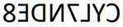
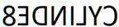
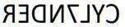
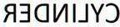
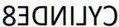
Select the correct mirror image of the given combination when the mirror is placed at 'PQ' as shown below.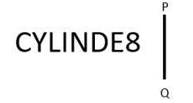
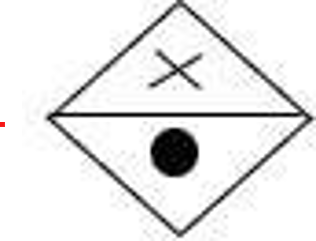
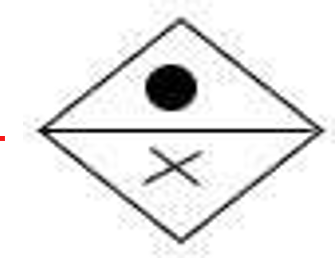
Select the figure that will replace the question mark (?) in the following figure series.
Select the set in which the numbers are related in the same way as are the numbers of the following sets.
(NOTE : Operations should be performed on the whole numbers, without breaking down the numbers into its constituent digits. E.g. 13 - Operations on 13 such as adding /subtracting /multiplying etc. to 13 can be performed. Breaking down 13 into 1 and 3 and then performing mathematical operations on 1 and 3 is not allowed).
(17, 24, 58)
(26, 37, 89)
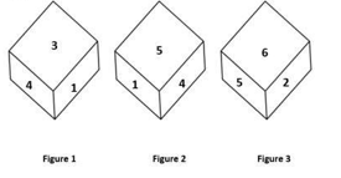
Three different positions of the same dice are shown. Find the number on the face opposite the face showing '5'.