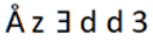
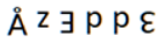
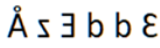
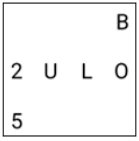
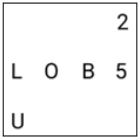
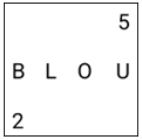
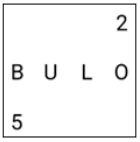
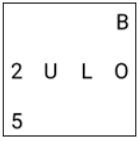
A, B, C, D, E, F and G are sitting around a circular table facing the centre (but not necessarily in the same order). B sits to the immediate left of E. C sits to the immediate left of F. F sits second to the left of G. D sits third to the left of E.
Who sits third to the left of A?
In a certain code language, ‘you read book’ is written as ‘hm rn op’ and ‘book is good’ is written as ‘cf am rn’. What is the code for ‘book’ in that language?
In the following number-pairs, the second number is obtained by applying certain mathematical operations to the first number. Select the set in which the numbers are related in the same way as are the numbers of the following sets.
(NOTE: Operations should be performed on the whole numbers, without breaking down the numbers into their constituent digits. E.g. 13 – Operations on 13 such as adding/subtracting/multiplying to 13 can be performed. Breaking down 13 into 1 and 3 and then performing mathematical operations on 1 and 3 is not allowed.)
8, 72
11, 99
3 is related to 40 following a certain logic. Following the same logic, 5 is related to 66. To which of the following is 10 related, following the same logic?
(NOTE : Operations should be performed on the whole numbers, without breaking down the numbers into its constituent digits. E.g. 13 – Operations on 13 such as adding/subtracting/multiplying, etc. to 13 can be performed. Breaking down 13 into 1 and 3 and then performing mathematical operations on 1 and 3 is not allowed.)
CDFG is related to FGIJ in a certain way based on the English alphabetical order. In the same way, MNPQ is related to PQST. To which of the following is HIKL related, following the same logic?
Read the given statements and conclusions carefully. Assuming that the information given in the statements is true, even if it appears to be at variance with commonly known facts, decide which of the given conclusions logically follow(s) from the statements.
Statements:
Some tomatoes are potatoes.
No potato is an onion.
Conclusions:
(I) Some potatoes are not tomatoes.
(II) No tomato is an onion.