
Four pictures of a cube are given below which number is on the face opposite to 3?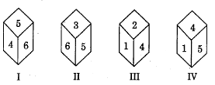
கனசதுரத்தின் நான்கு வரைபடங்கள் கீழே கொடுக்கப்பட்டுள்ளன. எந்த எண் 3 இன் எதிர்பக்கமாக இருக்க முடியும்.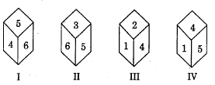
Group 1 - 2022
To determine which number is on the face opposite to 3, we need to analyze the given diagrams of the cube and understand the arrangement of numbers on its faces.
Correct Option: C) 4
கனசதுரத்தின் முகங்களை ஆராய்ந்து, 3 இன் எதிர்பக்கத்தில் உள்ள எண் என்ன என்பதை கண்டறிய வேண்டும்.
சரியான விடை: C) 4
Group 2/2A - 2022
In a standard six-sided die, opposite faces always add up to 7. This property helps determine the pairs of opposite faces. Once opposite faces are identified, we can determine adjacent faces, as adjacent faces are any faces that are not opposite to each other.
Correct Option: C) 2 is adjacent to 3 and 6
ஒரு நிலையான ஆறு பக்க பகடையில், எதிர் பக்கங்களின் கூட்டுத்தொகை எப்போதும் 7 ஆக இருக்கும். இந்த பண்பு எதிர் பக்க ஜோடிகளை தீர்மானிக்க உதவுகிறது. எதிர் பக்கங்கள் அடையாளம் காணப்பட்டவுடன், அருகிலுள்ள பக்கங்களை நாம் தீர்மானிக்கலாம், ஏனெனில் அருகிலுள்ள பக்கங்கள் ஒன்றுக்கொன்று எதிர் அல்லாத எந்தப் பக்கங்களாகவும் இருக்கும்.
சரியான விடை: C) 2 ஆனது 3 மற்றும் 6க்கு அருகே உள்ளது
Group 2/2A - 2024
To find the probability of an event, we need to determine the number of favorable outcomes and divide it by the total number of possible outcomes. When three dice are thrown, we first calculate the total possible outcomes. Then, we identify the outcomes where all three dice show the same number (e.g., 1,1,1 or 2,2,2, etc.) and count them. Finally, we apply the probability formula.
Total number of outcomes: When a single die is thrown, there are 6 possible outcomes (1, 2, 3, 4, 5, 6). When three dice are thrown simultaneously, the total number of possible outcomes is \(6 \times 6 \times 6\).
\[ \text{Total outcomes} = 6^3 = 216 \]Favorable outcomes (getting the same number on all dice): We are looking for outcomes where all three dice show the same number. These are:
There are 6 such favorable outcomes.
Calculate the probability: Probability is given by the formula:
\[ \text{Probability} = \frac{\text{Number of favorable outcomes}}{\text{Total number of outcomes}} \]Substituting the values we found:
\[ \text{Probability} = \frac{6}{216} \]Simplify the fraction:
\[ \text{Probability} = \frac{1}{36} \]Correct Option: C) 1/36
ஒரு நிகழ்வின் நிகழ்தகவைக் கண்டறிய, நாம் சாதகமான விளைவுகளின் எண்ணிக்கையை மொத்த சாத்தியமான விளைவுகளின் எண்ணிக்கையால் வகுக்க வேண்டும். மூன்று பகடைகள் உருட்டப்படும்போது, முதலில் மொத்த சாத்தியமான விளைவுகளைக் கணக்கிடுவோம். பின்னர், மூன்று பகடைகளிலும் ஒரே எண் வரும் விளைவுகளை (எ.கா., 1,1,1 அல்லது 2,2,2, போன்றவை) அடையாளம் கண்டு அவற்றைக் கணக்கிடுவோம். இறுதியாக, நிகழ்தகவு சூத்திரத்தைப் பயன்படுத்துவோம்.
மொத்த விளைவுகளின் எண்ணிக்கை: ஒரு பகடையை உருட்டும்போது, 6 சாத்தியமான விளைவுகள் உள்ளன (1, 2, 3, 4, 5, 6). மூன்று பகடைகள் ஒரே நேரத்தில் உருட்டப்படும்போது, மொத்த சாத்தியமான விளைவுகளின் எண்ணிக்கை \(6 \times 6 \times 6\).
\[ \text{மொத்த விளைவுகள்} = 6^3 = 216 \]சாதகமான விளைவுகள் (அனைத்து பகடைகளிலும் ஒரே எண் கிடைப்பது): மூன்று பகடைகளிலும் ஒரே எண் வரும் விளைவுகளை நாம் தேடுகிறோம். அவை:
இத்தகைய சாதகமான விளைவுகள் 6 உள்ளன.
நிகழ்தகவைக் கணக்கிடுங்கள்: நிகழ்தகவு பின்வரும் சூத்திரத்தால் வழங்கப்படுகிறது:
\[ \text{நிகழ்தகவு} = \frac{\text{சாதகமான விளைவுகளின் எண்ணிக்கை}}{\text{மொத்த விளைவுகளின் எண்ணிக்கை}} \]நாம் கண்டறிந்த மதிப்புகளைப் பிரதியிடுக:
\[ \text{நிகழ்தகவு} = \frac{6}{216} \]பின்னத்தை சுருக்குக:
\[ \text{நிகழ்தகவு} = \frac{1}{36} \]சரியான விடை: C) 1/36
Group 2/2A - 2024
We need to find the number of cases where the face value of the second die is greater than the face value of the first die. The faces of each die are given as 1, 2, 2, 3, 3, 3. We can list all possible outcomes when two such dice are rolled and then filter for the condition.
Identify the possible outcomes for a single die: The faces are {1, 2, 2, 3, 3, 3}. There are 6 possible outcomes for each die.
List all possible pairs of outcomes: When two dice are rolled, the total number of outcomes is \(6 \times 6 = 36\). We can represent these as (Die 1, Die 2).
Filter outcomes where Die 2 > Die 1: We will systematically list the pairs that satisfy this condition.
If Die 1 shows 1:
Total cases when Die 1 is 1: 5 cases.
If Die 1 shows 2 (first 2):
Total cases when Die 1 is the first 2: 3 cases.
If Die 1 shows 2 (second 2):
Total cases when Die 1 is the second 2: 3 cases.
If Die 1 shows 3 (first 3, second 3, or third 3):
Total cases when Die 1 is 3: 0 cases.
Sum the cases: Add the number of cases from each scenario.
Total cases = (Cases when Die 1 is 1) + (Cases when Die 1 is first 2) + (Cases when Die 1 is second 2) + (Cases when Die 1 is 3)
Total cases = \(5 + 3 + 3 + 0 = 11\).
D) 11 is the correct answer because there are 11 distinct pairs of outcomes where the second die's face value is greater than the first die's face value, considering the distinctness of identical numbers on the die faces.
இரண்டாவது பகடையின் முக மதிப்பு முதல் பகடையின் முக மதிப்பை விட அதிகமாக இருக்கும் நிகழ்வுகளின் எண்ணிக்கையைக் கண்டறிய வேண்டும். ஒவ்வொரு பகடையின் முக மதிப்புகள் 1, 2, 2, 3, 3, 3 ஆகும். இரண்டு பகடைகள் உருட்டப்படும்போது சாத்தியமான அனைத்து விளைவுகளையும் பட்டியலிட்டு, பின்னர் நிபந்தனைக்கு உட்பட்டவற்றை வடிகட்டலாம்.
ஒரு பகடைக்கான சாத்தியமான விளைவுகளை அடையாளம் காணவும்: முக மதிப்புகள் {1, 2, 2, 3, 3, 3}. ஒவ்வொரு பகடைக்கும் 6 சாத்தியமான விளைவுகள் உள்ளன.
சாத்தியமான அனைத்து ஜோடி விளைவுகளையும் பட்டியலிடுங்கள்: இரண்டு பகடைகள் உருட்டப்படும்போது, மொத்த விளைவுகளின் எண்ணிக்கை \(6 \times 6 = 36\). இவற்றை (பகடை 1, பகடை 2) என குறிப்பிடலாம்.
பகடை 2 > பகடை 1 என்ற நிபந்தனையை பூர்த்தி செய்யும் விளைவுகளை வடிகட்டவும்: இந்த நிபந்தனையை பூர்த்தி செய்யும் ஜோடிகளை முறையாக பட்டியலிடுவோம்.
பகடை 1, 1 ஆக இருந்தால்:
பகடை 1, 1 ஆக இருக்கும்போது மொத்த நிகழ்வுகள்: 5 நிகழ்வுகள்.
பகடை 1, 2 ஆக இருந்தால் (முதல் 2):
பகடை 1, முதல் 2 ஆக இருக்கும்போது மொத்த நிகழ்வுகள்: 3 நிகழ்வுகள்.
பகடை 1, 2 ஆக இருந்தால் (இரண்டாவது 2):
பகடை 1, இரண்டாவது 2 ஆக இருக்கும்போது மொத்த நிகழ்வுகள்: 3 நிகழ்வுகள்.
பகடை 1, 3 ஆக இருந்தால் (முதல் 3, இரண்டாவது 3, அல்லது மூன்றாவது 3):
பகடை 1, 3 ஆக இருக்கும்போது மொத்த நிகழ்வுகள்: 0 நிகழ்வுகள்.
நிகழ்வுகளை கூட்டவும்: ஒவ்வொரு சூழ்நிலையிலிருந்தும் நிகழ்வுகளின் எண்ணிக்கையை கூட்டவும்.
மொத்த நிகழ்வுகள் = (பகடை 1, 1 ஆக இருக்கும்போது நிகழ்வுகள்) + (பகடை 1, முதல் 2 ஆக இருக்கும்போது நிகழ்வுகள்) + (பகடை 1, இரண்டாவது 2 ஆக இருக்கும்போது நிகழ்வுகள்) + (பகடை 1, 3 ஆக இருக்கும்போது நிகழ்வுகள்)
மொத்த நிகழ்வுகள் = \(5 + 3 + 3 + 0 = 11\).
D) 11 என்பது சரியான விடை, ஏனெனில் இரண்டாவது பகடையின் முக மதிப்பு முதல் பகடையின் முக மதிப்பை விட அதிகமாக இருக்கும் 11 தனித்துவமான ஜோடி விளைவுகள் உள்ளன, பகடை முகங்களில் உள்ள ஒரே மாதிரியான எண்களின் தனித்துவத்தை கருத்தில் கொண்டு.
A dice is thrown four times and its four different positions are given below: Find the number on the face opposite the face showing 2. 
ஒரு பகடை 4 முறை உருட்டப்படும் போது அதன் 4 வேறுபட்ட நிலைகள் கீழே கொடுக்கப்பட்டுள்ளன. 2-ன் எதிர் பக்கமாக இருக்கும் எண்ணைக் காண்க.
Group 4 - 2025
To find the number on the face opposite to the face showing 2, we need to analyze the given positions of the dice and use the information to deduce the opposite face.
Correct Option: A) 4
2-ன் எதிர் பக்கமாக இருக்கும் எண்ணைக் கண்டறிய, கொடுக்கப்பட்ட பகடை நிலைகளை ஆராய்ந்து, எதிர் பக்கத்தை கண்டறிய வேண்டும்.
சரியான விடை: A) 4
Two unbiased dice are rolled once. Find the probability of getting the product of face value is 4 or the difference of the face value is 5.
இரண்டு முறையான பகடைகள் உருட்டப்படும் பொழுது முகமதிப்புகளின் பெருக்கல் பலன் 4 அல்லது முக மதிப்புகளின் வித்தியாசம் 5 ஆக இருக்க நிகழ்தகவு?
Group 4 - 2025
\( \frac{1}{4} \)
\( \frac{5}{36} \)
\( \frac{1}{9} \)
\( \frac{7}{36} \)
To find the probability of either event A (product of face values is 4) or event B (difference of face values is 5) occurring when two unbiased dice are rolled, we first list all possible outcomes. Then, we identify the outcomes favorable to event A, event B, and any outcomes common to both (intersection). Finally, we use the formula for the probability of the union of two events: \( P(A \cup B) = P(A) + P(B) - P(A \cap B) \).
Total possible outcomes: When two dice are rolled, each die has 6 faces. So, the total number of possible outcomes is \( 6 \times 6 = 36 \). We denote this as \( n(S) = 36 \).
Event A: Product of face values is 4.
The pairs \((d_1, d_2)\) whose product is 4 are:
\((1, 4)\) (since \(1 \times 4 = 4\))
\((2, 2)\) (since \(2 \times 2 = 4\))
\((4, 1)\) (since \(4 \times 1 = 4\))
So, the number of outcomes favorable to event A is \( n(A) = 3 \).
The probability of event A is \[P(A) = \frac{n(A)}{n(S)} = \frac{3}{36}\].
Event B: Difference of face values is 5.
The pairs \((d_1, d_2)\) whose absolute difference is 5 are:
\((1, 6)\) (since \(|1 - 6| = 5\))
\((6, 1)\) (since \(|6 - 1| = 5\))
So, the number of outcomes favorable to event B is \( n(B) = 2 \).
The probability of event B is \[P(B) = \frac{n(B)}{n(S)} = \frac{2}{36}\].
Intersection of Event A and Event B:
We need to check if there are any outcomes common to both A and B. Event A outcomes are \(\{(1, 4), (2, 2), (4, 1)\}\). Event B outcomes are \(\{(1, 6), (6, 1)\}\). There are no common outcomes.
So, \( n(A \cap B) = 0 \).
The probability of the intersection is \( P(A \cap B) = \frac{0}{36} = 0 \).
Probability of A or B:
Using the formula \( P(A \cup B) = P(A) + P(B) - P(A \cap B) \):
\[ P(A \cup B) = \frac{3}{36} + \frac{2}{36} - 0 \]\[ P(A \cup B) = \frac{3 + 2}{36} \]\[ P(A \cup B) = \frac{5}{36} \]
Correct Option: B) \( \frac{5}{36} \)
இரண்டு முறையான பகடைகள் உருட்டப்படும்போது, முகமதிப்புகளின் பெருக்கல் பலன் 4 (நிகழ்வு A) அல்லது முகமதிப்புகளின் வித்தியாசம் 5 (நிகழ்வு B) ஆக இருப்பதற்கான நிகழ்தகவைக் கண்டறிய, முதலில் சாத்தியமான அனைத்து விளைவுகளையும் பட்டியலிட வேண்டும். பின்னர், நிகழ்வு A, நிகழ்வு B மற்றும் இரண்டிற்கும் பொதுவான (வெட்டு) விளைவுகளைக் கண்டறிய வேண்டும். இறுதியாக, இரண்டு நிகழ்வுகளின் ஒன்றிப்பிற்கான நிகழ்தகவு சூத்திரத்தைப் பயன்படுத்த வேண்டும்: \( P(A \cup B) = P(A) + P(B) - P(A \cap B) \).
மொத்த சாத்தியமான விளைவுகள்: இரண்டு பகடைகள் உருட்டப்படும்போது, ஒவ்வொரு பகடைக்கும் 6 முகங்கள் உள்ளன. எனவே, மொத்த சாத்தியமான விளைவுகளின் எண்ணிக்கை \( 6 \times 6 = 36 \). இதை \( n(S) = 36 \) எனக் குறிக்கிறோம்.
நிகழ்வு A: முகமதிப்புகளின் பெருக்கல் பலன் 4.
பெருக்கல் பலன் 4 ஆக உள்ள ஜோடிகள் \((d_1, d_2)\) பின்வருமாறு:
\((1, 4)\) (ஏனெனில் \(1 \times 4 = 4\))
\((2, 2)\) (ஏனெனில் \(2 \times 2 = 4\))
\((4, 1)\) (ஏனெனில் \(4 \times 1 = 4\))
எனவே, நிகழ்வு A க்கு சாதகமான விளைவுகளின் எண்ணிக்கை \( n(A) = 3 \).
நிகழ்வு A இன் நிகழ்தகவு:
நிகழ்வு B: முகமதிப்புகளின் வித்தியாசம் 5.
முழுமையான வித்தியாசம் 5 ஆக உள்ள ஜோடிகள் \((d_1, d_2)\) பின்வருமாறு:
\((1, 6)\) (ஏனெனில் \(|1 - 6| = 5\))
\((6, 1)\) (ஏனெனில் \(|6 - 1| = 5\))
எனவே, நிகழ்வு B க்கு சாதகமான விளைவுகளின் எண்ணிக்கை \( n(B) = 2 \).
நிகழ்வு B இன் நிகழ்தகவு:
நிகழ்வு A மற்றும் நிகழ்வு B இன் வெட்டு:
A மற்றும் B இரண்டிற்கும் பொதுவான விளைவுகள் ஏதேனும் உள்ளதா என்று சரிபார்க்க வேண்டும். நிகழ்வு A இன் விளைவுகள் \(\{(1, 4), (2, 2), (4, 1)\}\). நிகழ்வு B இன் விளைவுகள் \(\{(1, 6), (6, 1)\}\). பொதுவான விளைவுகள் எதுவும் இல்லை.
எனவே, \( n(A \cap B) = 0 \).
வெட்டின் நிகழ்தகவு:
A அல்லது B இன் நிகழ்தகவு:
சூத்திரம் \( P(A \cup B) = P(A) + P(B) - P(A \cap B) \) ஐப் பயன்படுத்தி:
சரியான விடை: B) \( \frac{5}{36} \)