
Two dice are rolled together find the probability of getting a doublet or sum of faces as 4
இரண்டு பகடைகள் ஒரே நேரத்தில் உருட்டப்படும்பொழுது இரண்டிலும் ஒரே முகம் அல்லது கூடுதல் 4 கிடைக்க நிகழ்தகவு காண்க.
Group 4 - 2022
\( \frac{1}{9} \)
\( \frac{3}{9} \)
\( \frac{4}{9} \)
\( \frac{2}{9} \)
To find the probability of getting a doublet or a sum of 4 when two dice are rolled, we first list all possible outcomes. Then, we identify the outcomes that satisfy each condition (doublet, sum of 4) and the outcomes that satisfy both. Finally, we use the formula for the probability of the union of two events: \( P(A \cup B) = P(A) + P(B) - P(A \cap B) \).
Correct Option: D) \( \frac{2}{9} \)
இரண்டு பகடைகள் உருட்டப்படும்போது, இரண்டிலும் ஒரே முகம் (doublet) அல்லது கூடுதல் 4 கிடைக்கும் நிகழ்தகவைக் கண்டறிய, முதலில் சாத்தியமான அனைத்து விளைவுகளையும் பட்டியலிட வேண்டும். பின்னர், ஒவ்வொரு நிபந்தனையையும் (doublet, கூடுதல் 4) பூர்த்தி செய்யும் விளைவுகளையும், இரண்டு நிபந்தனைகளையும் பூர்த்தி செய்யும் விளைவுகளையும் அடையாளம் காண வேண்டும். இறுதியாக, இரண்டு நிகழ்வுகளின் ஒன்றிணைவுக்கான நிகழ்தகவு சூத்திரத்தைப் பயன்படுத்த வேண்டும்: \( P(A \cup B) = P(A) + P(B) - P(A \cap B) \).
சரியான விடை: D) \( \frac{2}{9} \)
Which number is in opposite plane of 3?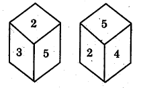
3-க்கு எதிரான தளத்தில் உள்ள எண் எது?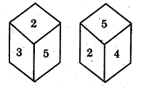
Group 4 - 2022
To find the number opposite 3 on the dice, we need to analyze the given images and understand the arrangement of numbers on the dice.
Correct Option: B) 4
கூழாங்கற்களில் 3-க்கு எதிரான எண்ணை கண்டறிய, கொடுக்கப்பட்ட படங்களைப் பார்வையிட்டு, எண்ண்களின் அமைப்பை புரிந்து கொள்ள வேண்டும்.
சரியான விடை: B) 4
If two dice are thrown together what is the probability to get atleast one prime number and sum of the numbers should be even
இரு பகடைகள் ஒரே நேரத்தில் உருட்டும் போது குறைந்தபட்சம் ஒரு பகா எண்ணும், இரு எண்களின் கூடுதல் இரட்டை எண்ணாகவும் இருக்க நிகழ்தகவு காண்க.
Group 1B,1C - 2024
\( \frac{1}{2} \)
\( \frac{15}{36} \)
\( \frac{13}{36} \)
\( \frac{17}{36} \)
To solve this problem, we first need to list all possible outcomes when two dice are thrown. Then, we identify the outcomes that satisfy both conditions: at least one prime number and an even sum. Finally, we calculate the probability by dividing the number of favorable outcomes by the total number of outcomes.
For the sum to be even, both numbers must be even, or both numbers must be odd.
Even numbers on a die are {2, 4, 6}.
Pairs with both even numbers:
From this case, we have 5 favorable outcomes: (2,2), (2,4), (2,6), (4,2), (6,2).
Odd numbers on a die are {1, 3, 5}.
Pairs with both odd numbers:
From this case, we have 8 favorable outcomes: (1,3), (1,5), (3,1), (3,3), (3,5), (5,1), (5,3), (5,5).
Correct Option: C) \( \frac{13}{36} \)
இந்தச் சிக்கலைத் தீர்க்க, முதலில் இரண்டு பகடைகள் உருட்டப்படும்போது சாத்தியமான அனைத்து விளைவுகளையும் பட்டியலிட வேண்டும். பின்னர், குறைந்தபட்சம் ஒரு பகா எண் மற்றும் எண்களின் கூடுதல் இரட்டை எண் ஆகிய இரண்டு நிபந்தனைகளையும் பூர்த்தி செய்யும் விளைவுகளைக் கண்டறிய வேண்டும். இறுதியாக, சாதகமான விளைவுகளின் எண்ணிக்கையை மொத்த விளைவுகளின் எண்ணிக்கையால் வகுப்பதன் மூலம் நிகழ்தகவைக் கணக்கிட வேண்டும்.
கூடுதல் இரட்டை எண்ணாக இருக்க, இரண்டு எண்களும் இரட்டை எண்களாக இருக்க வேண்டும் அல்லது இரண்டு எண்களும் ஒற்றை எண்களாக இருக்க வேண்டும்.
பகடை மீதான இரட்டை எண்கள் {2, 4, 6}.
இரட்டை எண்கள் கொண்ட ஜோடிகள்:
இந்த நிலையில் இருந்து, நமக்கு 5 சாதகமான விளைவுகள் உள்ளன: (2,2), (2,4), (2,6), (4,2), (6,2).
பகடை மீதான ஒற்றை எண்கள் {1, 3, 5}.
ஒற்றை எண்கள் கொண்ட ஜோடிகள்:
இந்த நிலையில் இருந்து, நமக்கு 8 சாதகமான விளைவுகள் உள்ளன: (1,3), (1,5), (3,1), (3,3), (3,5), (5,1), (5,3), (5,5).
சரியான விடை: C) \( \frac{13}{36} \)
I have a box which has 3 green, 9 blue, 4 yellow, 8 orange coloured cubes in it.
a. What is the ratio of orange to yellow cubes?
b. What is the ratio of green to blue cubes?
c. How many different ratios can be formed, when you compare each color to any one of the other colours?
என்னிடமுள்ள ஒரு பெட்டியில் 3 பச்சை 9 நீலம் 4மஞ்சள் 8ஆரஞ்சு என 24 வண்ணக் கனச் சதுரங்கள் உள்ளன. எனில்
a) ஆரஞ்சு மற்றும் மஞ்சள் கனச்சதுரங்களின் விகிதம் என்ன
b) பச்சை மற்றும் நீலம் கனச்சதுரங்களின் விகிதம் என்ன?
c) ஒரு வண்ணத்தை மற்ற வண்ணங்களோடு ஒப்பிட்டு எத்தனை விகிதங்கள் காணலாம் ?
(a) (b) (c)
Group 1 - 2019
3:1 1:2 10 ratios
1:3 2:1 4 ratios
1:2 3:1 12 ratios
2:1 1:3 12 ratios
This problem involves calculating ratios and combinations. We need to find two specific ratios and then determine the total number of unique ratios that can be formed by comparing each color to any other color.
The ratio of orange to yellow cubes is the number of orange cubes divided by the number of yellow cubes, simplified to its lowest terms.
\[ \text{Ratio (Orange : Yellow)} = \frac{\text{Number of Orange Cubes}}{\text{Number of Yellow Cubes}} = \frac{8}{4} = \frac{2}{1} \]The ratio of green to blue cubes is the number of green cubes divided by the number of blue cubes, simplified to its lowest terms.
\[ \text{Ratio (Green : Blue)} = \frac{\text{Number of Green Cubes}}{\text{Number of Blue Cubes}} = \frac{3}{9} = \frac{1}{3} \]There are 4 different colors (Green, Blue, Yellow, Orange). We need to compare each color to any one of the other colors. This is a permutation problem where order matters (A:B is different from B:A). The number of ways to choose 2 distinct colors from 4 and arrange them is given by the permutation formula \(P(n, k) = \frac{n!}{(n-k)!}\), where \(n=4\) (total colors) and \(k=2\) (colors chosen for a ratio).
\[ \text{Number of ratios} = P(4, 2) = \frac{4!}{(4-2)!} = \frac{4!}{2!} = \frac{4 \times 3 \times 2 \times 1}{2 \times 1} = 4 \times 3 = 12 \]This matches option D.
Correct Option: D) 2:1 1:3 12 ratios
இந்தக் கணக்கில் விகிதங்கள் மற்றும் சேர்மானங்களைக் கணக்கிட வேண்டும். நாம் இரண்டு குறிப்பிட்ட விகிதங்களைக் கண்டறிந்து, பின்னர் ஒவ்வொரு வண்ணத்தையும் மற்ற எந்த வண்ணத்துடனும் ஒப்பிடுவதன் மூலம் உருவாக்கக்கூடிய தனித்துவமான விகிதங்களின் மொத்த எண்ணிக்கையைக் கண்டறிய வேண்டும்.
ஆரஞ்சு மற்றும் மஞ்சள் கனச்சதுரங்களின் விகிதம் என்பது ஆரஞ்சு கனச்சதுரங்களின் எண்ணிக்கையை மஞ்சள் கனச்சதுரங்களின் எண்ணிக்கையால் வகுத்து, எளிய வடிவத்திற்குக் குறைப்பதாகும்.
\[ \text{விகிதம் (Orange : Yellow)} = \frac{\text{Number of Orange Cubes}}{\text{Number of Yellow Cubes}} = \frac{8}{4} = \frac{2}{1} \]பச்சை மற்றும் நீல கனச்சதுரங்களின் விகிதம் என்பது பச்சை கனச்சதுரங்களின் எண்ணிக்கையை நீல கனச்சதுரங்களின் எண்ணிக்கையால் வகுத்து, எளிய வடிவத்திற்குக் குறைப்பதாகும்.
\[ \text{விகிதம் (Green : Blue)} = \frac{\text{Number of Green Cubes}}{\text{Number of Blue Cubes}} = \frac{3}{9} = \frac{1}{3} \]4 வெவ்வேறு வண்ணங்கள் உள்ளன (பச்சை, நீலம், மஞ்சள், ஆரஞ்சு). ஒவ்வொரு வண்ணத்தையும் மற்ற வண்ணங்களில் ஒன்றுடன் ஒப்பிட வேண்டும். இது ஒரு வரிசைமாற்றச் சிக்கலாகும், இதில் வரிசை முக்கியமானது (A:B என்பது B:A இலிருந்து வேறுபட்டது). 4 இல் இருந்து 2 தனித்துவமான வண்ணங்களைத் தேர்ந்தெடுத்து அவற்றை வரிசைப்படுத்தும் வழிகளின் எண்ணிக்கை வரிசைமாற்ற சூத்திரத்தால் கொடுக்கப்படுகிறது \(P(n, k) = \frac{n!}{(n-k)!}\), இங்கு \(n=4\) (மொத்த வண்ணங்கள்) மற்றும் \(k=2\) (விகிதத்திற்காகத் தேர்ந்தெடுக்கப்பட்ட வண்ணங்கள்).
\[ \text{விகிதங்களின் எண்ணிக்கை} = P(4, 2) = \frac{4!}{(4-2)!} = \frac{4!}{2!} = \frac{4 \times 3 \times 2 \times 1}{2 \times 1} = 4 \times 3 = 12 \]இது விருப்பம் D உடன் பொருந்துகிறது.
சரியான விடை: D) 2:1 1:3 12 விகிதங்கள்
What is the probability that a leap year selected at random will contain 53 sundays?
சமவாய்ப்பு முறையில் தேர்ந்தெடுக்கப்படும் லீப் வருடம் 53 ஞாயிற்றுக் கிழமைகளை கொண்டு இருக்க நிகழ்தகவு யாது ?
Group 1 - 2019
\( \frac{2}{7} \)
\( \frac{3}{7} \)
\( \frac{4}{7} \)
\( \frac{5}{7} \)
To find the probability of a leap year having 53 Sundays, we first need to determine the total number of days in a leap year and how many full weeks it contains. Then, we identify the number of remaining days and the possible combinations for these days to include a Sunday.
Number of days in a leap year: A leap year has 366 days.
Number of full weeks: We divide the total number of days by 7 (days in a week) to find the number of full weeks and the remaining days.
\[ \text{Number of weeks} = \frac{366}{7} = 52 \text{ weeks and } 2 \text{ days remaining} \]
This means every leap year will have at least 52 Sundays (one for each full week).
Possible combinations for the remaining 2 days: The two remaining days can be any of the following pairs:
There are 7 possible combinations for these two consecutive days.
Favorable outcomes: For the leap year to have 53 Sundays, one of the two remaining days must be a Sunday. Looking at the combinations above, the pairs that include a Sunday are:
There are 2 favorable outcomes.
Calculate the probability: The probability is the ratio of favorable outcomes to the total possible outcomes.
\[ P(\text{53 Sundays}) = \frac{\text{Number of favorable outcomes}}{\text{Total number of possible outcomes}} = \frac{2}{7} \]
Correct Option: A) \( \frac{2}{7} \)
ஒரு லீப் வருடத்தில் 53 ஞாயிற்றுக் கிழமைகள் வருவதற்கான நிகழ்தகவைக் கண்டறிய, முதலில் ஒரு லீப் வருடத்தில் உள்ள மொத்த நாட்களின் எண்ணிக்கையையும், அதில் எத்தனை முழு வாரங்கள் உள்ளன என்பதையும் கண்டறிய வேண்டும். பின்னர், மீதமுள்ள நாட்களின் எண்ணிக்கையையும், இந்த நாட்களில் ஞாயிற்றுக்கிழமை வருவதற்கான சாத்தியமான சேர்க்கைகளையும் கண்டறிய வேண்டும்.
லீப் வருடத்தில் உள்ள நாட்களின் எண்ணிக்கை: ஒரு லீப் வருடத்தில் 366 நாட்கள் உள்ளன.
முழு வாரங்களின் எண்ணிக்கை: மொத்த நாட்களின் எண்ணிக்கையை 7 ஆல் (ஒரு வாரத்தில் உள்ள நாட்கள்) வகுத்து, முழு வாரங்களின் எண்ணிக்கையையும் மீதமுள்ள நாட்களையும் கண்டறியலாம்.
\[ \text{வாரங்களின் எண்ணிக்கை} = \frac{366}{7} = 52 \text{ வாரங்கள் மற்றும் } 2 \text{ நாட்கள் மீதம்} \]
இதன் பொருள் ஒவ்வொரு லீப் வருடத்திலும் குறைந்தது 52 ஞாயிற்றுக்கிழமைகள் இருக்கும் (ஒவ்வொரு முழு வாரத்திற்கும் ஒன்று).
மீதமுள்ள 2 நாட்களுக்கான சாத்தியமான சேர்க்கைகள்: மீதமுள்ள இரண்டு நாட்கள் பின்வரும் ஜோடிகளில் ஏதேனும் ஒன்றாக இருக்கலாம்:
இந்த இரண்டு தொடர்ச்சியான நாட்களுக்கு 7 சாத்தியமான சேர்க்கைகள் உள்ளன.
சாதகமான விளைவுகள்: லீப் வருடத்தில் 53 ஞாயிற்றுக்கிழமைகள் இருக்க வேண்டுமானால், மீதமுள்ள இரண்டு நாட்களில் ஒன்று ஞாயிற்றுக்கிழமையாக இருக்க வேண்டும். மேலே உள்ள சேர்க்கைகளைப் பார்க்கும்போது, ஞாயிற்றுக்கிழமையை உள்ளடக்கிய ஜோடிகள்:
2 சாதகமான விளைவுகள் உள்ளன.
நிகழ்தகவைக் கணக்கிடுதல்: நிகழ்தகவு என்பது சாதகமான விளைவுகளின் எண்ணிக்கைக்கும், மொத்த சாத்தியமான விளைவுகளின் எண்ணிக்கைக்கும் உள்ள விகிதமாகும்.
\[ P(\text{53 ஞாயிற்றுக்கிழமைகள்}) = \frac{\text{சாதகமான விளைவுகளின் எண்ணிக்கை}}{\text{மொத்த சாத்தியமான விளைவுகளின் எண்ணிக்கை}} = \frac{2}{7} \]
சரியான விடை: A) \( \frac{2}{7} \)
A fair die is rolled. Find the probablity of getting a prime factor of 6
ஒரு சீரான பகடை ஒரு முறை உருட்டப்படுகிறது. அதில் 6ன் பாக காரணிகள் கிடைக்க நிகழ்தகவு யாது ?
Group 1 - 2019
\( \frac{2}{3} \)
\( \frac{1}{3} \)
\( \frac{5}{6} \)
\( \frac{1}{2} \)
To find the probability, we need to determine the total number of possible outcomes when rolling a fair die and the number of favorable outcomes (getting a prime factor of 6). The probability is then the ratio of favorable outcomes to total outcomes.
When a fair die is rolled, the possible outcomes are the numbers on its faces.
Total outcomes, \(S = \{1, 2, 3, 4, 5, 6\}\)
The total number of outcomes is \(n(S) = 6\).
The factors of 6 are the numbers that divide 6 exactly.
Factors of \(6 = \{1, 2, 3, 6\}\).
A prime number is a natural number greater than 1 that has no positive divisors other than 1 and itself.
So, the prime factors of 6 are \(P = \{2, 3\}\).
The number of favorable outcomes (getting a prime factor of 6) is the count of elements in set \(P\).
\(n(P) = 2\).
The probability of an event is given by the formula:
\[ P(\text{Event}) = \frac{\text{Number of favorable outcomes}}{\text{Total number of possible outcomes}} \]In this case:
\[ P(\text{getting a prime factor of } 6) = \frac{n(P)}{n(S)} = \frac{2}{6} \]Simplify the fraction:
\[ \frac{2}{6} = \frac{1}{3} \]Correct Option: B) \( \frac{1}{3} \)
நிகழ்தகவைக் கண்டறிய, ஒரு சீரான பகடையை உருட்டும்போது கிடைக்கும் மொத்த சாத்தியமான விளைவுகளின் எண்ணிக்கையையும், 6 இன் பகா காரணிகள் கிடைக்கும் சாதகமான விளைவுகளின் எண்ணிக்கையையும் நாம் தீர்மானிக்க வேண்டும். நிகழ்தகவு என்பது சாதகமான விளைவுகளின் எண்ணிக்கைக்கும் மொத்த விளைவுகளின் எண்ணிக்கைக்கும் உள்ள விகிதமாகும்.
ஒரு சீரான பகடை உருட்டப்படும்போது, சாத்தியமான விளைவுகள் அதன் முகங்களில் உள்ள எண்கள்.
மொத்த விளைவுகள், \(S = \{1, 2, 3, 4, 5, 6\}\)
மொத்த விளைவுகளின் எண்ணிக்கை \(n(S) = 6\).
6 இன் காரணிகள் என்பது 6 ஐ சரியாக வகுக்கும் எண்கள்.
6 இன் காரணிகள் \( = \{1, 2, 3, 6\}\).
ஒரு பகா எண் என்பது 1 ஐ விட பெரிய ஒரு இயல் எண் ஆகும், இது 1 மற்றும் தன்னைத் தவிர வேறு எந்த நேர்மறை வகுத்திகளையும் கொண்டிருக்காது.
எனவே, 6 இன் பகா காரணிகள் \(P = \{2, 3\}\).
சாதகமான விளைவுகளின் எண்ணிக்கை (6 இன் பகா காரணி கிடைப்பது) என்பது \(P\) தொகுப்பில் உள்ள உறுப்புகளின் எண்ணிக்கையாகும்.
\(n(P) = 2\).
ஒரு நிகழ்வின் நிகழ்தகவு பின்வரும் சூத்திரத்தால் வழங்கப்படுகிறது:
\[ P(\text{நிகழ்வு}) = \frac{\text{சாதகமான விளைவுகளின் எண்ணிக்கை}}{\text{மொத்த சாத்தியமான விளைவுகளின் எண்ணிக்கை}} \]இந்த விஷயத்தில்:
\[ P(\text{6 இன் பகா காரணி கிடைப்பது}) = \frac{n(P)}{n(S)} = \frac{2}{6} \]பின்னத்தை சுருக்கவும்:
\[ \frac{2}{6} = \frac{1}{3} \]சரியான விடை: B) \( \frac{1}{3} \)