In a certain code language, 'STAIR' is coded as '#*&@$' and 'TEARS' is coded as '*&^@#'. What is the code for 'I' in the given code language?
What should come in place of the question mark (?) in the given series?
9 25 53 157 317 ?
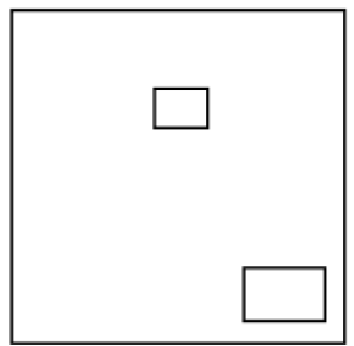
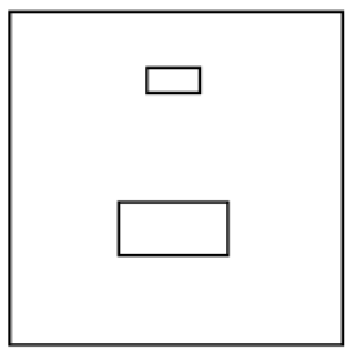
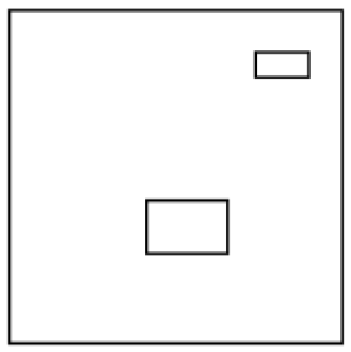
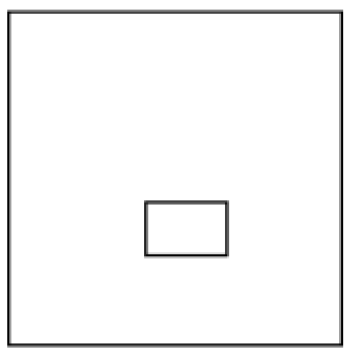
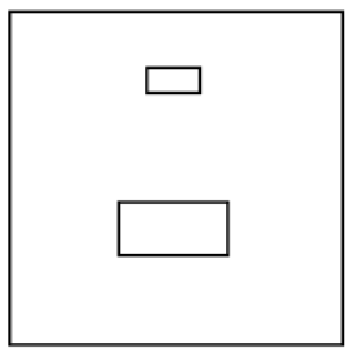
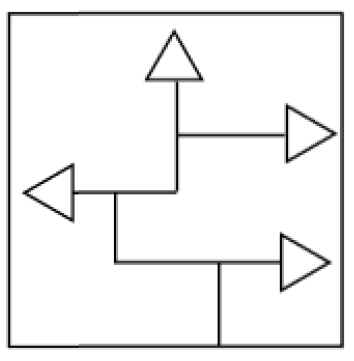
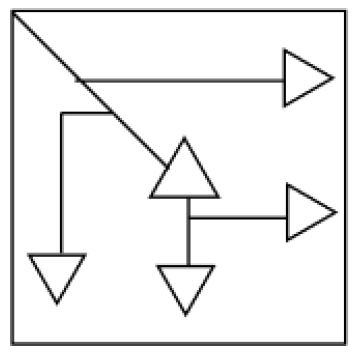
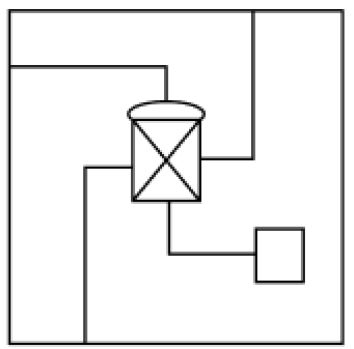
A paper is folded and cut as shown below. How will it appear when unfolded? 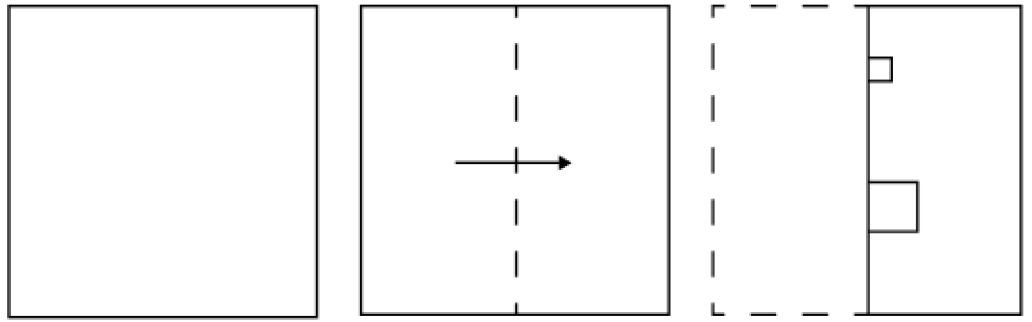
Based on the English alphabetical order, three of the following four letter-clusters are alike in a certain way and thus form a group. Which letter-cluster DOES NOT belong to that group?
(Note: The odd one out is not based on the number of consonants/vowels or their position in the letter-cluster.)
The position(s) of how many letters will remain unchanged if each of the letters in the word GRISTLE is arranged in the English alphabetical order?
If 2 is added to each odd digit and 2 is subtracted from each even digit in the number 5163748, what will be the sum of the highest and lowest digit in the new number thus formed?
Select the option in which the given figure (X) is embedded (rotation is NOT allowed). 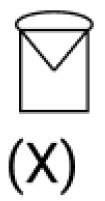
Read the given statements and conclusions carefully. Assuming that the information given in the statements is true, even if it appears to be at variance with commonly known facts, decide which of the given conclusions logically follow(s) from the statements.
Statements: All crows are rocks.
All rocks are plants.
All plants are flowers.
Conclusions:
(I) All crows are flowers.
(II) Some flowers are rocks.
Only conclusion (II) follows
Neither conclusion (I) nor (II) follows
Only conclusion (I) follows
Both conclusions (I) and (II) follow
In a certain code language,
'A + B' means 'A is the mother of B',
'A – B' means 'A is the brother of B',
'A × B' means 'A is the wife of B' and
'A ÷ B' means 'A is the father of B'.
Based on the above, how is F related to J if 'F + G × H ÷ I – J'?
E, F, G, H, K, L and N are sitting around a circular table, facing the centre (but not necessarily in the same order). G sits third to the left of K. N sits second to the left of H. Only K sits between L and N. F is not an immediate neighbour of G. How many people sit between E and N when counted from the right of E?