In a certain code language,
'A + B' means 'A is the daughter of B',
'A - B' means 'A is the brother of B',
'A x B' means 'A is the sister of B' and
'A ÷ B' means 'A is the son of B'.
How is G related to E if 'E + F x G - H ÷ I'?
Mother's sister
Sister's daughter
Brother's daughter
Mother's brother
Seven people, E, F, G, H, K, L and M are sitting in a row, facing north (but not necessarily in the same order). Only three people sit between E and L. F sits to the immediate left of L. No one sits to the right of M. Only two people sit between M and F. H sits to the immediate right of G. How many people sit between K and H?
Two different positions of the same dice are given below. Which is the number on the face opposite to the face containing 12?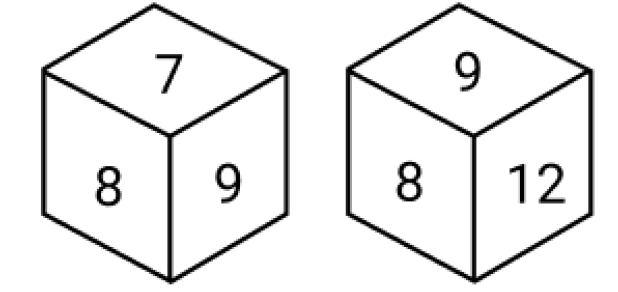
Based on the English alphabetical order, three of the following four letter-clusters are alike in a certain way and thus form a group. Which letter-cluster DOES NOT belong to that group?
(Note: The odd man out is not based on the number of consonants/vowels or their position in the letter-cluster.)
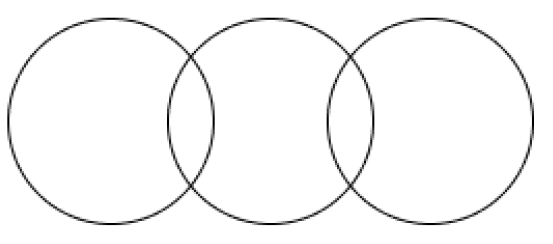
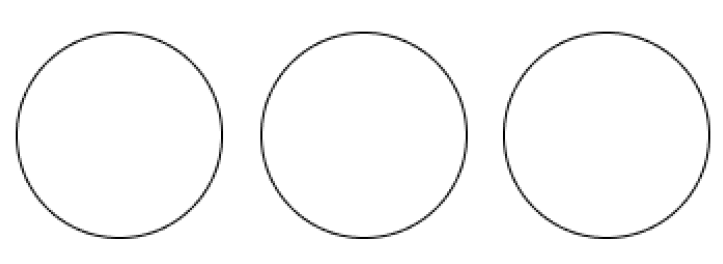
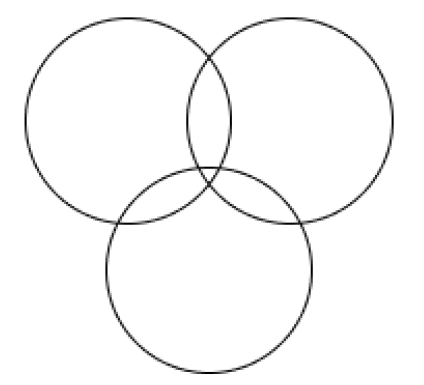
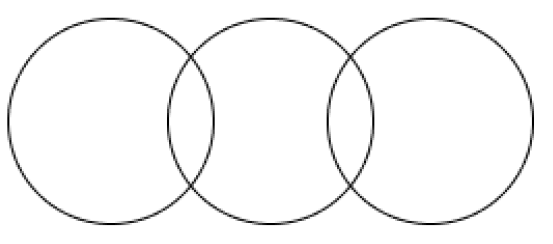
Select the Venn diagram that best illustrates the relationship between the following classes:
Petrol, Car, Electric.
Read the given statements and conclusions carefully. Assuming that the information given in the statements is true, even if it appears to be at variance with commonly known facts, decide which of the given conclusions logically follow(s) from the statements.
Statements:
Some balls are toys.
All toys are plastic.
No plastic is water.
Conclusions:
(I): Some balls are plastic.
(II): No toy is water.
Which conclusion(s) follow?
Both conclusions (I) and (II) follow
Neither conclusion (I) nor (II) follows
Only conclusion (II) follows
Only conclusion (I) follows