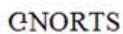
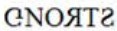
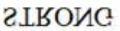
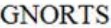
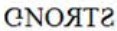
Select the option that depicts the correct mirror image for the given word.
STRONG
To find the correct mirror image of the word "STRONG," we need to reverse the order of the letters and flip them horizontally as they would appear in a mirror.
Option B correctly shows the mirror image as described above.
Correct Option: B) Option B depicts the correct mirror image of the word "STRONG."
The given graph shows the distribution of minerals in the human body.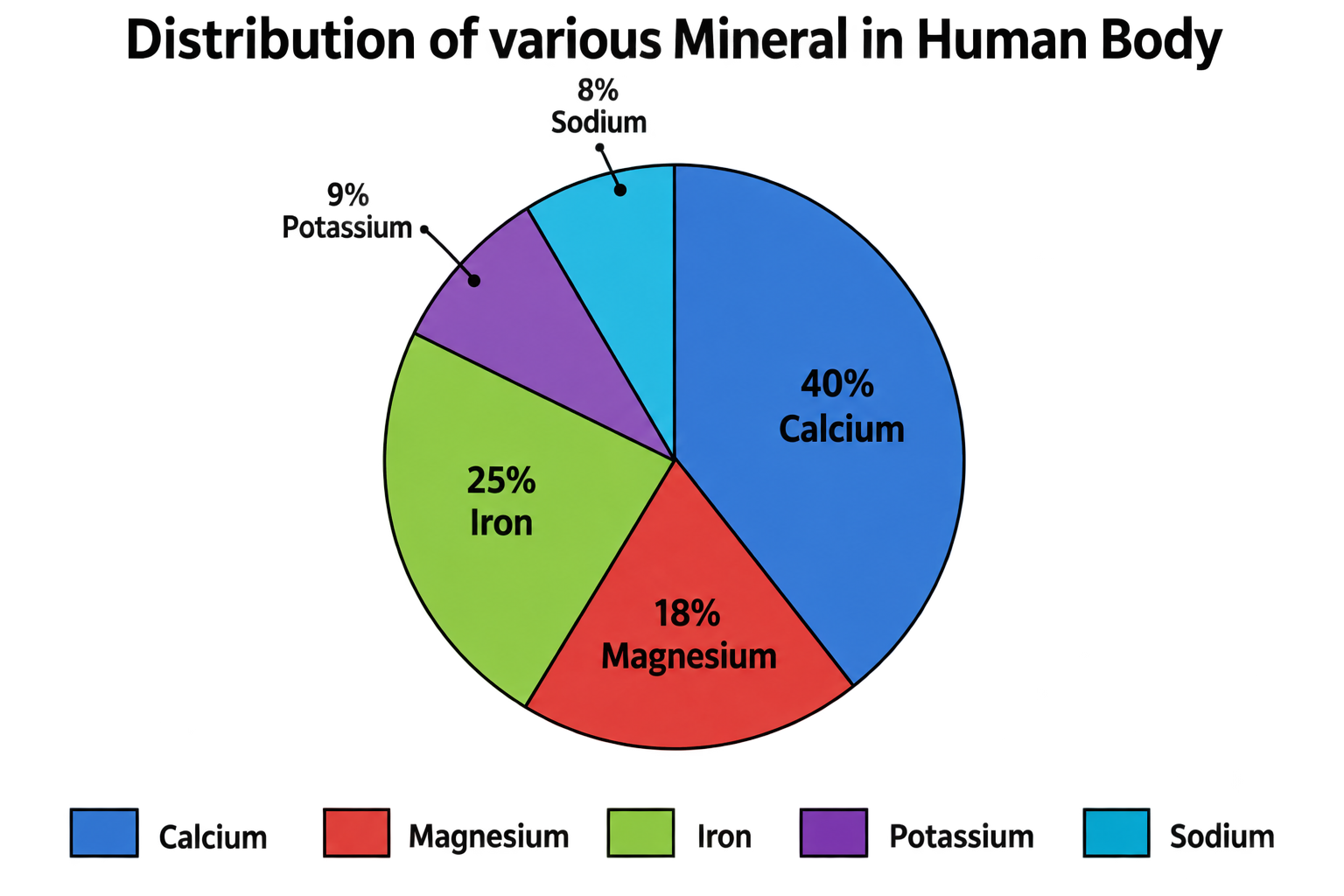
Based on the given data, if a person has a total of 1000 IU of all the mentioned minerals in his body, how many units of calcium are distributed in his body?
The problem requires calculating the amount of calcium in the body based on the given percentage distribution of minerals. The total amount of minerals is specified, and the pie chart provides the percentage of each mineral.
Amount of Calcium = Total Minerals × Percentage of Calcium
Substitute the given values:
\[ \text{Amount of Calcium} = 1000 \times \frac{40}{100} = 400 \text{ IU} \]Thus, the amount of calcium is 400 IU.
Correct Option: D) 400 IU
From the given four figures choose the correct water image of the below figure.
Problem Figure: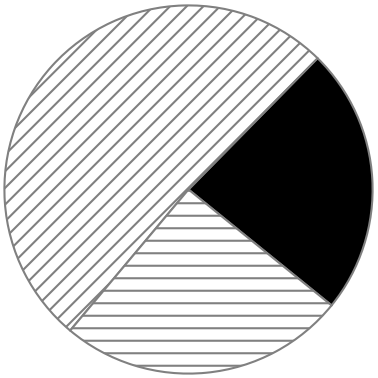
Answer Figure: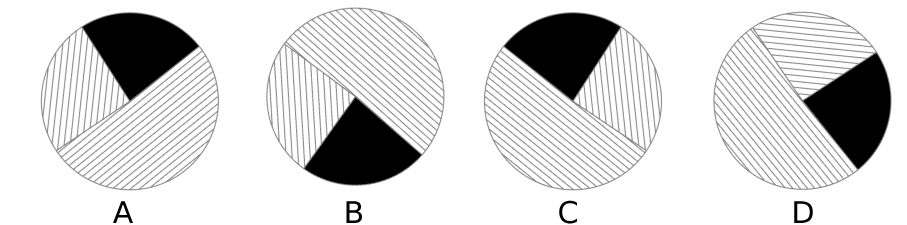
To find the correct water image of the given figure, we need to visualize how the figure would appear if it were reflected vertically (upside down). This involves flipping the image over a horizontal axis.
Correct Option: C) The black section is correctly positioned at the bottom right, and the diagonal lines are mirrored accurately.
To find the equivalent resistance of a combination of resistors, we need to apply the formulas for resistors in parallel and resistors in series. First, calculate the equivalent resistance of the two resistors connected in parallel. Then, treat this equivalent resistance as a single resistor and combine it in series with the third resistor.
The equivalent resistance of the entire combination is \(15 \, \Omega\).
Correct Option: C) 15 Ω
The question asks about the factors that increase the kinetic energy of an object. To answer this, we need to recall the formula for kinetic energy and identify the variables involved.
A) Speed — Kinetic energy is directly proportional to the square of the speed (\(v\)) of the object. Therefore, as the speed of an object increases, its kinetic energy increases significantly.
To find the length of the other diagonal of a rhombus, we can use the properties of a rhombus. A key property is that its diagonals bisect each other at right angles. This means that half of each diagonal and one side of the rhombus form a right-angled triangle. We can then apply the Pythagorean theorem.
Let the side length of the rhombus be \(s\). Given \(s = 13 \text{ cm}\).
Let the two diagonals be \(d_1\) and \(d_2\). Given one diagonal, say \(d_1 = 10 \text{ cm}\).
The diagonals of a rhombus bisect each other at right angles. This means that half of \(d_1\) and half of \(d_2\) form the legs of a right-angled triangle, with the side \(s\) of the rhombus as the hypotenuse.
Half of the given diagonal \(d_1\) is \[\frac{d_1}{2} = \frac{10}{2} = 5 \text{ cm}\].
Let half of the other diagonal \(d_2\) be \(x\). So, \(\frac{d_2}{2} = x\).
Using the Pythagorean theorem in the right-angled triangle:
\[ \left(\frac{d_1}{2}\right)^2 + \left(\frac{d_2}{2}\right)^2 = s^2 \]Substitute the known values:
\[ (5)^2 + (x)^2 = (13)^2 \]Calculate the squares:
\[ 25 + x^2 = 169 \]Solve for \(x^2\):
\[ x^2 = 169 - 25 \]\[ x^2 = 144 \]Solve for \(x\):
\[ x = \sqrt{144} \]\[ x = 12 \text{ cm} \]Since \(x\) is half the length of the other diagonal \(d_2\), the full length of the other diagonal is:
\[ d_2 = 2 \times x \]\[ d_2 = 2 \times 12 \]\[ d_2 = 24 \text{ cm} \]Correct Option: C) 24 cm
This question tests logical reasoning, specifically identifying implicit assumptions in an argument. An assumption is an unstated premise that must be true for the argument's conclusion to follow logically from its stated premises. We need to evaluate each given assumption to see if the argument "Alexander the Great was mortal" relies on it.
A) Only assumption 1 is implicit — Assumption 1 (Alexander the Great was human) is a necessary unstated premise. The concept of mortality, in this context, is directly tied to being human. If he were not human (e.g., a deity or an immortal being), the argument that he was mortal would not necessarily hold.
The question asks to identify a surface phenomenon among the given options. A surface phenomenon is a process that occurs primarily at the surface of a substance, rather than throughout its bulk.
Correct Option: C) Evaporation — Evaporation is a surface phenomenon because it occurs only at the surface of a liquid where molecules gain sufficient energy to escape into the gaseous phase. The entire bulk of the liquid does not need to reach a specific temperature for evaporation to occur.
The problem involves decoding a pattern in a given word transformation and then applying that same pattern to a new word. We need to find the positional shift for each letter in the word "GREEN" to get "ITGGP" and then apply the same shift to the letters of "PINK".
It is clear that each letter in the word "GREEN" is shifted forward by 2 positions in the English alphabet to obtain the coded word "ITGGP".
Combining the shifted letters, PINK becomes RKPM.
Correct Option: D) RKPM
The question asks to identify the author of 'Two Fates – The Story of My Divorce', a parody of Chetan Bhagat's 'Two States – The Story of My Marriage'. This requires knowledge of contemporary Indian authors and their works, specifically parodies.
C) Judy Balan is the author of 'Two Fates – The Story of My Divorce', a humorous take and parody of Chetan Bhagat's 'Two States – The Story of My Marriage'. Her work is known for its witty and satirical style.