The question asks to identify the author of the Indian historical fiction novel 'The Rise of Sivagami', published in March 2017. This requires knowledge of contemporary Indian authors and their notable works, particularly those related to historical fiction or mythology.
Correct Option: D) Anand Neelakantan wrote 'The Rise of Sivagami'. This novel is the first book in the 'Baahubali: Before the Beginning' trilogy, which explores the backstory of characters from the popular 'Baahubali' film series. It was indeed published in March 2017.
This is a logical reasoning question where we need to analyze the given statement and determine which of the provided conclusions logically follow from it. The statement is a common idiom, and we must interpret its meaning to evaluate the conclusions.
Correct Option: C) Both conclusions 1 and 2 follow.
This problem can be solved using the unitary method. First, we find the cost of one pen, or alternatively, the number of pens that can be bought for ₹1. Then, we use this information to calculate the number of pens that can be bought for the desired amount.
Understand the given information: We are given that 192 pens cost ₹10.
So, \[ \text{Cost of 192 pens} = \text{₹}10 \]
Find the number of pens per rupee: To find out how many pens can be bought for ₹1, we divide the total number of pens by the total cost.
\[ \text{Pens per rupee} = \frac{\text{Number of pens}}{\text{Total cost}} = \frac{192 \text{ pens}}{10 \text{ rupees}} \]
\[ \text{Pens per rupee} = 19.2 \text{ pens/rupee} \]
Calculate pens for ₹5: Now, we need to find out how many pens can be bought for ₹5. We multiply the number of pens per rupee by ₹5.
\[ \text{Pens for ₹}5 = \text{Pens per rupee} \times 5 \text{ rupees} \]
\[ \text{Pens for ₹}5 = 19.2 \times 5 \]
\[ \text{Pens for ₹}5 = 96 \]
Therefore, 96 pens can be bought for ₹5.
B) 96 is the correct answer. As calculated, if 192 pens cost ₹10, then for half the price (₹5), half the number of pens can be bought, which is \(192 / 2 = 96\).
The question asks to identify the country where Indian-origin Leo Varadkar served as Prime Minister. This requires knowledge of current affairs and prominent political figures of Indian origin in global politics.
Correct Option: C) Ireland
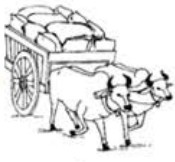
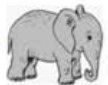
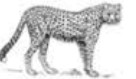
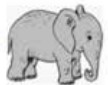
Select the missing figure based on the given related pair of figures.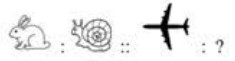
The question requires identifying a relationship between pairs of figures and selecting the figure that completes the second pair based on the given pattern.
Correct Option: A) The bullock cart represents slowness, complementing the airplane in the speed contrast analogy.
To find the combined ratio A : B : C from two given ratios A : B and B : C, we need to make the common term (B in this case) equal in both ratios. This is achieved by finding the Least Common Multiple (LCM) of the values of B in the given ratios and then scaling the ratios accordingly.
Identify the given ratios:
Find the common term and its values:
The common term is B. Its values in the given ratios are 8 and 6.
Calculate the LCM of the common term's values:
LCM of 8 and 6 is 24.
Adjust the first ratio (A : B) to make B equal to the LCM:
To make B = 24 from 8, we multiply the ratio by \(24 \div 8 = 3\).
Adjust the second ratio (B : C) to make B equal to the LCM:
To make B = 24 from 6, we multiply the ratio by \(24 \div 6 = 4\).
Combine the adjusted ratios:
Now that the value of B is the same in both adjusted ratios, we can combine them:
Correct Option: D) 9 : 24 : 52
The question asks to identify the Governor of Assam as of March 2018. This requires knowledge of political appointments and current affairs relevant to that specific period.
As of March 2018, Jagdish Mukhi was the Governor of Assam. He assumed office on September 30, 2017.
B) Jagdish Mukhi was indeed the Governor of Assam as of March 2018. He served in this capacity from September 30, 2017, until February 18, 2023.
To find the distance travelled by the train, we need to use the equations of motion for uniformly accelerated motion. First, convert all given quantities to consistent units (SI units are preferred). Then, calculate the acceleration and finally use an appropriate kinematic equation to find the distance.
Initial velocity, \(u = 0\) (since the train starts from rest).
Final velocity, \(v = 90 \text{ km/h}\). To convert this to meters per second (m/s), multiply by \(\frac{5}{18}\):
\[ v = 90 \times \frac{5}{18} \text{ m/s} = 5 \times 5 \text{ m/s} = 25 \text{ m/s} \]Time, \(t = 5 \text{ minutes}\). To convert this to seconds, multiply by 60:
\[ t = 5 \times 60 \text{ s} = 300 \text{ s} \]Using the first equation of motion:
\[ v = u + at \]\[ 25 \text{ m/s} = 0 + a \times 300 \text{ s} \]\[ a = \frac{25}{300} \text{ m/s}^2 = \frac{1}{12} \text{ m/s}^2 \]Using the second equation of motion:
\[ s = ut + \frac{1}{2}at^2 \]\[ s = (0)(300) + \frac{1}{2} \left(\frac{1}{12}\right)(300)^2 \]\[ s = 0 + \frac{1}{2} \times \frac{1}{12} \times 90000 \]\[ s = \frac{90000}{24} \]\[ s = 3750 \text{ m} \]Since \(1 \text{ km} = 1000 \text{ m}\):
\[ s = \frac{3750}{1000} \text{ km} = 3.75 \text{ km} \]C) 3.75 km is the correct distance travelled by the train.
Consider the given question and decide which of the following statements is sufficient to answer the question.
What are the values of p, q and r?
Statements:
1. p + q = 16
2. p - q = 4; r = 2p
Both 1 and 2 are sufficient to answer the question.
Only 2 is sufficient to answer the question.
Neither 1 nor 2 is sufficient to answer the question.
Only 1 is sufficient to answer the question.
The problem asks us to determine if the given statements are sufficient to find the values of p, q, and r. We need to check if combining the information from the statements allows us to uniquely solve for all three variables.
Statement 1 gives us one equation:
\[ p + q = 16 \]This equation involves two variables, p and q. We cannot find unique values for p and q from this statement alone, let alone for r. Therefore, Statement 1 alone is not sufficient.
Statement 2 gives us two equations:
\[ p - q = 4 \] \[ r = 2p \]From the first equation, \(p - q = 4\), we cannot find unique values for p and q. Since r depends on p, we also cannot find a unique value for r. Therefore, Statement 2 alone is not sufficient.
Now, let's consider both statements together. We have the following system of equations:
We can solve the first two equations for p and q. Adding equation (1) and equation (2):
\[ (p + q) + (p - q) = 16 + 4 \]\[ 2p = 20 \]\[ p = 10 \]Substitute the value of p into equation (1):
\[ 10 + q = 16 \]\[ q = 16 - 10 \]\[ q = 6 \]Now that we have the value of p, we can find r using equation (3):
\[ r = 2p \]\[ r = 2 \times 10 \]\[ r = 20 \]Since we were able to find unique values for p, q, and r (p=10, q=6, r=20) by combining both statements, both statements together are sufficient to answer the question.
A) Both 1 and 2 are sufficient to answer the question. As shown in the step-by-step analysis, combining the equations from Statement 1 and Statement 2 allows us to uniquely determine the values of p, q, and r.
The data given shows the registration of bikes and total vehicles (in thousands) for six months in 2017 in city X.
Note: In the chart, the first number represents bikes and the second number represents total vehicles. The increase in registration of bikes from May to June 2017 is: 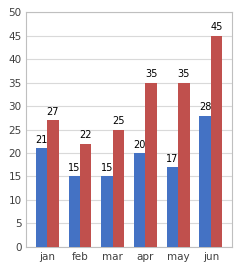
To find the percentage increase in the registration of bikes from May to June 2017, we need to calculate the difference in the number of bikes registered in these months and then express this difference as a percentage of the registrations in May.
Correct Option: B) 64.7%