
We need to find the length of one side of the square by setting up equations based on the given relationships between the cube and the square. We will use variables for the side lengths of the cube and the square, form two equations from the problem statement, and solve them simultaneously.
Define variables:
Let \(a\) be the length of one edge of the cube.
Let \(s\) be the length of one side of the square.
Formulate the first equation:
A cube has 12 edges. The sum of the lengths of the edges of a cube is \(12a\).
The perimeter of a square is \(4s\). Half the perimeter of a square is \(\frac{1}{2} \times 4s = 2s\).
According to the problem, the sum of the lengths of the edges of a cube is equal to half the perimeter of a square:
Formulate the second equation:
The volume of the cube is \(a^3\).
The area of the square is \(s^2\).
According to the problem, the numerical value of the volume of the cube is equal to the numerical value of the area of the square:
Solve the system of equations:
Substitute Equation 1 into Equation 2:
Since \(a\) represents a length, \(a \neq 0\). We can divide both sides by \(a^2\):
\[ \frac{a^3}{a^2} = \frac{36a^2}{a^2} \] \[ a = 36 \]Find the length of one side of the square:
Substitute the value of \(a\) back into Equation 1:
Correct Option: C) 216 units
The question asks for the Governor of Bihar as of March 2018. This requires knowledge of political appointments and current affairs around that specific time period.
Correct Option: A) Satya Pal Malik — Satya Pal Malik was the Governor of Bihar from September 2017 to August 2018, which includes March 2018.
The problem figure is embedded in one of the four answer figures. Which of the four figures contains the problem figure?
Problem figure: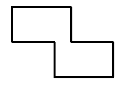
Answer Figures: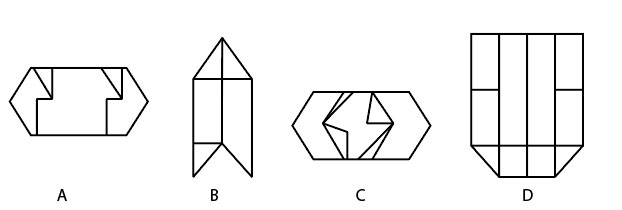
The task is to identify which of the four answer figures contains the problem figure as an embedded component. This involves visually inspecting each option to find a match with the given shape.
Correct Option: D) The problem figure is embedded within the grid structure of Option D.
The question asks to identify the element with the unique ability to form bonds with its own atoms, leading to large molecules. This property is known as catenation.
C) Carbon is unique in its ability to form strong covalent bonds with other carbon atoms, leading to the formation of very large and complex molecules. This property, called catenation, is responsible for the vast diversity of organic compounds.
The question asks to identify the type of energy a body possesses due to its position or shape. We need to recall the definitions of different forms of energy and match them with the given description.
D) potential energy. Potential energy is indeed the energy stored in an object due to its position (e.g., an object held high above the ground) or its shape (e.g., a compressed spring or a stretched rubber band). Gravitational potential energy depends on height (position), and elastic potential energy depends on deformation (shape).
The problem presents a sequence of terms, each consisting of a letter and a number. We need to identify the pattern in both the letters and the numbers separately to find the missing term.
The letters are E, H, K, N.
The pattern for the letters is that each subsequent letter is found by skipping 2 letters in the alphabetical order. Following this pattern, the next letter after N would be N (O, P) Q. So, the next letter is Q.
The numbers are 1, 2, 6, 24.
The pattern for the numbers is that each subsequent number is obtained by multiplying the previous number by an increasing integer, starting from 2. The multipliers are 2, 3, 4. Following this pattern, the next multiplier would be 5.
So, the next number is \(24 \times 5 = 120\).
The next letter is Q and the next number is 120.
Therefore, the missing term is Q120.
D) Q120 — This option correctly combines the determined letter (Q) and number (120) based on the identified patterns.
This question asks us to identify implicit assumptions in a given argument. An implicit assumption is something that must be true for the argument to hold, even if it's not explicitly stated. We need to evaluate each assumption provided and determine if the argument logically depends on it.
B) Only assumption 2 is implicit
Assumption 2 is implicit because if there were other routes, the potholes might not be the sole reason for people being unable to reach the airport on time. The argument hinges on the idea that the potholes are the primary impediment, which implies a lack of viable alternatives.
The chart represents the domestic expenditure of a family per month with total expenditure being ₹ 33,650 then the annual saving for provident fund is: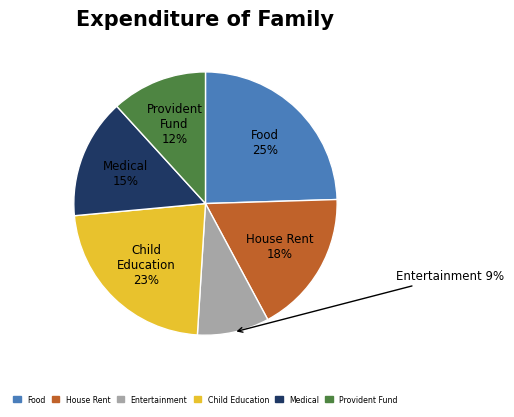
The problem involves calculating the annual savings for the provident fund based on monthly expenditure percentages shown in a pie chart.
Correct Option: D) ₹ 48,456
The problem states the ratio of boys to girls in a club. This means the total number of members must be a multiple of the sum of the ratio parts. We need to find which of the given options is a multiple of this sum.
B) \(25\) is the correct option because it is a multiple of \(5\), which is the sum of the ratio parts (\(3+2\)).
The following problem figure is embedded in one of the four answer figures. Choose the correct figure containing the problem figure.
Problem Figure:
Answer Figures: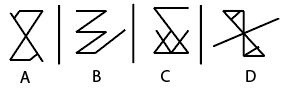
The problem requires identifying the figure among the options that contains the exact shape of the problem figure. This involves visually matching the shapes and orientations.
Correct Option: B) Option B contains the exact problem figure without any alterations.