
The question asks for the location of the Narora Atomic Power Station. This is a factual question related to major power projects in India, which is a common topic in general knowledge sections of competitive exams.
Correct Option: D) Uttar Pradesh is the correct answer. The Narora Atomic Power Station (NAPS) is situated in Narora, a town in the Bulandshahr district of Uttar Pradesh, India. It is operated by the Nuclear Power Corporation of India Limited (NPCIL).
The question asks about the maximum permissible Specific Absorption Rate (SAR) value for mobile handsets in India, as mandated by the Department of Telecommunications (DoT). This is a factual question related to telecommunication regulations and safety standards.
A) 1.6 W/kg is the correct maximum SAR value permitted by the Department of Telecommunications, Government of India, for mobile handsets.
The question asks about the institution responsible for the 'Financial Literacy Week' initiative. This requires knowledge of financial regulatory bodies and their outreach programs in India.
D) Reserve Bank of India. The Reserve Bank of India (RBI) spearheads the Financial Literacy Week (FLW) initiative. It is an annual event conducted by the RBI to disseminate financial education messages to the public on various themes through a focused campaign. This initiative aims to create awareness about financial products and services, good financial practices, and consumer protection.
This problem involves ordering the scores of four cricket players based on given comparative statements. We will use inequalities to represent the relationships between their scores and then combine these inequalities to determine the highest scorer.
Correct Option: A) Pankaj
Find the total number of straight lines in the following figure.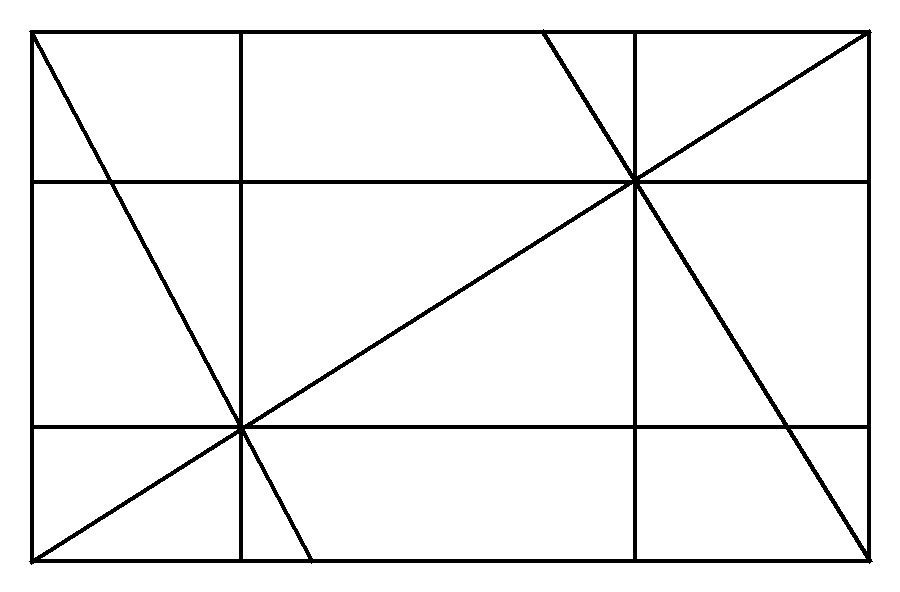
To find the total number of straight lines in the given figure, we need to count all the distinct lines formed by the intersections of the lines in the diagram.
Thus, the total number of straight lines in the figure is 11.
Correct Option: A) 11
To solve this problem, we first need to calculate the simple interest earned and the original rate of interest. Then, we will calculate the additional interest earned if the rate was 2% higher. Finally, we will find the increase in the interest amount.
Calculate the Simple Interest (SI) earned:
The principal amount (P) is ₹480.
The amount (A) after 5 years is ₹600.
Simple Interest (SI) = Amount - Principal
\[ \text{SI} = \text{A} - \text{P} = 600 - 480 = \text{₹}120 \]Calculate the original Rate of Interest (R):
We know the formula for Simple Interest:
\[ \text{SI} = \frac{\text{P} \times \text{R} \times \text{T}}{100} \]Where P = ₹480, SI = ₹120, and T = 5 years.
Rearranging the formula to find R:
\[ \text{R} = \frac{\text{SI} \times 100}{\text{P} \times \text{T}} \] \[ \text{R} = \frac{120 \times 100}{480 \times 5} = \frac{12000}{2400} = 5\% \]So, the original rate of interest is 5%.
Calculate the new Rate of Interest:
If the interest rate was 2% higher, the new rate would be:
\[ \text{New R} = 5\% + 2\% = 7\% \]Calculate the new Simple Interest amount:
Using the new rate (7%), principal (₹480), and time (5 years):
\[ \text{New SI} = \frac{\text{P} \times \text{New R} \times \text{T}}{100} \] \[ \text{New SI} = \frac{480 \times 7 \times 5}{100} = \frac{16800}{100} = \text{₹}168 \]Calculate the increase in interest amount:
Increase in interest = New SI - Original SI
\[ \text{Increase} = 168 - 120 = \text{₹}48 \]Alternatively, we can directly calculate the additional interest due to the 2% higher rate:
\[ \text{Additional SI} = \frac{\text{P} \times (\text{Increase in R}) \times \text{T}}{100} \] \[ \text{Additional SI} = \frac{480 \times 2 \times 5}{100} = \frac{4800}{100} = \text{₹}48 \]Correct Option: C) ₹48
This is a logical reasoning question where we need to determine which conclusions logically follow from a given statement, assuming the statement is true. We must not bring in outside information or common sense that might contradict the statement. The key is to stick strictly to the information provided in the statement.
Correct Option: B) Neither conclusion I nor II follows.
The question asks to identify which members of BIMSTEC (Bay of Bengal Initiative for Multi-Sectoral Technical and Economic Cooperation) are not participating in China's Belt and Road Initiative (BRI). To answer this, one needs to know the member countries of BIMSTEC and their individual stances on BRI.
A) India and Bhutan are the two BIMSTEC members that have not officially joined or endorsed China's Belt and Road Initiative. India has openly opposed it, and Bhutan has maintained a non-committal stance.
The value of {\( \frac{3}{5} \) × [3 + {3 + (11 + 5 + 6)}]} is:
12 \( \frac{6}{5} \)
16 \( \frac{4}{5} \)
11 \( \frac{4}{5} \)
10 \( \frac{2}{5} \)
To solve this problem, we need to follow the order of operations, often remembered by the acronym BODMAS/PEMDAS (Brackets/Parentheses, Orders/Exponents, Division/Multiplication, Addition/Subtraction). We will start by evaluating the innermost parentheses and work our way outwards.
B) The calculated value is \(16 \frac{4}{5}\), which matches option B.
This problem involves the concept of work and time, specifically inverse proportionality. If more men are working, less time is required to complete the same amount of work, and vice-versa. We can use the formula \(\text{M}_1 \times \text{D}_1 = \text{M}_2 \times \text{D}_2\), where \(\text{M}\) represents the number of men and \(\text{D}\) represents the number of days.
Correct Option: B) 50