The problem asks us to identify the odd one out from a given set of four words. We need to find a common characteristic among three words and then identify the word that does not share that characteristic.
Correct Option: B) Pincode — Pincode is a numerical code used for postal addressing and sorting, whereas Postcard, Parcel, and Letter are all types of physical mail items that are sent or received.
A dice is thrown twice and the sum of the appearing numbers is 10. Then the probability that the number 5 has appeared at least once is:
\( \frac{1}{4} \)
\( \frac{1}{3} \)
\( \frac{2}{3} \)
\( \frac{1}{2} \)
This problem involves conditional probability. We first identify all possible outcomes where the sum of the numbers appearing on two dice is 10. Then, from these outcomes, we count how many include the number 5 at least once. The probability is the ratio of favorable outcomes to the total possible outcomes under the given condition.
Identify the sample space for the sum being 10: When two dice are thrown, each die can show a number from 1 to 6. We need to find pairs \((d_1, d_2)\) such that \(d_1 + d_2 = 10\). The possible pairs are:
So, there are 3 possible outcomes where the sum of the appearing numbers is 10. Let's call this event A.
Identify favorable outcomes (number 5 appeared at least once): From the outcomes identified in step 1, we need to find which ones include the number 5 at least once. These are:
Let's call this event B. Only 1 outcome satisfies this condition.
Calculate the probability: The probability that the number 5 has appeared at least once, given that the sum of the appearing numbers is 10, is the ratio of the number of favorable outcomes (event B) to the total number of outcomes where the sum is 10 (event A).
\[ P(\text{5 appeared at least once} \mid \text{sum is 10}) = \frac{\text{Number of outcomes with 5 and sum 10}}{\text{Total outcomes with sum 10}} \] \[ P(\text{5 appeared at least once} \mid \text{sum is 10}) = \frac{1}{3} \]B) \( \frac{1}{3} \)
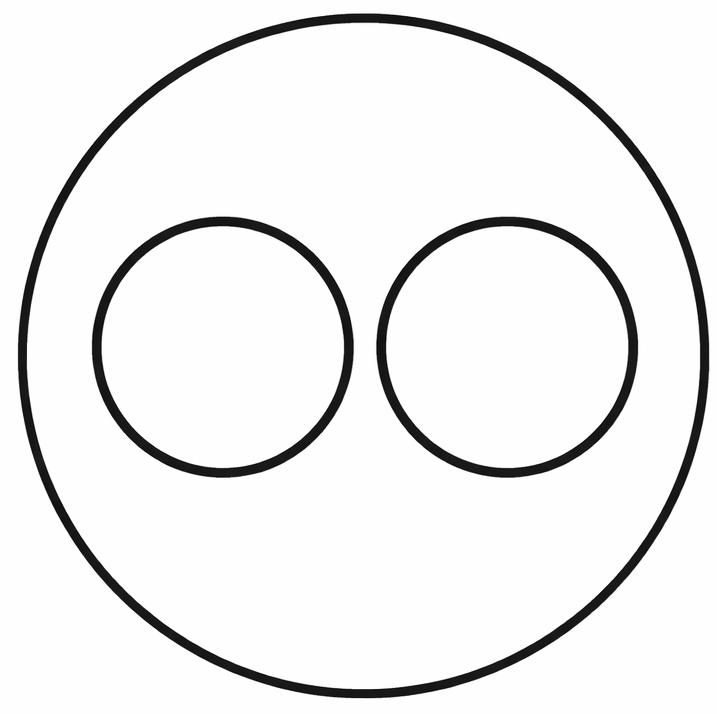
Select the Venn diagram that best represents the relationship between fruits, citrus fruits and oranges.
To determine the correct Venn diagram, we must understand the hierarchical relationship among the categories: fruits, citrus fruits, and oranges. Oranges are a subset of citrus fruits, which are themselves a subset of fruits.
Correct Option: D) The diagram shows three concentric circles, correctly representing the relationship where oranges are within citrus fruits, and citrus fruits are within fruits.
The question asks to identify which option is NOT a component of the finance budget. We need to understand the typical documents and processes involved in the annual financial statement (budget) in India.
D) Memorandum expelling grants — This term is not a recognized component or document of the finance budget in India. The budget includes 'Demands for Grants' which are proposals for expenditure, not a document to 'expel' or remove grants.
To find the value of the variable \(x\), we need to solve the given linear equation. This involves distributing terms, combining like terms, and isolating \(x\) on one side of the equation.
D) The value of \(x\) is \(0\).
The problem presents an alphanumeric series where each term consists of two letters. We need to identify the pattern in both the first and second letters of each term to find the missing term.
Let's look at the alphabetical positions:
Let's consider alternating patterns for the first letter:
Let's consider alternating patterns for the second letter:
Wait, let's re-evaluate the second letter pattern. The series is ZA, BY, XC, DW.
Let's look at the second letters in sequence: A, Y, C, W.
Let's re-examine the first letter pattern: Z, B, X, D.
The pattern for the first letter seems to be an alternating addition/subtraction of increasing even numbers: +2, -4, +6. The next operation would be -8.
So, for the first letter of the next term: D (4) - 8. \(4 - 8 = -4\). Wrapping around from A (1), Z (26), Y (25), X (24), W (23), V (22). So, D - 8 = V.
Now let's examine the second letter pattern: A, Y, C, W.
The pattern for the second letter seems to be an alternating subtraction/addition of increasing even numbers: -2, +4, -6. The next operation would be +8.
So, for the second letter of the next term: W (23) + 8. \(23 + 8 = 31\). Since there are 26 letters, \(31 - 26 = 5\). The 5th letter is E.
Therefore, the next term in the series is VE.
D) VE
To find the equation of a straight line passing through two given points, we can use the two-point form of the line equation. Alternatively, we can calculate the slope first and then use the point-slope form, or substitute the points into the general equation and solve for coefficients.
Identify the given points: Let the two points be \( (x_1, y_1) = (-2, 5) \) and \( (x_2, y_2) = (1, 3) \).
Use the two-point form of the equation of a line: The formula for the equation of a line passing through \( (x_1, y_1) \) and \( (x_2, y_2) \) is:
\[ \frac{y - y_1}{x - x_1} = \frac{y_2 - y_1}{x_2 - x_1} \]Substitute the coordinates into the formula:
\[ \frac{y - 5}{x - (-2)} = \frac{3 - 5}{1 - (-2)} \] \[ \frac{y - 5}{x + 2} = \frac{-2}{1 + 2} \] \[ \frac{y - 5}{x + 2} = \frac{-2}{3} \]Cross-multiply to simplify the equation:
\[ 3(y - 5) = -2(x + 2) \] \[ 3y - 15 = -2x - 4 \]Rearrange the equation into the standard form \(Ax + By + C = 0\):
\[ 2x + 3y - 15 + 4 = 0 \] \[ 2x + 3y - 11 = 0 \]This matches option C.
C) 2x + 3y − 11 = 0 is the correct equation of the straight line passing through the given points.
The question asks to identify the purpose of "Rail Bandhu," an initiative by Indian Railways. This requires knowledge of various passenger-centric programs launched by Indian Railways.
Rail Bandhu is indeed a rail magazine launched by Indian Railways. It is an onboard magazine distributed to passengers, providing information, entertainment, and updates related to Indian Railways and travel. It was introduced to enhance the travel experience for passengers.
The question asks to identify the article of the Indian Constitution that deals with the right to work, education, and public assistance in certain cases. This falls under the Directive Principles of State Policy (DPSP) in Part IV of the Constitution, which are guidelines for the state to establish a just society.
A) Article 41 is the correct answer. It explicitly directs the State to make effective provision for securing the right to work, to education, and to public assistance in cases of unemployment, old age, sickness, disablement, and other cases of undeserved want. This directly matches the description in the question.
This problem can be solved by using the fundamental relationship between the Least Common Multiple (LCM) and the Highest Common Factor (HCF) of two numbers. The product of two numbers is always equal to the product of their LCM and HCF.
A) 14 — As calculated, the other number is 14.