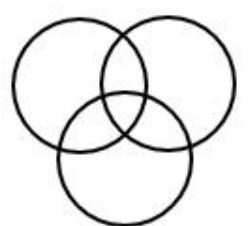
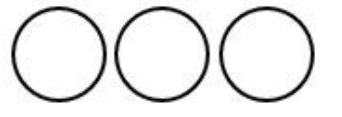
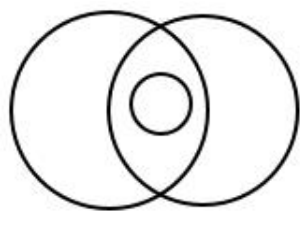
The question asks us to evaluate the strength of two arguments regarding the benefits of a boarding school system for children. A strong argument should be logically sound, factually relevant, and address a significant aspect of the question. It should not be based on a subjective or unsupported claim.
D) Only argument (ii) is strong. Argument (ii) presents a valid and significant concern regarding the emotional and psychological well-being of children in a boarding school system, which is a strong point against its universal benefit. The potential for damaged relationships, anxiety, and loneliness are recognized issues.
The question asks to identify the individual who represents the full authority of the Lok Sabha. This requires understanding the roles and responsibilities of key constitutional functionaries in the Indian parliamentary system, specifically concerning the Lower House (Lok Sabha).
C) Speaker — The Speaker is the presiding officer of the Lok Sabha and represents its full authority. They ensure the orderly conduct of business, maintain discipline, and are the final interpreter of the provisions of the Constitution within the House, as well as the Rules of Procedure and Conduct of Business of Lok Sabha. The Speaker's position is one of great authority and prestige, symbolizing the independence and dignity of the House.
The question asks to identify the author of the book 'The Indian Struggle'. This requires knowledge of prominent Indian freedom fighters and their literary works.
Correct Option: D) Subhash Chandra Bose
Study the given pattern carefully and select the number from among the given options that can replace the question mark (?).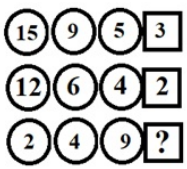
To solve the pattern, observe the relationship between the numbers in each row. Each row consists of three circles followed by a square. The number in the square is derived from the numbers in the circles.
Correct Option: D) 18
The question asks for the year in which the Sepoy Mutiny, also known as the First War of Independence, occurred. This is a direct factual question related to Indian history, specifically the period of British rule.
Correct Option: B) 1857 — The Sepoy Mutiny, also widely referred to as the First War of Independence, began in 1857. This event marked a significant uprising against the British East India Company's rule and is a crucial turning point in India's struggle for independence.
What is the remainder of function \( 4a^{3} - 12a^{2} + 14a - 3 \) when it is divided by \( (2a-1) \) ?
−\( \frac{2}{3} \)
−\( \frac{3}{2} \)
\( \frac{2}{3} \)
\( \frac{3}{2} \)
To find the remainder when a polynomial \( P(a) \) is divided by a linear factor \( (xa-y) \), we can use the Remainder Theorem. The Remainder Theorem states that if a polynomial \( P(a) \) is divided by \( (xa-y) \), the remainder is \( P\left(\frac{y}{x}\right) \).
Identify the polynomial \( P(a) \) and the divisor \( (xa-y) \).
Here, \( P(a) = 4a^{3} - 12a^{2} + 14a - 3 \).
The divisor is \( (2a-1) \).
Set the divisor equal to zero to find the value of \( a \).
\( 2a - 1 = 0 \)
\( 2a = 1 \)
\( a = \frac{1}{2} \)
Substitute this value of \( a \) into the polynomial \( P(a) \) to find the remainder.
Remainder \( = P\left(\frac{1}{2}\right) \)
\[ P\left(\frac{1}{2}\right) = 4\left(\frac{1}{2}\right)^{3} - 12\left(\frac{1}{2}\right)^{2} + 14\left(\frac{1}{2}\right) - 3 \]
\[ P\left(\frac{1}{2}\right) = 4\left(\frac{1}{8}\right) - 12\left(\frac{1}{4}\right) + 14\left(\frac{1}{2}\right) - 3 \]
\[ P\left(\frac{1}{2}\right) = \frac{4}{8} - \frac{12}{4} + \frac{14}{2} - 3 \]
\[ P\left(\frac{1}{2}\right) = \frac{1}{2} - 3 + 7 - 3 \]
\[ P\left(\frac{1}{2}\right) = \frac{1}{2} + 1 \]
\[ P\left(\frac{1}{2}\right) = \frac{1}{2} + \frac{2}{2} \]
\[ P\left(\frac{1}{2}\right) = \frac{3}{2} \]
The remainder is \( \frac{3}{2} \).
D) \( \frac{3}{2} \)
As calculated using the Remainder Theorem, the remainder is \( \frac{3}{2} \).
To find the greatest number that divides given numbers and leaves specific remainders, we first subtract the respective remainders from each number. The problem then reduces to finding the HCF (Highest Common Factor) of these new numbers. The HCF will be the greatest number that perfectly divides the modified numbers, and thus leaves the specified remainders when dividing the original numbers.
The problem states that when the greatest number divides 13, it leaves a remainder of 1. This means that \(13 - 1 = 12\) must be perfectly divisible by the number.
When the greatest number divides 26, it leaves a remainder of 2. This means that \(26 - 2 = 24\) must be perfectly divisible by the number.
When the greatest number divides 39, it leaves a remainder of 3. This means that \(39 - 3 = 36\) must be perfectly divisible by the number.
We need to find the HCF of 12, 24, and 36.
Let's find the prime factorization of each number:
To find the HCF, we take the lowest power of the common prime factors.
So, HCF \(= 2^2 \times 3^1 = 4 \times 3 = 12\).
Thus, the greatest number is 12.
Correct Option: C) 12
This problem can be solved using a fundamental algebraic identity related to the sum of cubes. The key is to recognize the condition given (sum of three numbers is zero) and apply the appropriate identity.
The general algebraic identity for the sum of cubes of three numbers \(a\), \(b\), and \(c\) is:
\[ a^3 + b^3 + c^3 - 3abc = (a+b+c)(a^2 + b^2 + c^2 - ab - bc - ca) \]The problem states that the sum of the three numbers is zero. Let the three numbers be \(a\), \(b\), and \(c\). So, we are given:
\[ a + b + c = 0 \]Substitute \(a+b+c = 0\) into the identity from Step 1:
\[ a^3 + b^3 + c^3 - 3abc = (0)(a^2 + b^2 + c^2 - ab - bc - ca) \]Since anything multiplied by zero is zero, the right-hand side of the equation becomes zero:
\[ a^3 + b^3 + c^3 - 3abc = 0 \]Move the term \(-3abc\) to the right-hand side of the equation:
\[ a^3 + b^3 + c^3 = 3abc \]Thus, if the sum of three numbers is zero, the sum of their cubes is equal to three times the product of the three numbers.
Correct Option: B) three times the product of the three numbers
Select the Venn diagram that best represents the relationship between the following classes.
Rivers, Ganga, Water bodies
To solve this question, we need to understand the hierarchical relationship between the classes: Rivers, Ganga, and Water bodies. A Venn diagram can visually represent these relationships by showing how these sets overlap or nest within each other.
Correct Option: B) Option B correctly represents the relationship with concentric circles, showing Ganga within Rivers, and Rivers within Water bodies.
The question asks for the headquarters of the OECD (Organisation for Economic Co-operation and Development). This is a factual question requiring knowledge of international organizations and their locations.
Correct Option: A) Paris