
Select the option that would come next in the given series.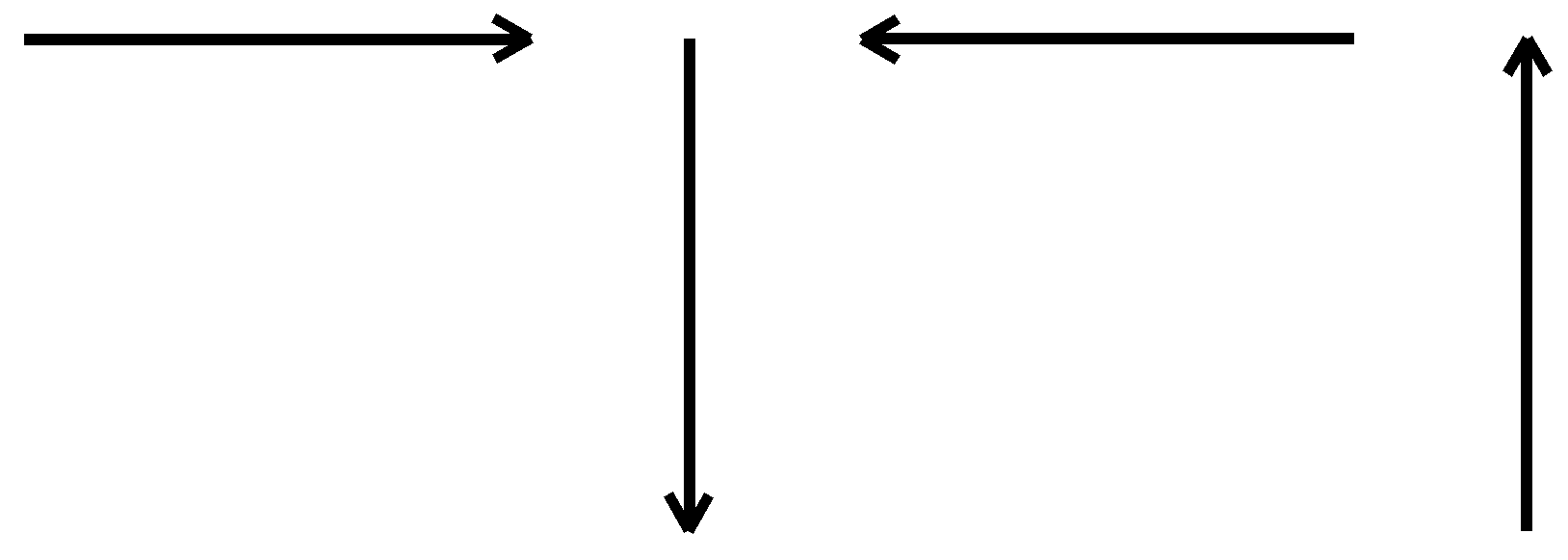
The question involves identifying the next element in a series of arrows. Observing the pattern of the arrows' directions will help determine the correct option.
Correct Option: D) The arrow pointing up matches the expected direction in the sequence.
The question asks for the location of India's first experimental satellite telecommunication earth station, established in 1967. This is a factual question related to the history of India's space and telecommunication infrastructure.
Correct Option: D) Ahmedabad was the location where India's first experimental satellite telecommunication earth station was set up in 1967. This station was known as the Experimental Satellite Communication Earth Station (ESCES).
The question asks to identify which option is NOT a characteristic of a computer. We need to evaluate each option based on the fundamental properties and limitations of computers.
Correct Option: A) Intelligence quotient. Computers do not possess an intelligence quotient (IQ) or genuine intelligence. They operate based on programmed instructions and logical operations, lacking human-like understanding, intuition, or common sense.
To evaluate the given algebraic expression, we need to substitute the provided values of \(x\) and \(y\) into the expression and then perform the arithmetic operations according to the order of operations (PEMDAS/BODMAS).
Thus, the value of the expression \( 5xy - y^{2} \) is 25.
B) 25 is the correct answer, as derived from the step-by-step evaluation.
This problem involves relative speed. When a bus passes a person moving in the same direction, the relative speed is the difference between the bus's speed and the person's speed. The distance covered by the bus relative to the person during the passing time is equal to the length of the bus. Since the bus passes two different persons in different times, we can set up two equations based on relative speed and time, and then solve for the unknown speed of the bus and its length.
Let the speed of the bus be \(V_B\) km/h and its length be \(L\) meters.
The speed of the first person is \(V_{P1} = 3\) km/h. The time taken to pass the first person is \(T_1 = 10\) s.
The speed of the second person is \(V_{P2} = 5\) km/h. The time taken to pass the second person is \(T_2 = 11\) s.
First, convert the speeds from km/h to m/s for consistency with time in seconds. To convert km/h to m/s, multiply by \(\frac{5}{18}\).
Relative speed of bus with respect to the first person: \((V_B - V_{P1})\) km/h.
In m/s: \((V_B - 3) \times \frac{5}{18}\) m/s.
Relative speed of bus with respect to the second person: \((V_B - V_{P2})\) km/h.
In m/s: \((V_B - 5) \times \frac{5}{18}\) m/s.
The distance covered by the bus relative to the person (which is the length of the bus, \(L\)) is given by the relative speed multiplied by the time.
For the first person:
\[ L = (V_B - 3) \times \frac{5}{18} \times 10 \quad \text{(Equation 1)} \]For the second person:
\[ L = (V_B - 5) \times \frac{5}{18} \times 11 \quad \text{(Equation 2)} \]Equate Equation 1 and Equation 2 since the length of the bus \(L\) is the same:
\[ (V_B - 3) \times \frac{5}{18} \times 10 = (V_B - 5) \times \frac{5}{18} \times 11 \]Cancel out the common term \(\frac{5}{18}\) from both sides:
\[ (V_B - 3) \times 10 = (V_B - 5) \times 11 \]Expand and solve for \(V_B\):
\[ 10V_B - 30 = 11V_B - 55 \]\[ 11V_B - 10V_B = 55 - 30 \]\[ V_B = 25 \]The speed of the bus is 25 km/h.
B) 25 km/h is the correct speed of the bus, as calculated by equating the expressions for the length of the bus based on the two scenarios.
A) 27 km/h — This would be incorrect because it does not satisfy the conditions given in the problem. If the speed were 27 km/h, the relative speeds and passing times would not be consistent.
C) 24 km/h — This value is incorrect. Substituting 24 km/h into the equations would lead to different lengths for the bus in the two scenarios, which is not possible.
D) 28 km/h — This value is incorrect. Similar to the other incorrect options, 28 km/h would not yield a consistent length for the bus when calculated using the given passing times and person speeds.
The question asks for the specific term that refers to the balance between a country's exports and imports of goods. This is a fundamental concept in international trade and macroeconomics.
B) trade balance. The trade balance (or balance of trade) specifically measures the difference between a country's exports and imports of visible goods (merchandise). If exports exceed imports, it's a trade surplus; if imports exceed exports, it's a trade deficit.
The question asks us to identify the relationship between the first pair of words (Shirt : Apparel) and then apply the same relationship to the third word (Necklace) to find the missing fourth word. This is a common type of analogy question.
Correct Option: D) Jewellery
A shirt is a type of apparel. Similarly, a necklace is a type of jewellery.
To determine the sum of deviations about the mean, we need to understand the definition of the mean and how deviations are calculated. The mean is a measure of central tendency, and deviations are the differences between each data point and the mean. We will use the formula for the mean and the sum of deviations to prove the result.
Define the Mean: Let's consider a set of \(n\) observations: \(x_1, x_2, \ldots, x_n\). The arithmetic mean, denoted by \(\bar{x}\), is calculated as the sum of all observations divided by the number of observations:
\[ \bar{x} = \frac{\sum_{i=1}^{n} x_i}{n} \]From this definition, we can also write the sum of observations as:
\[ \sum_{i=1}^{n} x_i = n\bar{x} \quad \text{(Equation 1)} \]Define Deviation: The deviation of an individual observation \(x_i\) from the mean \(\bar{x}\) is given by \((x_i - \bar{x})\).
Calculate the Sum of Deviations: We need to find the sum of these deviations for all observations:
\[ \sum_{i=1}^{n} (x_i - \bar{x}) \]Expand the Summation: We can distribute the summation operator:
\[ \sum_{i=1}^{n} (x_i - \bar{x}) = \sum_{i=1}^{n} x_i - \sum_{i=1}^{n} \bar{x} \]Evaluate Each Term:
Substitute and Simplify: Now substitute these back into the expression for the sum of deviations:
\[ \sum_{i=1}^{n} (x_i - \bar{x}) = n\bar{x} - n\bar{x} = 0 \]Thus, the sum of the deviations about the mean is always zero.
Correct Option: B) zero
The question asks about the first region in India where colonial rule was firmly established. This requires knowledge of the early phases of British expansion and consolidation of power in India.
Correct Option: B) Bengal
To find the least number that leaves the same remainder when divided by several numbers, we first need to find the Least Common Multiple (LCM) of those numbers. The required number will be the LCM plus the common remainder.
Find the LCM of 12, 21, and 35:
First, find the prime factorization of each number:
To find the LCM, take the highest power of all prime factors present:
\[\text{LCM}(12, 21, 35) = 2^2 \times 3 \times 5 \times 7\] \[\text{LCM}(12, 21, 35) = 4 \times 3 \times 5 \times 7\] \[\text{LCM}(12, 21, 35) = 12 \times 35\] \[\text{LCM}(12, 21, 35) = 420\]Add the remainder:
The problem states that the number leaves a remainder of 6 when divided by 12, 21, and 35. Therefore, the least such number will be the LCM plus the remainder.
\[\text{Required Number} = \text{LCM} + \text{Remainder}\] \[\text{Required Number} = 420 + 6\] \[\text{Required Number} = 426\]Correct Option: D) 426
When 426 is divided by 12, \(426 = 12 \times 35 + 6\). Remainder is 6. When 426 is divided by 21, \(426 = 21 \times 20 + 6\). Remainder is 6. When 426 is divided by 35, \(426 = 35 \times 12 + 6\). Remainder is 6.




