The problem presents a coding-decoding scenario where a word is transformed into a coded form. We need to identify the pattern or rule applied to each letter of the original word to get its coded equivalent. Once the rule is established, we will apply it to the new word 'LOGAN' to find its coded form.
Original word: WOLVERINE
Coded word: ZIOPHLLHH
The pattern observed is a repeating sequence of operations: +3, -6, +3, -6, ...
Therefore, 'LOGAN' is coded as 'OIJUQ'.
A) OIJUQ — This matches our derived coded word based on the +3, -6 pattern.
The question asks to identify the Indian dynasty known for developing shipping ventures in Southeast Asia. This requires knowledge of the maritime history of various ancient and medieval Indian dynasties.
Correct Option: C) The Chola Dynasty was famous for its strong navy and extensive maritime activities, including trade and military expeditions to Southeast Asian countries like Sri Lanka, the Maldives, and the Srivijaya kingdom. They played a significant role in developing shipping ventures and establishing cultural and commercial ties with the region.
The question asks about the location where the Red Panda Winter Carnival is celebrated. This is a general knowledge question related to festivals and cultural events in India, often associated with specific states or regions.
D) Sikkim — The Red Panda Winter Carnival is an annual event celebrated in Sikkim. It aims to boost tourism and highlight the conservation efforts for the Red Panda, which is the state animal of Sikkim.
To find out how many more pages Maddy needs to read, we first need to calculate how many pages he has already read. Then, we subtract the pages read from the total number of pages in the chapter.
Identify the total number of pages:
The chapter consists of 75 pages.
\[ \text{Total pages} = 75 \]Calculate the number of pages Maddy has read:
Maddy has read three-fifth (\(3/5\)) of the chapter.
\[ \text{Pages read} = \frac{3}{5} \times \text{Total pages} \]\[ \text{Pages read} = \frac{3}{5} \times 75 \]\[ \text{Pages read} = 3 \times \frac{75}{5} \]\[ \text{Pages read} = 3 \times 15 \]\[ \text{Pages read} = 45 \]Calculate the number of pages Maddy still needs to read:
This is the difference between the total pages and the pages he has already read.
\[ \text{Pages remaining} = \text{Total pages} - \text{Pages read} \]\[ \text{Pages remaining} = 75 - 45 \]\[ \text{Pages remaining} = 30 \]Therefore, Maddy needs to read 30 more pages to complete the chapter.
Correct Option: D) 30
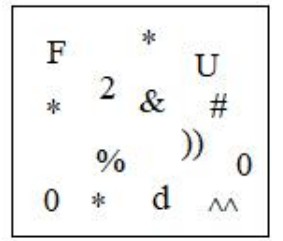
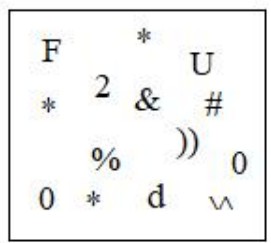
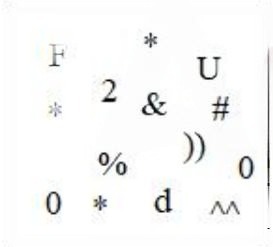
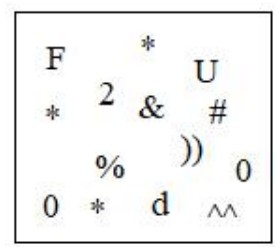
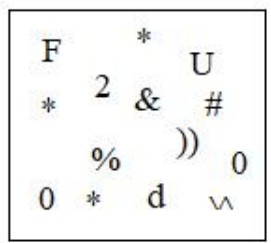
Four figures have been given, out of which three are alike in some manner and one is different. Select the odd one.
To identify the odd one out among the given figures, we need to analyze the arrangement and orientation of symbols within each diagram.
Correct Option: B) The arrangement of symbols in Option B is different due to the missing ^ symbol at the bottom right corner.
The question asks to identify which of the given states is NOT part of the "Seven Sisters of India". This requires knowledge of the states that constitute this group in Northeast India.
Correct Option: D) Sikkim is not included in the 'Seven Sisters of India'.
The question asks for the full form of the acronym SMPS. This is a common term in electronics and computer hardware. Recalling the full form of this acronym is key to answering the question correctly.
Correct Option: A) Switched-Mode Power Supply
If x × y = x + y + \(\sqrt{xy}\), then the value of 6 × 24 will be:
The problem defines a new binary operation denoted by '×'. We are given the rule for this operation: \(x \times y = x + y + \sqrt{xy}\). To find the value of \(6 \times 24\), we need to substitute \(x=6\) and \(y=24\) into the given formula and perform the arithmetic operations.
Thus, the value of \(6 \times 24\) is 42.
Correct Option: C) 42
The problem is a coding-decoding question. We need to identify the pattern or rule used to transform 'FEATURE' into 'HICXWVG' and then apply the same rule to 'ALMOST' to find its coded form.
The pattern observed is an alternating addition of +2 and +4 to the alphabetical position of each letter.
Correct Option: C) CPOSUX is the correct coded word based on the identified alternating +2, +4 pattern.
Simplify the following.
\(\sqrt{2+\sqrt{2+2\cos4\theta}}\)
The problem requires simplifying a trigonometric expression involving square roots. We will use the double-angle identity for cosine, specifically \(\cos 2A = 2\cos^2 A - 1\), which can be rearranged to \((1 + \cos 2A) = 2\cos^2 A\). This identity helps in simplifying terms like \((1 + \cos x)\) under a square root.
Start with the innermost part of the expression: \(\sqrt{2+\sqrt{2+2\cos4\theta}}\).
Factor out 2 from the innermost term under the square root: \(\sqrt{2+\sqrt{2(1+\cos4\theta)}}\).
Apply the identity \((1+\cos 2A) = 2\cos^2 A\). Here, \(2A = 4\theta\), so \(A = 2\theta\).
Thus, \((1+\cos4\theta) = 2\cos^2 2\theta\).
Substitute this back into the expression:
\[ \sqrt{2+\sqrt{2(2\cos^2 2\theta)}} \]Simplify the term inside the inner square root:
\[ \sqrt{2+\sqrt{4\cos^2 2\theta}} \]Take the square root of \(4\cos^2 2\theta\):
\[ \sqrt{2+2\cos 2\theta} \]Factor out 2 again from the terms under the remaining square root:
\[ \sqrt{2(1+\cos 2\theta)} \]Apply the identity \((1+\cos 2A) = 2\cos^2 A\) again. Here, \(2A = 2\theta\), so \(A = \theta\).
Thus, \((1+\cos 2\theta) = 2\cos^2 \theta\).
Substitute this back into the expression:
\[ \sqrt{2(2\cos^2 \theta)} \]Simplify the term inside the square root:
\[ \sqrt{4\cos^2 \theta} \]Take the final square root:
\[ 2\cos \theta \]C) The simplified expression is \(2\cos \theta\).