The question asks to identify a biological catalyst from the given options. A biological catalyst is a substance that speeds up biochemical reactions in living organisms without being consumed in the process. We need to evaluate each option based on this definition.
Based on the definitions, enzymes fit the description of a biological catalyst perfectly.
C) Enzymes are biological catalysts. They are proteins that speed up the rate of specific biochemical reactions in living organisms by lowering the activation energy without being consumed in the process.
The area of a triangle is given by the formula \( \frac{1}{2} \times \text{base} \times \text{height} \). We are given the ratio of the bases and the ratio of the areas of two triangles. We need to find the ratio of their corresponding altitudes (heights) using this formula.
Let the two triangles be Triangle 1 and Triangle 2.
Let the base of Triangle 1 be \(b_1\) and its altitude be \(h_1\).
Let the base of Triangle 2 be \(b_2\) and its altitude be \(h_2\).
The area of Triangle 1, \(A_1\), is given by:
\[ A_1 = \frac{1}{2} \times b_1 \times h_1 \]The area of Triangle 2, \(A_2\), is given by:
\[ A_2 = \frac{1}{2} \times b_2 \times h_2 \]We are given the ratio of their bases:
\[ \frac{b_1}{b_2} = \frac{4}{5} \]We are given the ratio of their areas:
\[ \frac{A_1}{A_2} = \frac{8}{15} \]Now, let's find the ratio of their areas using the area formula:
\[ \frac{A_1}{A_2} = \frac{\frac{1}{2} \times b_1 \times h_1}{\frac{1}{2} \times b_2 \times h_2} \]The \( \frac{1}{2} \) terms cancel out:
\[ \frac{A_1}{A_2} = \frac{b_1 \times h_1}{b_2 \times h_2} \]This can be rewritten as:
\[ \frac{A_1}{A_2} = \left(\frac{b_1}{b_2}\right) \times \left(\frac{h_1}{h_2}\right) \]Substitute the given ratios into this equation:
\[ \frac{8}{15} = \left(\frac{4}{5}\right) \times \left(\frac{h_1}{h_2}\right) \]Now, solve for the ratio of the altitudes, \( \frac{h_1}{h_2} \):
\[ \frac{h_1}{h_2} = \frac{8}{15} \div \frac{4}{5} \]\[ \frac{h_1}{h_2} = \frac{8}{15} \times \frac{5}{4} \]Perform the multiplication and simplification:
\[ \frac{h_1}{h_2} = \frac{8 \times 5}{15 \times 4} \]\[ \frac{h_1}{h_2} = \frac{40}{60} \]\[ \frac{h_1}{h_2} = \frac{2}{3} \]So, the ratio of their corresponding altitudes is 2 : 3.
B) 2 : 3
This problem involves relative speed. When a train overtakes a person walking in the same direction, the relative speed is the difference between the train's speed and the person's speed. The distance covered by the train to completely pass the person is equal to the length of the train. We will set up equations for the two scenarios given and solve for the train's speed and length.
The question asks for the overall length of the Golden Quadrilateral in India. This is a factual question related to Indian infrastructure and geography. To answer this, one needs to recall the established length of this highway network.
Correct Option: A) 5846 km
The Golden Quadrilateral project, connecting Delhi, Kolkata, Mumbai, and Chennai, has an official and widely cited total length of 5,846 km.
To find the number of diagonals of a regular polygon, we first need to determine the number of sides (n) of the polygon. We can do this using the given interior angle. Once the number of sides is known, we can apply the formula for the number of diagonals in an n-sided polygon.
A) 9 is the correct answer. A regular polygon with an interior angle of 120° is a hexagon, and a hexagon has 9 diagonals.
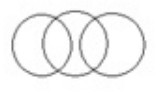
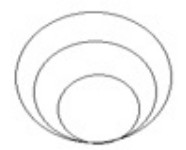
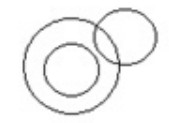
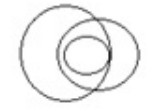
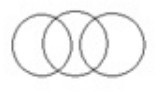
Select the Venn diagram that best represents the relationship between Females, Toddlers and Teachers.
To determine the correct Venn diagram representing the relationship among Females, Toddlers, and Teachers, consider the possible overlaps and distinctions between these categories.
Correct Option: A) The diagram shows three intersecting circles, indicating that some Females can be Toddlers, some can be Teachers, and some can be neither.
The question asks to identify the Chairman of the Department of Atomic Energy (DAE) in India as of October 2020. This requires knowledge of key appointments in Indian government organizations.
As of October 2020, Dr. K.N. Vyas was the Secretary to the Government of India, Department of Atomic Energy, and also the Chairman of the Atomic Energy Commission. He served in this role from September 2018 to May 2023.
Correct Option: D) Sh. K.N. Vyas
The question asks about the origin of the 'Rule of Law' concept in the Indian Constitution. This requires knowledge of the sources and influences on the Indian Constitution, specifically which foreign constitution inspired this particular principle.
D) UK — The concept of 'Rule of Law' was primarily borrowed from the British Constitution. It is a cornerstone of the British legal system and was adopted by India to ensure equality before the law and prevent arbitrary governance.
To find the selling price of the machine, we first need to calculate the amount of loss incurred. The loss is given as a percentage of the cost price. Once the loss amount is determined, we subtract it from the cost price to get the selling price.
The cost price of the machine is given as ₹2,400.
\[ \text{CP} = \text{₹}2,400 \]The machine is sold at a loss of 10%.
\[ \text{Loss Percentage} = 10\% \]The loss amount is 10% of the cost price.
\[ \text{Loss Amount} = \frac{\text{Loss Percentage}}{100} \times \text{CP} \]\[ \text{Loss Amount} = \frac{10}{100} \times 2400 \]\[ \text{Loss Amount} = 0.10 \times 2400 \]\[ \text{Loss Amount} = \text{₹}240 \]The selling price is obtained by subtracting the loss amount from the cost price.
\[ \text{SP} = \text{CP} - \text{Loss Amount} \]\[ \text{SP} = 2400 - 240 \]\[ \text{SP} = \text{₹}2160 \]Alternatively, we can directly calculate the selling price using the formula:
\[ \text{SP} = \text{CP} \times \left(1 - \frac{\text{Loss Percentage}}{100}\right) \]\[ \text{SP} = 2400 \times \left(1 - \frac{10}{100}\right) \]\[ \text{SP} = 2400 \times \left(1 - 0.10\right) \]\[ \text{SP} = 2400 \times 0.90 \]\[ \text{SP} = \text{₹}2160 \]B) ₹2,160 is the correct selling price of the machine after a 10% loss.
The question asks to identify the Oxford Hindi Word of the Year for 2019. This is a general knowledge question related to current affairs and linguistic awards.
Correct Option: B) Samvidhaan — The word "Samvidhaan" (Constitution) was chosen as the Oxford Hindi Word of the Year 2019. This selection was made because the word gained prominence following the abrogation of Article 370 and the Ayodhya verdict, leading to widespread discussions about constitutional values and justice in India.