The question asks to identify the "father of taxonomy." This requires knowledge of key historical figures in the field of biological classification.
D) Carl Linnaeus — Carl Linnaeus (1707–1778) was a Swedish botanist, zoologist, and physician who formalized binomial nomenclature, the modern system of naming organisms. He is known as the "father of modern taxonomy" because his system for classifying and naming organisms is still largely in use today.
The question asks to identify a famous Santoor instrumentalist from the given options. This requires knowledge of prominent Indian classical musicians and the instruments they play.
Correct Option: A) Shiv Kumar Sharma is a globally acclaimed Santoor maestro who significantly contributed to bringing the instrument into the mainstream of Indian classical music.
ABC is an equilateral triangle. P, Q and R are the midpoints of sides AB, BC and AC respectively. The length of the side of the triangle is 4 cm. The area of triangle PQR is:
\(\frac{\sqrt{3}}{9}\) cm²
\(\frac{\sqrt{3}}{2}\) cm²
\(\sqrt{3}\) cm²
\(\frac{1}{4}\sqrt{3}\) cm²
The problem involves finding the area of a triangle formed by joining the midpoints of the sides of an equilateral triangle. We can use the Midpoint Theorem and properties of equilateral triangles to solve this. The key idea is that the triangle formed by joining the midpoints will be similar to the original triangle and its area will be a fraction of the original triangle's area.
Understand the given information: ABC is an equilateral triangle with side length \(a = 4\) cm. P, Q, R are the midpoints of sides AB, BC, and AC respectively.
Apply the Midpoint Theorem: According to the Midpoint Theorem, the line segment connecting the midpoints of two sides of a triangle is parallel to the third side and is half the length of the third side.
Determine the side length of triangle PQR: Given that ABC is an equilateral triangle, \(AB = BC = AC = 4\) cm. Therefore, the sides of triangle PQR are: \[PQ = \frac{1}{2} AC = \frac{1}{2} (4) = 2\] cm \[QR = \frac{1}{2} AB = \frac{1}{2} (4) = 2\] cm \[RP = \frac{1}{2} BC = \frac{1}{2} (4) = 2\] cm This shows that triangle PQR is also an equilateral triangle with side length \(s = 2\) cm.
Calculate the area of an equilateral triangle: The formula for the area of an equilateral triangle with side length \(s\) is given by: \[ \text{Area} = \frac{\sqrt{3}}{4} s^2 \] For triangle PQR, \(s = 2\) cm. \[ \text{Area of PQR} = \frac{\sqrt{3}}{4} (2)^2 \] \[ \text{Area of PQR} = \frac{\sqrt{3}}{4} (4) \] \[ \text{Area of PQR} = \sqrt{3} \text{ cm}^2 \]
Alternative Method (Ratio of Areas): When the midpoints of the sides of a triangle are joined, they form four smaller congruent triangles, each similar to the original triangle. The central triangle (PQR) is one of these four triangles. Therefore, the area of triangle PQR is \(\frac{1}{4}\) of the area of triangle ABC.
First, calculate the area of triangle ABC: \[ \text{Area of ABC} = \frac{\sqrt{3}}{4} (\text{side of ABC})^2 \] \[ \text{Area of ABC} = \frac{\sqrt{3}}{4} (4)^2 \] \[ \text{Area of ABC} = \frac{\sqrt{3}}{4} (16) \] \[ \text{Area of ABC} = 4\sqrt{3} \text{ cm}^2 \] Now, find the area of triangle PQR: \[ \text{Area of PQR} = \frac{1}{4} \times \text{Area of ABC} \] \[ \text{Area of PQR} = \frac{1}{4} \times 4\sqrt{3} \] \[ \text{Area of PQR} = \sqrt{3} \text{ cm}^2 \]
Correct Option: C) \(\sqrt{3}\) cm²
The question asks to identify the state that currently has a Legislative Council. This requires knowledge of the Indian states that have a bicameral legislature, specifically those with an upper house (Legislative Council or Vidhan Parishad).
Correct Option: C) Andhra Pradesh
Andhra Pradesh is one of the six states in India that currently has a Legislative Council (Vidhan Parishad).
This is a seating arrangement puzzle. We need to deduce the positions of the six friends around a round table based on the given clues and then identify who is sitting opposite Rohan.
  1 (Mohan)  2
6            3
  5 (Rohit)  4
1 (Mohan) 2 (Shyam) 6 3 (Ram) 5 (Mohit) 4 (Rohit)Now, we have Mohan (1), Shyam (2), Ram (3), Rohit (4), Mohit (5). The only person left is Rohan, and the only position left is 6. So, Rohan is at position 6.
A) Ram is sitting opposite Rohan.
If P = 0.3 × 0.3 + 0.03 × 0.03 - 0.6 × 0.03 and Q = 0.54, then\( \frac{p}{q} \) is equal to:
The problem requires us to calculate the value of P first, then divide P by Q to find the final answer. The expression for P resembles the algebraic identity \((a-b)^2 = a^2 - 2ab + b^2\).
Calculate P: Given \(P = 0.3 \times 0.3 + 0.03 \times 0.03 - 0.6 \times 0.03\).
We can rewrite the terms:
So, the expression for P becomes:
\[ P = (0.3)^2 + (0.03)^2 - 2 \times 0.3 \times 0.03 \]This matches the algebraic identity \((a-b)^2 = a^2 - 2ab + b^2\), where \(a = 0.3\) and \(b = 0.03\).
Therefore,
\[ P = (0.3 - 0.03)^2 \] \[ P = (0.27)^2 \]Now, calculate \((0.27)^2\):
\[ 0.27 \times 0.27 = 0.0729 \]So, \(P = 0.0729\).
Calculate \( \frac{P}{Q} \): Given \(Q = 0.54\).
We need to find \( \frac{P}{Q} \):
\[ \frac{P}{Q} = \frac{0.0729}{0.54} \]To simplify the division, we can multiply the numerator and denominator by 10000 to remove decimals:
\[ \frac{0.0729 \times 10000}{0.54 \times 10000} = \frac{729}{5400} \]Now, we can simplify the fraction. Both 729 and 5400 are divisible by 9 (sum of digits of 729 is 18, sum of digits of 5400 is 9).
\[ \frac{729 \div 9}{5400 \div 9} = \frac{81}{600} \]Both 81 and 600 are divisible by 3.
\[ \frac{81 \div 3}{600 \div 3} = \frac{27}{200} \]To convert this fraction to a decimal, divide 27 by 200:
\[ \frac{27}{200} = 0.135 \]Correct Option: D) 0.135
A sum of money of ₹2600.00 was lent out in two parts in such a way that the simple interest on the first part at 10% per annum for 5 years is the same as the interest of the second part at 9% per annum for 6 years. The part lent out at 10% is -
This problem involves simple interest calculations. We are given a total sum of money lent in two parts, and the simple interest earned on both parts is equal. We need to find the value of the first part. We will use the formula for simple interest and set up an equation based on the given condition.
Let the total sum of money be \(P = \text{₹}2600\).
Let the first part be \(P_1\). Then the second part will be \(P_2 = P - P_1 = 2600 - P_1\).
For the first part:
For the second part:
According to the problem, the simple interest on the first part is the same as the interest on the second part:
\[SI_1 = SI_2\]\[\frac{P_1}{2} = \frac{54(2600 - P_1)}{100}\]Now, solve for \(P_1\):
\[100 P_1 = 2 \times 54 (2600 - P_1)\]\[100 P_1 = 108 (2600 - P_1)\]\[100 P_1 = 108 \times 2600 - 108 P_1\]\[100 P_1 + 108 P_1 = 108 \times 2600\]\[208 P_1 = 108 \times 2600\]\[P_1 = \frac{108 \times 2600}{208}\]Simplify the expression:
\[P_1 = \frac{108 \times 2600}{208} = \frac{108 \times 26 \times 100}{208}\]\[P_1 = \frac{108 \times 100}{8} = 27 \times 50\]\[P_1 = 1350\]So, the part lent out at 10% is ₹1,350.00.
Correct Option: C) ₹1,350.00
The question asks for the location of the famous Gol Gumbaz. This is a direct factual question related to Indian history and geography, specifically about a prominent architectural monument.
Correct Option: A) Karnataka
Gol Gumbaz is located in Bijapur (Vijayapura), which is in the state of Karnataka, India. It is a significant example of Deccan architecture.
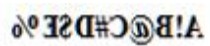
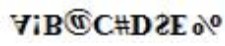
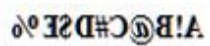
Choose the mirror image of the following A!B@C#D$E%
To find the mirror image of a sequence, each element must be reversed horizontally. This involves flipping the order and orientation of letters and symbols.
Correct Option: B) Option B correctly displays the mirror image as %E$D#C@B!A, with all elements reversed and flipped horizontally.
The question asks to find the relationship between the first pair of words and apply the same relationship to the third word to find the missing fourth word. This is an analogy-based question where we need to identify the function or purpose of the first animal and then find the corresponding function for the second animal.
C) Ride — Horses are commonly used for riding. This fits the pattern of an animal and its common activity or purpose, similar to how dogs are used for guarding.