We are given the compound interest (CI) for a certain sum of money over 2 years at a specific rate. We need to find the simple interest (SI) for the same sum, rate, and period. We can use the relationship between CI and SI for 2 years, or first find the principal amount using the CI formula and then calculate the SI.
Let the Principal be \(P\), Rate \(R = 11\%\) p.a., and Time \(T = 2\) years.
The formula for Compound Interest (CI) is:
\[ \text{CI} = P \left[ \left(1 + \frac{R}{100}\right)^T - 1 \right] \]Substitute the given values:
\[ 4642 = P \left[ \left(1 + \frac{11}{100}\right)^2 - 1 \right] \]\[ 4642 = P \left[ \left(\frac{111}{100}\right)^2 - 1 \right] \]\[ 4642 = P \left[ \frac{12321}{10000} - 1 \right] \]\[ 4642 = P \left[ \frac{12321 - 10000}{10000} \right] \]\[ 4642 = P \left[ \frac{2321}{10000} \right] \]Now, solve for \(P\):
\[ P = \frac{4642 \times 10000}{2321} \]\[ P = 2 \times 10000 \]\[ P = 20000 \]Now that we have the Principal \(P = \text{₹}20,000\), we can calculate the Simple Interest (SI) using the formula:
\[ \text{SI} = \frac{P \times R \times T}{100} \]Substitute the values:
\[ \text{SI} = \frac{20000 \times 11 \times 2}{100} \]\[ \text{SI} = 200 \times 11 \times 2 \]\[ \text{SI} = 4400 \]A) The simple interest is ₹4,400.
The question asks to identify the youngest-ever UNICEF Goodwill Ambassador. This requires knowledge of prominent figures associated with UNICEF and their appointment details.
B) Millie Bobby Brown was appointed as a UNICEF Goodwill Ambassador on November 20, 2018, at the age of 14, making her the youngest person ever to hold this title.
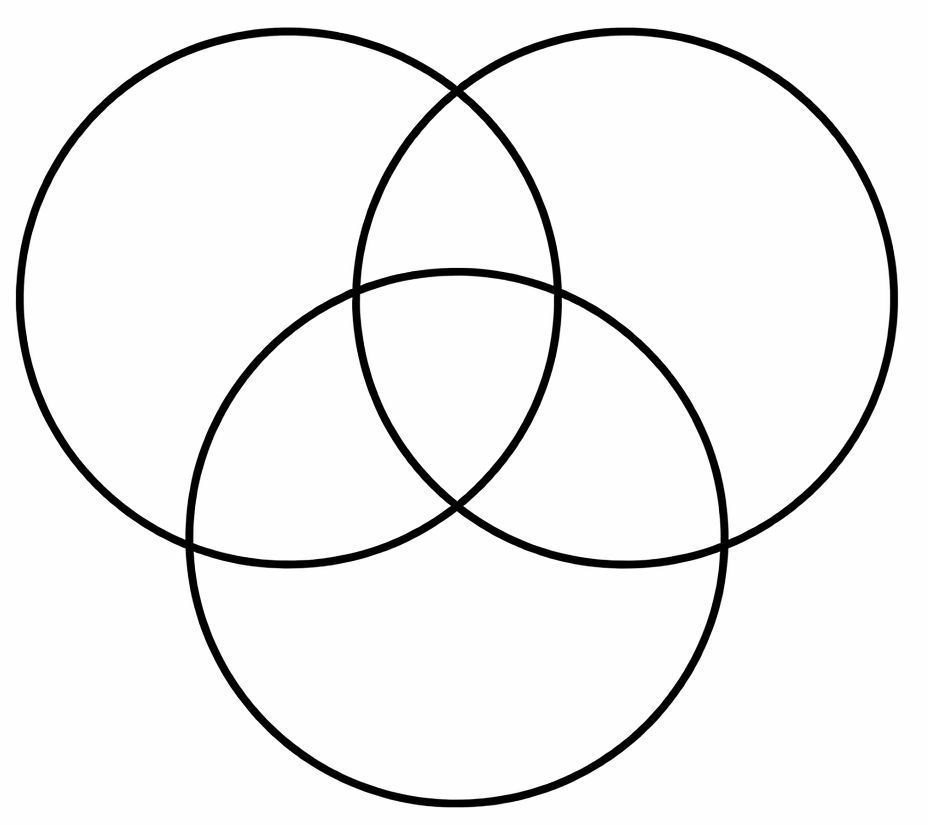
Select the Venn diagram that best represents the relationship between the given set of classes.
Students, Interns and Research scholars
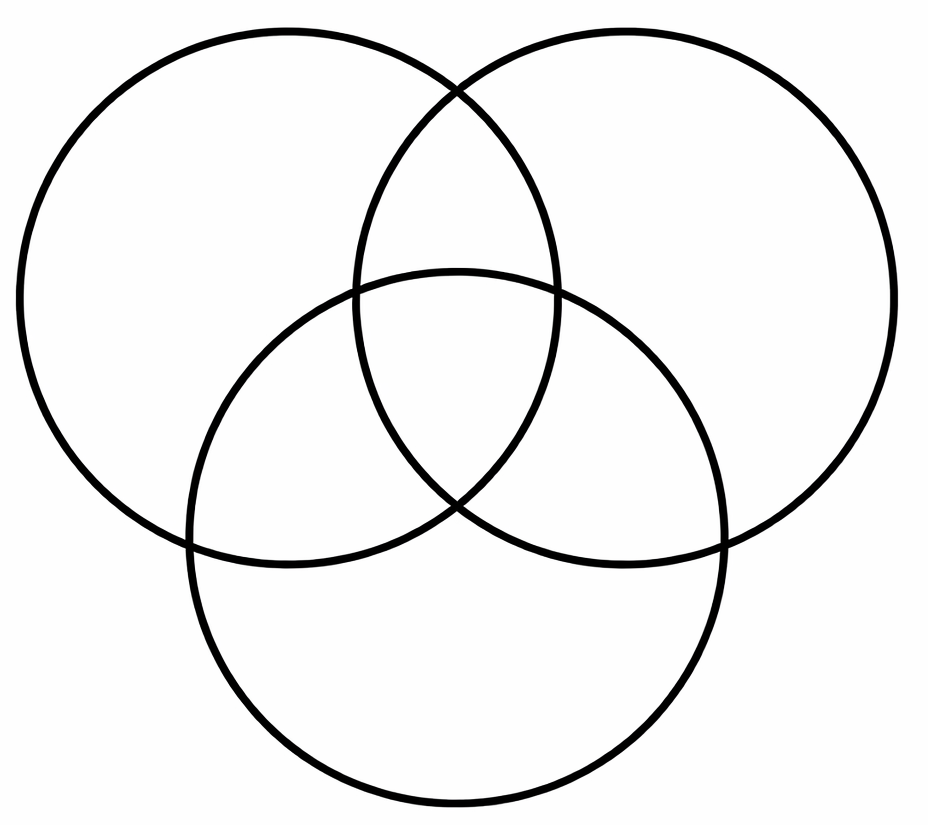
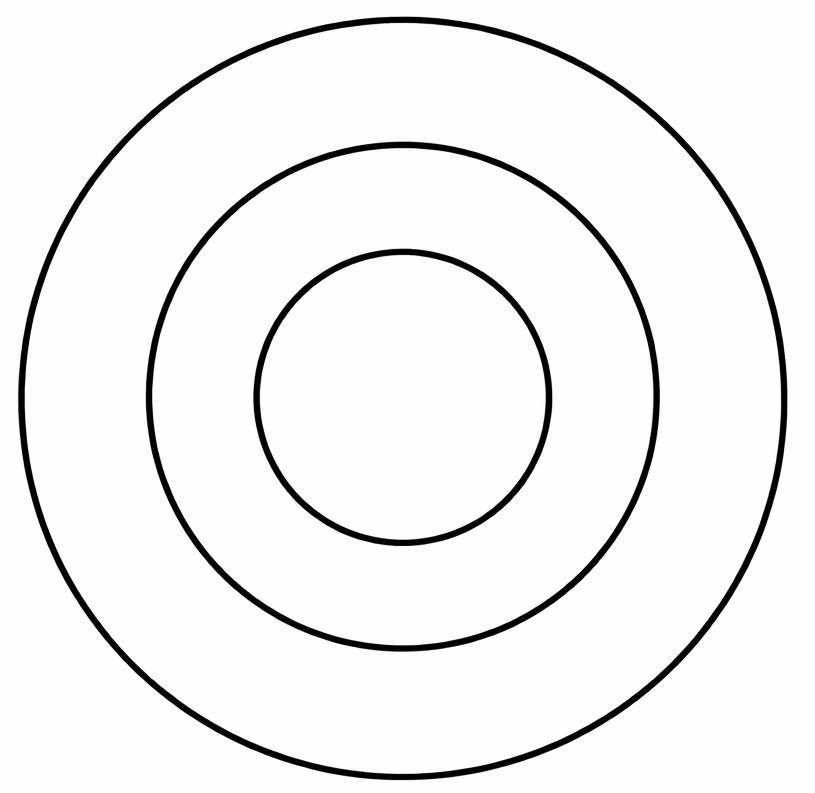
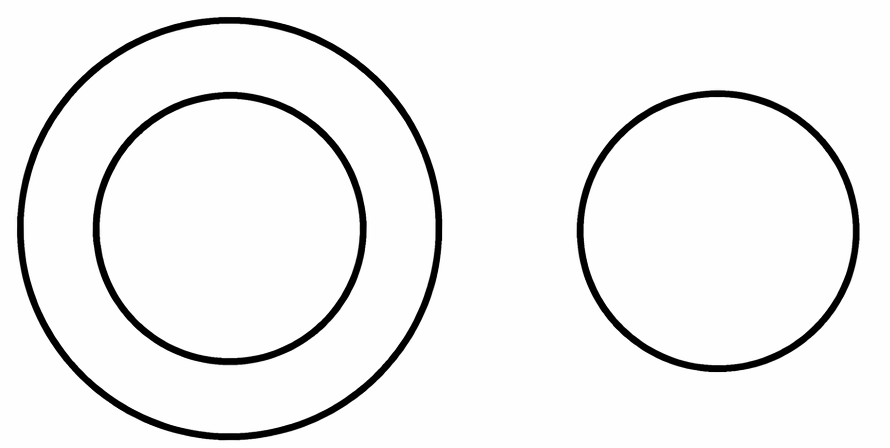
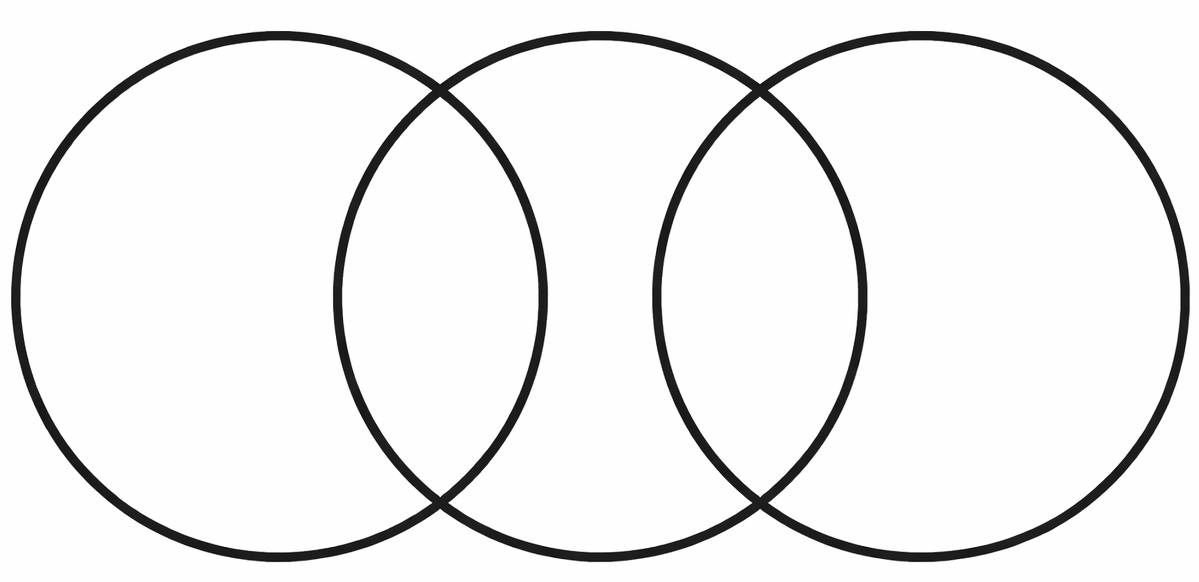
To determine the correct Venn diagram, we need to understand the relationships between the classes: Students, Interns, and Research Scholars. These categories can overlap, as some individuals may belong to more than one category.
Correct Option: A) This option correctly shows the potential overlaps among all three categories.
The problem presents a series of three-letter combinations. We need to identify the pattern in how these letters change from one term to the next to predict the subsequent term in the series.
Based on the patterns identified, the next term in the series will be FNY.
A) FNY is the correct option as it follows the established pattern of incrementing each letter by one position in the alphabet for each subsequent term.
The length of a rectangle is \( \frac{3}{5} \) of the radius of a circle. The radius of a circle is equal to the side of a square whose area is 4900 m². What is the area of the rectangle if its breadth is 20 m.
To find the area of the rectangle, we need its length and breadth. The breadth is given. We can find the length by first determining the radius of the circle, which is related to the side of a square whose area is known.
The area of the square is given as \(4900 \text{ m}^2\). The formula for the area of a square is \( \text{side}^2 \).
\[ \text{Area of square} = \text{side}^2 \] \[ 4900 = \text{side}^2 \] \[ \text{side} = \sqrt{4900} \] \[ \text{side} = 70 \text{ m} \]The radius of the circle is equal to the side of the square.
\[ \text{Radius of circle} (r) = \text{side of square} \] \[ r = 70 \text{ m} \]The length of the rectangle is \( \frac{3}{5} \) of the radius of the circle.
\[ \text{Length of rectangle} (L) = \frac{3}{5} \times r \] \[ L = \frac{3}{5} \times 70 \] \[ L = 3 \times 14 \] \[ L = 42 \text{ m} \]The breadth of the rectangle (B) is given as \(20 \text{ m}\). The formula for the area of a rectangle is \( \text{length} \times \text{breadth} \).
\[ \text{Area of rectangle} = L \times B \] \[ \text{Area of rectangle} = 42 \text{ m} \times 20 \text{ m} \] \[ \text{Area of rectangle} = 840 \text{ m}^2 \]Correct Option: B) 840 m²
To find the least number that should be added to 4707 so that the sum is exactly divisible by 4, 5, 6, and 8, we first need to find the least common multiple (LCM) of 4, 5, 6, and 8. The LCM will be the smallest number that is exactly divisible by all these numbers. Then, we will divide 4707 by the LCM and find the remainder. The difference between the LCM and the remainder will give us the number that needs to be added.
D) 93 is the least number that should be added to 4707 so that the sum is exactly divisible by 4, 5, 6, and 8.
The question asks to identify the recipient of the 2020 UNESCO/Guillermo Cano Press Freedom Prize. This requires knowledge of current affairs and specific awards related to press freedom.
The UNESCO/Guillermo Cano Press Freedom Prize for 2020 was awarded to Jineth Bedoya Lima, a Colombian journalist, in recognition of her courageous work.
D) Jineth Bedoya Lima — She is a Colombian investigative journalist who was awarded the 2020 UNESCO/Guillermo Cano Press Freedom Prize for her bravery and commitment to seeking the truth, particularly in reporting on armed conflict and sexual violence.
To simplify the given expression, we must follow the order of operations, often remembered by the acronym BODMAS/PEMDAS. This means we perform operations in the following order:
The given expression is:
\[ 17 \times 8 - 6 + [(27 - 3) \div 6 - 4] \]Thus, the simplified value of the expression is 130.
B) 130 is the correct answer, as derived by following the order of operations.
This is an analogy question where we need to find the relationship between the first pair of words and apply the same relationship to the third word to find the missing fourth word.
B) Hanger — A hanger is an object used to hang clothes, typically to keep them organized and wrinkle-free. This directly parallels how a stapler is used to organize or secure paper.
The question asks to identify the revolutionary who used the alias Pandit Harishankar Brahmachari and established a base near the Satar river in Jhansi during the 1920s. This requires knowledge of prominent Indian revolutionaries and their activities, particularly their aliases and operational areas.
C) Chandrashekhar Azad — Chandrashekhar Azad was a key figure in the Hindustan Socialist Republican Association (HSRA). After the Kakori Conspiracy, he went underground and adopted various aliases to continue his revolutionary work. He spent a significant period in the Bundelkhand region, including Jhansi, where he established a base near the Satar river, often using the alias Pandit Harishankar Brahmachari. He also trained revolutionaries there.