The question asks to identify which of the given forts is NOT located in the state of Madhya Pradesh. This requires knowledge of the geographical locations of prominent historical forts in India.
Correct Option: B) Janjira Fort is an island fort located off the coast of Murud in the Raigad district of Maharashtra. Therefore, it is not in Madhya Pradesh.
The question asks to identify the countries that withdrew from UNESCO in 2019. This requires knowledge of recent international relations and specific events concerning UNESCO membership.
Correct Option: B) Israel & USA
Both Israel and the United States officially withdrew from UNESCO on January 1, 2019. The U.S. cited anti-Israel bias and the need for fundamental reform within the organization as reasons for its departure. Israel followed suit, citing similar reasons.
The question asks to identify the first full-time female Defence Minister of India. This is a factual question related to Indian political history and current affairs. Candidates should recall key ministerial appointments.
Correct Option: A) Nirmala Sitharaman was the first woman to be appointed as a full-time Defence Minister of India. She held the office from September 2017 to May 2019.
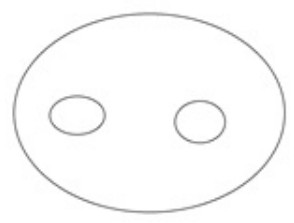
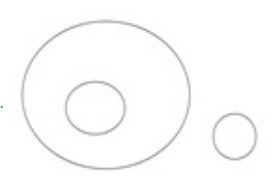
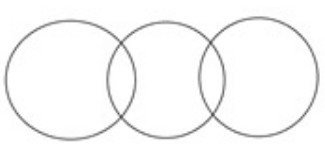
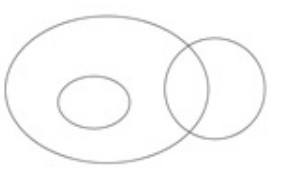
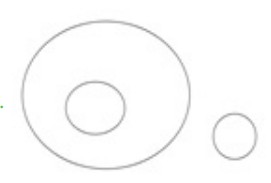
Select the Venn diagram that best represents the relationship between the following classes. Coca Cola, Wine, Soft drink.
To determine the correct Venn diagram, we need to understand the relationship between the classes: Coca Cola, Wine, and Soft drink.
Correct Option: B) Option B correctly represents the relationship.
The question asks for the year Sir William Jones founded the "Asiatic Society of Bengal". This is a direct factual recall question from Indian history, specifically related to the British colonial period and the intellectual movements of that era.
Correct Option: D) 1784
Sir William Jones, a British philologist and scholar, founded the Asiatic Society of Bengal on January 15, 1784, in Calcutta. The society was established with the aim of promoting Oriental studies, including the study of Indian history, culture, languages, and sciences.
This question tests knowledge of standard binary prefixes used in computing. In the binary system, units of data storage are based on powers of 2, not powers of 10. A kilobyte (KB) in the binary system refers to \(2^{10}\) bytes.
\(2^1 = 2\)
\(2^2 = 4\)
\(2^3 = 8\)
\(2^4 = 16\)
\(2^5 = 32\)
\(2^6 = 64\)
\(2^7 = 128\)
\(2^8 = 256\)
\(2^9 = 512\)
\(2^{10} = 1024\)
D) 1024 Bytes — In the binary system, which is used for computer memory and storage, a kilobyte (KB) is defined as \(2^{10}\) bytes, which equals 1024 bytes. This is a fundamental concept in computer science.
The given series is a sequence of numbers: 5040, 840, 168, 42, 14, ?. We need to find the pattern in the series to determine the next number. Often, such series involve arithmetic operations (addition, subtraction, multiplication, division) or a combination of these.
Let's look at the division or multiplication factor between consecutive terms, as the numbers are decreasing significantly.
Divide the first term by the second term:
\[ \frac{5040}{840} = 6 \]Divide the second term by the third term:
\[ \frac{840}{168} = 5 \]Divide the third term by the fourth term:
\[ \frac{168}{42} = 4 \]Divide the fourth term by the fifth term:
\[ \frac{42}{14} = 3 \]The divisors are 6, 5, 4, 3. This is a decreasing sequence of natural numbers. Therefore, the next divisor in the pattern should be 2.
To find the next term, we need to divide the last given term (14) by the next divisor (2).
\[ \frac{14}{2} = 7 \]The next number in the series is 7.
D) 7 — The pattern observed is that each term is obtained by dividing the previous term by a consecutively decreasing integer, starting from 6. The sequence of divisors is 6, 5, 4, 3, and the next divisor is 2. Dividing the last term 14 by 2 gives 7.
The problem requires us to find which two signs, when interchanged in the given equation, will make the equation correct. We need to test each option by interchanging the specified signs and then evaluating the expression using the BODMAS/PEMDAS rule (Brackets, Orders, Division, Multiplication, Addition, Subtraction).
The given equation is: \(36 - 3 \div 3 + 2 \times 4 = 34\)
Let's check each option:
A) - and \(\times\) — When '-' and '\(\times\)' are interchanged, the equation becomes \(36 \times 3 \div 3 + 2 - 4\). Evaluating this expression gives \(36 \times 1 + 2 - 4 = 36 + 2 - 4 = 38 - 4 = 34\). This matches the right-hand side of the equation, so this is the correct answer.
The question asks about the purpose of the "Rail Sahyog web portal" launched by Indian Railways. To answer this, one needs to recall the specific initiatives and their objectives undertaken by Indian Railways.
Correct Option: A) Provide basic amenities i.e. toilet, dustbin etc.
This problem can be solved using the concept of work and time. We will calculate the individual work rates (amount of work done per day) of A and B, and then use these rates to find the time B takes to complete the work alone.
Determine the combined work rate of A and B:
If A and B together can complete a piece of work in 16 days, their combined work rate is:
Determine the work rate of A alone:
If A alone can complete the same work in 24 days, A's work rate is:
Calculate the work rate of B alone:
The work rate of B alone can be found by subtracting A's work rate from the combined work rate of A and B:
Perform the subtraction to find B's work rate:
To subtract the fractions, find a common denominator, which is 48 (LCM of 16 and 24).
Calculate the number of days B takes to complete the work alone:
If B completes \(\frac{1}{48}\) of the work per day, then B will take 48 days to complete the entire work.
Correct Option: C) 48