The question asks to identify the CEO of Google as of October 2020. This requires knowledge of current affairs and prominent business leaders.
Correct Option: B) Sundar Pichai is the CEO of Google and Alphabet Inc. He assumed the role of CEO of Google in 2015 and became CEO of Alphabet Inc. in 2019.
To determine the correct chronological order of events during the Indian freedom struggle, we need to recall the approximate years in which each event occurred. This will allow us to arrange them from earliest to latest.
Arranging these events chronologically:
This sequence matches option C.
Correct Option: C) Sepoy Mutiny - Partition of Bengal - Champaran Movement - Non-Cooperation Movement
To solve this alphanumeric series, we need to identify the patterns in the numbers and the letters separately. We will analyze the sequence of numbers and the sequence of letters to find the rule governing each, and then apply these rules to find the missing term.
Analyze the number sequence:
The numbers in the series are: 5, 7, 6, 8, ?, 9, 8.
Let's look at the pattern:
The pattern for numbers seems to be \((+2, -1, +2, -1, \dots)\). Following this pattern:
Let's verify this with the subsequent terms:
So, the number for the missing cluster is 7.
Analyze the letter sequence:
The letters in the series are: A, C, E, G, ?, K, M.
Let's find the position of each letter in the alphabet (A=1, B=2, C=3, etc.):
The pattern for letters is that each letter is the next alternate letter in the alphabet (skipping one letter). This means the position increases by 2 each time:
Following this pattern for the missing term:
The 9th letter of the alphabet is I.
Let's verify this with the subsequent terms:
So, the letter for the missing cluster is I.
Combine the number and letter:
The missing alphanumeric cluster is 7I.
Correct Option: D) 7I
To find the sum of the first four prime numbers, we first need to identify what prime numbers are and then list the first four of them. A prime number is a natural number greater than 1 that has no positive divisors other than 1 and itself.
Correct Option: C) 17 is the sum of the first four prime numbers \(2, 3, 5,\) and \(7\).
The reactivity of an element is determined by its tendency to gain, lose, or share electrons to achieve a stable electron configuration, typically a full outer shell (octet rule). Elements with a full outer shell are very stable and thus unreactive. We need to identify which of the given options has a stable electron configuration.
Correct Option: A) Neon is a noble gas with a complete octet in its outermost shell, making it chemically stable and thus the least reactive element among the choices.
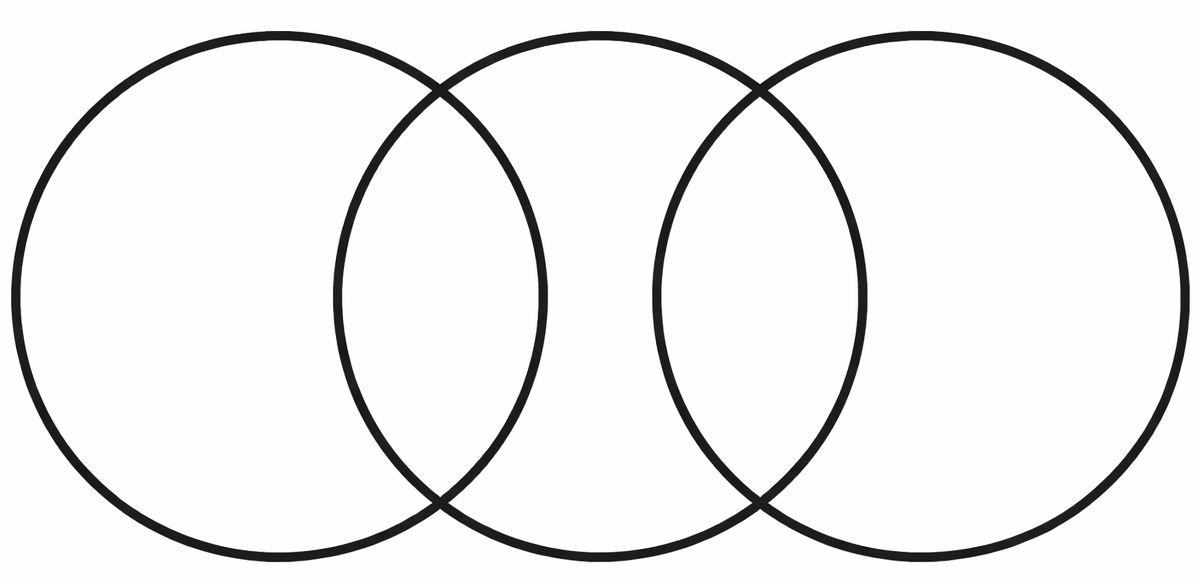
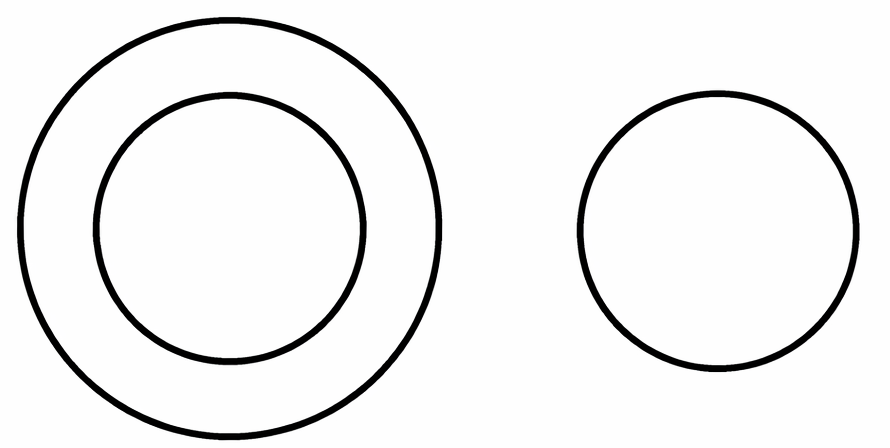
Select the Venn diagram that best represents the relationship between the given set of classes. Sisters, Family, Siblings
To determine the correct Venn diagram, we need to understand the relationships between the classes: Sisters, Family, and Siblings.
Correct Option: C) The diagram with concentric circles accurately represents the hierarchical relationship.
The question asks about the significance of the Bhimbetka rock shelters. To answer this, we need to recall the historical and archaeological importance of this site.
Correct Option: B) Earliest traces of human life on the Indian subcontinent
The Bhimbetka rock shelters are a UNESCO World Heritage site known for their extensive collection of prehistoric cave paintings, which date back to the Paleolithic and Mesolithic periods. These paintings and the archaeological evidence found at the site represent some of the earliest traces of human life and artistic expression on the Indian subcontinent, providing invaluable insights into early human societies.
The question asks to identify the incorrectly matched scheme among the given options. We need to recall the primary objectives of each scheme mentioned.
Based on the analysis, Mission Indradhanush is incorrectly matched with 'Employment for all'.
A) Mission Indradhanush – Employment for all is not correctly matched. Mission Indradhanush is related to immunization, not employment.
We are given the ratio of boys to girls and the difference in their numbers. We can use a common multiplier for the ratio to represent the actual number of boys and girls, then form an equation based on the given difference to find the value of the multiplier. Once the multiplier is found, we can calculate the number of boys and girls and then their total.
Let the number of boys be \(5x\) and the number of girls be \(7x\), where \(x\) is a common multiplier. This maintains the given ratio of boys to girls as \(5:7\).
We are told that there were 6 more girls than boys. This can be written as an equation:
\[ \text{Number of girls} - \text{Number of boys} = 6 \] \[ 7x - 5x = 6 \]Solve the equation for \(x\):
\[ 2x = 6 \] \[ x = \frac{6}{2} \] \[ x = 3 \]Now, calculate the actual number of boys and girls:
Find the total number of students in the class:
\[ \text{Total students} = \text{Number of boys} + \text{Number of girls} \] \[ \text{Total students} = 15 + 21 \] \[ \text{Total students} = 36 \]Correct Option: C) 36
This is a linear arrangement puzzle. We need to deduce the seating arrangement of the seven judges based on the given clues. We will build the arrangement step-by-step by placing judges relative to each other and then combine these partial arrangements.
E _ _ _ _ _ _(C A)(B D F)C comes before D. Combining this with (C A) and (B D F), we can infer a sequence like (C A ... B D F) or (... C A B D F). The clue also states "C is to the right of G", so G C.(G C A) and (B D F). We also know C is to the left of D. This means the sequence must be G C A B D F.G C A B D F has 6 judges. With E at the first position, the full arrangement will be:E G C A B D FCorrect Option: A) B