This problem involves the fundamental relationship between the product of two numbers, their Least Common Multiple (LCM), and their Highest Common Factor (HCF). The key principle is that for any two positive integers, the product of the numbers is equal to the product of their HCF and LCM.
Thus, the HCF of the two numbers is 60.
A) 60 is the correct HCF calculated using the fundamental relationship between the product of two numbers, their LCM, and HCF.
To find the length of the arc of a sector, we use the formula that relates the angle of the sector, its radius, and the circumference of the full circle. The length of the arc is a fraction of the total circumference, determined by the ratio of the sector's angle to the total angle in a circle (360°).
Correct Option: C) 22 cm
This is a coding-decoding problem where we need to find the code for a specific word by comparing common words and their corresponding codes in the given sentences.
Correct Option: D) ju
The question asks for the year when India officially adopted the national calendar based on the Saka Era, with Chaitra as its first month. This is a factual question related to Indian history and national symbols.
Correct Option: C) 1957
To find the third proportional to two numbers, say 'a' and 'b', we assume the third proportional to be 'x'. The relationship for third proportional is given by \(a : b :: b : x\), which can be written as a proportion \[\frac{a}{b} = \frac{b}{x}\].
Thus, the third proportional to 16 and 36 is 81.
Correct Option: C) 81
To find the number of pairs of twin primes between 1 and 100, we first need to understand what twin primes are. Twin primes are pairs of prime numbers that differ by 2. We will list all prime numbers up to 100 and then identify the pairs that satisfy the twin prime condition.
The prime numbers less than 100 are:
2, 3, 5, 7, 11, 13, 17, 19, 23, 29, 31, 37, 41, 43, 47, 53, 59, 61, 67, 71, 73, 79, 83, 89, 97.
Correct Option: B) 8
The question asks to identify the Assamese writer who received the Sahitya Akademi Award in 2020 for short stories. This requires knowledge of the specific awardees for that year and category.
Correct Option: A) Apurba Kumar Saikia won the Sahitya Akademi Award 2020 for his collection of short stories titled "Bengsata" in Assamese.
Find the value of cos1° cos2° cos3° … cos89° cos90°.
The problem asks for the value of a product of cosine terms: \( \cos 1^\circ \cos 2^\circ \cos 3^\circ \dots \cos 89^\circ \cos 90^\circ \). We need to identify if any term in this product is zero, as multiplying by zero will make the entire product zero.
The given expression is a product of cosine values from \( \cos 1^\circ \) to \( \cos 90^\circ \).
\[ P = \cos 1^\circ \cdot \cos 2^\circ \cdot \cos 3^\circ \cdot \dots \cdot \cos 89^\circ \cdot \cos 90^\circ \]We need to recall the value of \( \cos 90^\circ \).
The value of \( \cos 90^\circ \) is \( 0 \).
Since \( \cos 90^\circ \) is one of the terms in the product, and its value is \( 0 \), the entire product will be \( 0 \) because any number multiplied by \( 0 \) results in \( 0 \).
Therefore, the value of the expression is \( 0 \).
C) 0 — The product includes the term \( \cos 90^\circ \), which is equal to \( 0 \). Since any number multiplied by zero is zero, the entire product evaluates to zero.
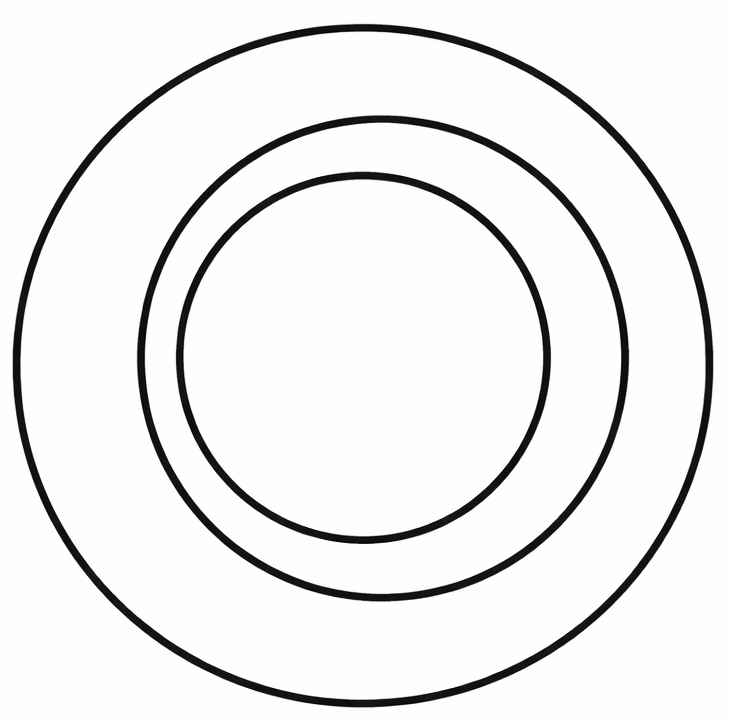
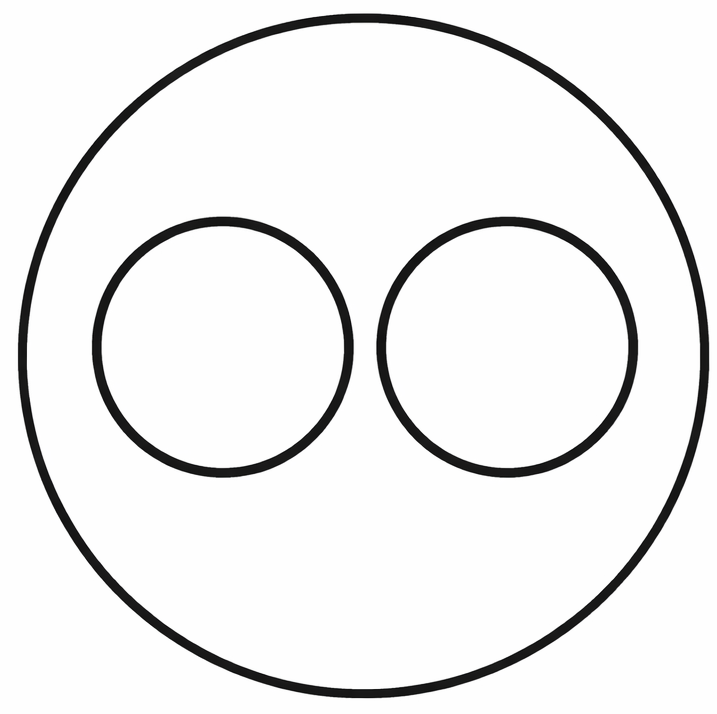
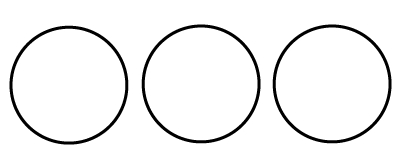
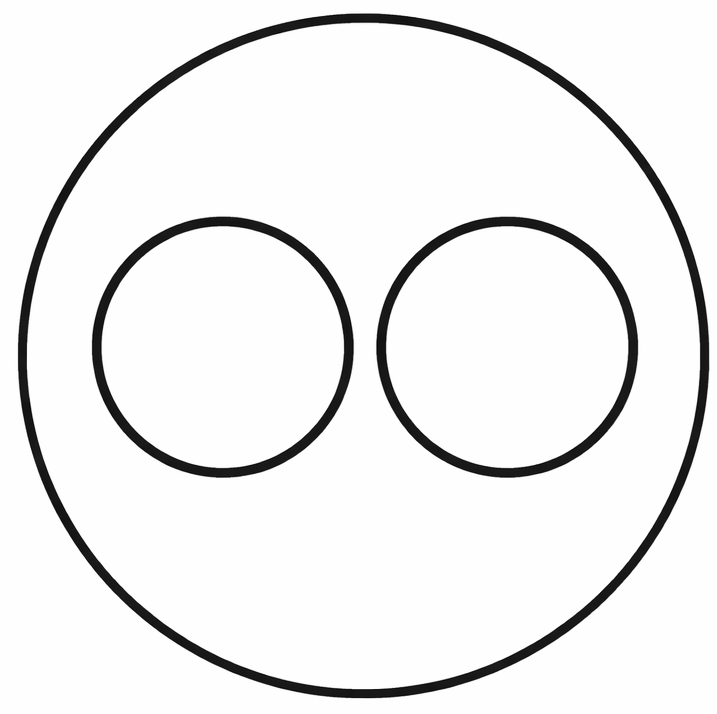
Select the Venn diagram that best represents the relationship between the given set of classes. Horse, Elephant, Herbivore
To determine the correct Venn diagram, we need to understand the relationship between the classes: Horse, Elephant, and Herbivore. Both horses and elephants are herbivores, but they are distinct from each other.
Correct Option: B) The diagram with two smaller circles inside a larger circle.
The question asks about Akbar's concept of Sulh-i-kul. To answer this, one needs to recall the core principles and meaning behind this policy introduced by the Mughal emperor Akbar.
A) Universal peace is the most accurate translation and representation of Akbar's Sulh-i-kul policy. It encompassed religious tolerance, non-discrimination, and harmony among all sections of society.