To determine if a number is divisible by 12, we need to check if it is divisible by both 3 and 4. This is because 3 and 4 are coprime factors of 12 (i.e., \(3 \times 4 = 12\), and their greatest common divisor is 1).
We will apply these two rules to each given option.
D) 53460 is divisible by 12 because it satisfies both the divisibility rules for 3 and 4.
The question asks to identify the founder of 'Humanity Hospital' who had a background as a vegetable vendor, domestic helper, and laborer. This requires knowledge of prominent social workers and their life stories, particularly those involved in healthcare initiatives.
Correct Option: B) Subhashini Mistry
Subhashini Mistry is the inspiring woman who, after losing her husband due to lack of medical treatment, vowed to build a hospital for the poor. She worked tirelessly for two decades as a vegetable vendor, domestic helper, and laborer, saving every penny to realize her dream. In 1995, she founded the 'Humanity Hospital' in Hanspukur, West Bengal, which provides affordable healthcare to the underprivileged. Her remarkable dedication earned her the Padma Shri award in 2018.
This problem involves work and time. We need to calculate the individual work rates, then consider the scenario where both work together for some time, and finally, only one person works for the remaining duration. We will use the concept of total work being equal to the LCM of individual days taken.
Correct Option: C) 2
The question asks to identify the Chief Minister of Uttar Pradesh as of 2018. This requires knowledge of political officeholders during that specific period.
Correct Option: A) Yogi Adityanath was sworn in as the Chief Minister of Uttar Pradesh on March 19, 2017, and remained in office throughout 2018 and beyond.
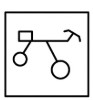
According to the line AB, the mirror image of the above figure will be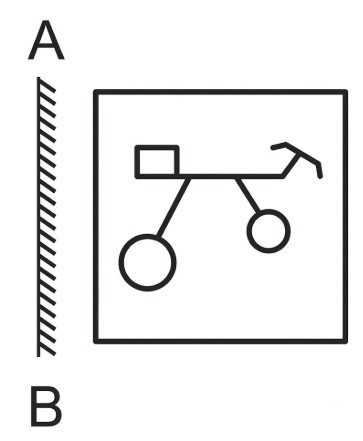
To determine the mirror image of a figure, we need to reflect the figure across the given line, in this case, line AB. The mirror image will have the same shape but reversed horizontally.
Correct Option: D) The diagram in option D correctly shows the mirror image of the original figure with all components reversed horizontally.
To find the next number in the series, we need to identify the pattern or the rule governing the sequence. This can often be done by looking at the differences between consecutive terms, or by identifying a mathematical operation or formula that generates each term.
A) 135 is the correct answer. The pattern involves adding successive multiples of 13 to the previous term.
Vimal lent a loan of Rs. 5,000 to Kamal for 2 years and Rs. 3,000 to Sumal for 4 years at simple interest at the same rate of interest and received Rs. 2,200 as interest from both. Calculate the interest rate per annum.
This problem involves calculating the simple interest rate when the principal amounts, time periods, and total interest received from two separate loans are given. We will use the simple interest formula for each loan, sum the interests, and then solve for the common rate of interest.
The formula for simple interest (SI) is:
\[ \text{SI} = \frac{\text{P} \times \text{R} \times \text{T}}{100} \]where:
For Kamal:
Simple Interest for Kamal (\(\text{SI}_1\)):
\[ \text{SI}_1 = \frac{5000 \times \text{R} \times 2}{100} = 100\text{R} \]For Sumal:
Simple Interest for Sumal (\(\text{SI}_2\)):
\[ \text{SI}_2 = \frac{3000 \times \text{R} \times 4}{100} = 120\text{R} \]The total interest received from both is \(\text{Rs. } 2,200\).
\[ \text{Total SI} = \text{SI}_1 + \text{SI}_2 \]\[ 2200 = 100\text{R} + 120\text{R} \]\[ 2200 = 220\text{R} \]Divide the total interest by the sum of the interest components in terms of \(\text{R}\):
\[ \text{R} = \frac{2200}{220} \]\[ \text{R} = 10 \]So, the interest rate per annum is \(10\%\).
D) 10% is the correct answer. The calculation shows that the common rate of interest is 10%.
Select the mirror image of the figure given below.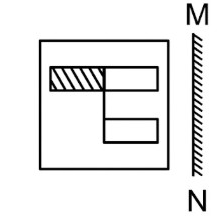
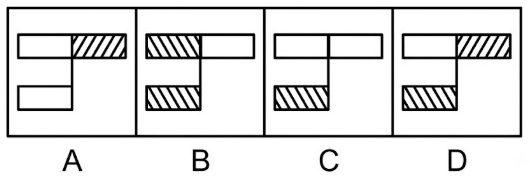
To find the mirror image of a figure, we need to visualize how the figure would look if reflected across a vertical line. This involves reversing the left and right sides of the figure while maintaining the same top and bottom orientation.
Correct Option: D) The figure correctly mirrors the original with the shaded rectangle on the right.
A samosa seller discusses his business situation with his friend. He says, between last year and this year, he has tripled his income. He sells each samosa for Rs. 20. He made an income of Rs. 1,20,000 in the previous year. This year, on an average, how many samosas did he sell per month?
The problem requires us to calculate the average number of samosas sold per month this year. We are given the previous year's income, the current year's income growth (tripled), and the price per samosa. We need to first find the current year's total income, then the total number of samosas sold this year, and finally divide by 12 months to get the monthly average.
Last year's income was Rs. 1,20,000.
This year's income is three times last year's income.
\[ \text{This year's income} = 3 \times \text{Last year's income} \]\[ \text{This year's income} = 3 \times \text{Rs. } 1,20,000 \]\[ \text{This year's income} = \text{Rs. } 3,60,000 \]Each samosa is sold for Rs. 20.
Total number of samosas sold = Total income / Price per samosa
\[ \text{Total samosas sold} = \frac{\text{This year's income}}{\text{Price per samosa}} \]\[ \text{Total samosas sold} = \frac{\text{Rs. } 3,60,000}{\text{Rs. } 20} \]\[ \text{Total samosas sold} = 18,000 \]There are 12 months in a year.
Average samosas sold per month = Total samosas sold / 12
\[ \text{Average samosas per month} = \frac{18,000}{12} \]\[ \text{Average samosas per month} = 1,500 \]Correct Option: B) 1,500
Nikhil and Dibu can complete a work in 30 and 40 days respectively when they work alone. If both of them work together for 8 days then how much work will be left to complete the same work?
\( \frac{7}{15} \)
\( \frac{8}{15} \)
\( \frac{5}{15} \)
\( \frac{6}{13} \)
To solve this problem, we need to determine the individual work rates of Nikhil and Dibu, then calculate their combined work rate. After finding the combined work done in 8 days, we can subtract it from the total work (represented as 1) to find the remaining work.
Nikhil can complete the work in 30 days. So, Nikhil's 1-day work is:
\[ \text{Nikhil's 1-day work} = \frac{1}{30} \]Dibu can complete the work in 40 days. So, Dibu's 1-day work is:
\[ \text{Dibu's 1-day work} = \frac{1}{40} \]When they work together, their combined 1-day work is the sum of their individual 1-day works:
\[ \text{Combined 1-day work} = \frac{1}{30} + \frac{1}{40} \]To add these fractions, find a common denominator, which is 120:
\[ \text{Combined 1-day work} = \frac{4}{120} + \frac{3}{120} = \frac{4+3}{120} = \frac{7}{120} \]If they work together for 8 days, the total work done will be:
\[ \text{Work done in 8 days} = 8 \times \frac{7}{120} \]Simplify the expression:
\[ \text{Work done in 8 days} = \frac{8 \times 7}{120} = \frac{56}{120} \]Divide both numerator and denominator by their greatest common divisor, which is 8:
\[ \text{Work done in 8 days} = \frac{56 \div 8}{120 \div 8} = \frac{7}{15} \]The total work is considered as 1. The remaining work is the total work minus the work done:
\[ \text{Remaining work} = 1 - \frac{7}{15} \]To subtract, express 1 as a fraction with denominator 15:
\[ \text{Remaining work} = \frac{15}{15} - \frac{7}{15} = \frac{15-7}{15} = \frac{8}{15} \]Thus, the remaining work is \( \frac{8}{15} \).
B) \( \frac{8}{15} \) is the correct answer, as calculated above.