This is a syllogism problem. We will use Venn diagrams to represent the given statements and then check if the conclusions logically follow from these representations. We need to consider all possible valid Venn diagram configurations.
This means that the set of 'petals' is entirely contained within the set of 'flowers'.
Diagrammatically, a circle representing 'petals' is inside a larger circle representing 'flowers'.
This means there is an overlap between the set of 'petals' and the set of 'yellow' things. Since all petals are flowers, these 'yellow petals' are also 'yellow flowers'.
Diagrammatically, the 'yellow' circle intersects with the 'petals' circle.
This means that the set of 'yellow' things is entirely contained within the set of 'flowers'.
Diagrammatically, the 'yellow' circle is inside the 'flowers' circle.
From statement 1 and 3, both 'petals' and 'yellows' are subsets of 'flowers'.
From statement 2, 'petals' and 'yellows' have an intersection.
Possible Venn Diagram configurations:
Case 1: The 'Petals' circle is inside the 'Flowers' circle. The 'Yellow' circle is also inside the 'Flowers' circle. The 'Petals' and 'Yellow' circles overlap.
Case 2 (Extreme): The 'Petals' circle is entirely contained within the 'Yellow' circle, which is itself entirely contained within the 'Flowers' circle. (This satisfies all statements: All petals are flowers, some petals are yellow (all of them), all yellows are flowers).
Case 3 (Extreme): The 'Yellow' circle is entirely contained within the 'Petals' circle, which is itself entirely contained within the 'Flowers' circle. (This satisfies all statements: All petals are flowers, some petals are yellow (all yellows are petals), all yellows are flowers).
This means the 'Flowers' circle should be entirely inside the 'Yellow' circle. Looking at our diagrams, this is clearly not necessarily true. For example, in Case 1, there can be flowers that are neither petals nor yellow. Even in Case 2, there can be flowers that are not yellow (if the 'Yellow' circle is smaller than the 'Flowers' circle).
Therefore, Conclusion 1 does not logically follow.
This means the 'Yellow' circle should be entirely inside the 'Petals' circle. While this is true in Case 3, it is not true in Case 1 or Case 2. In Case 1, there can be yellow things that are not petals (e.g., yellow flowers that are not petals). In Case 2, all petals are yellow, but not all yellows are petals (the 'Yellow' circle can be larger than the 'Petals' circle).
Therefore, Conclusion 2 does not logically follow.
Since neither conclusion necessarily follows from the given statements, the correct option is A.
A) None of the conclusions follow — As demonstrated by analyzing all possible Venn diagram configurations, neither "All flowers are yellow" nor "All yellows are petals" can be definitively concluded from the given statements.
This question tests general knowledge about major technology companies and their market capitalization milestones. To answer correctly, one needs to recall which company reached the $900 billion market capitalization mark after Apple.
Correct Option: C) Amazon
The question asks to identify the Union Minister who launched the PowerTex India scheme. This requires knowledge of current affairs related to government schemes and ministerial portfolios.
Correct Option: A) Smriti Irani was the Union Minister of Textiles when the PowerTex India scheme was launched in 2017. The scheme was aimed at promoting the powerloom sector by providing financial assistance for new machinery, infrastructure development, and marketing support.
The question asks to identify the state government that launched the "Quit India 2 – from Swaraj to Suraj" initiative in August 2016 at August Kranti Maidan. This requires knowledge of specific government initiatives and their launch locations/dates.
B) Maharashtra — The "Quit India 2 – from Swaraj to Suraj" initiative was indeed launched by the Maharashtra government at the historic August Kranti Maidan in Mumbai in August 2016. This initiative aimed to promote good governance and public service delivery, drawing inspiration from the original Quit India Movement.
The question asks to identify the recipient of the RedInk Award for Lifetime Achievement in Journalism for the year 2018. This is a factual question requiring knowledge of current affairs and awards in the field of journalism.
Correct Option: A) Mark Tully was indeed chosen for the RedInk Award for Lifetime Achievement in Journalism for 2018. He is a highly respected journalist known for his extensive work in India.
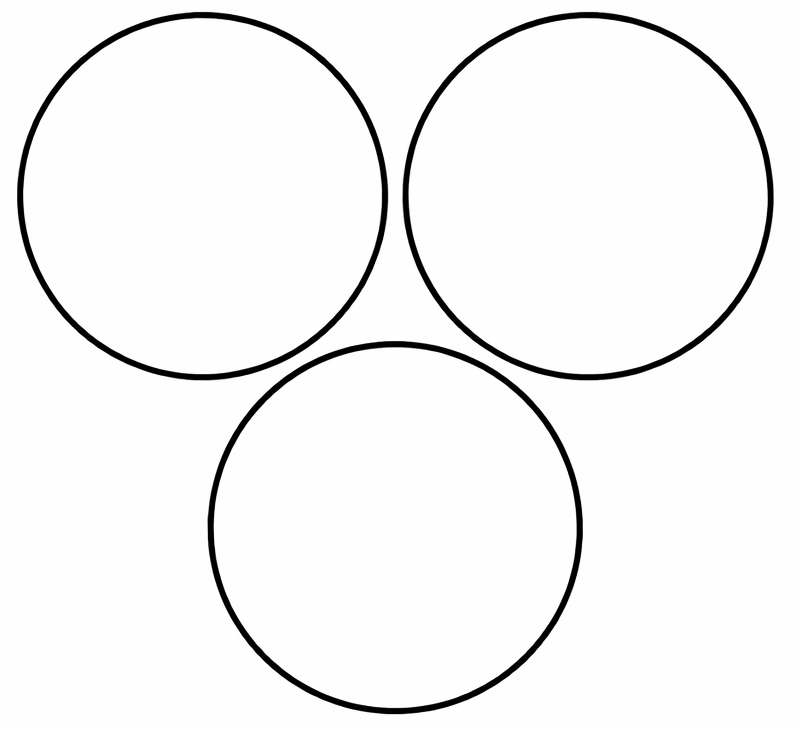
Choose the most suitable Venn Diagram for the following words:
Horse, Monkey, Tiger
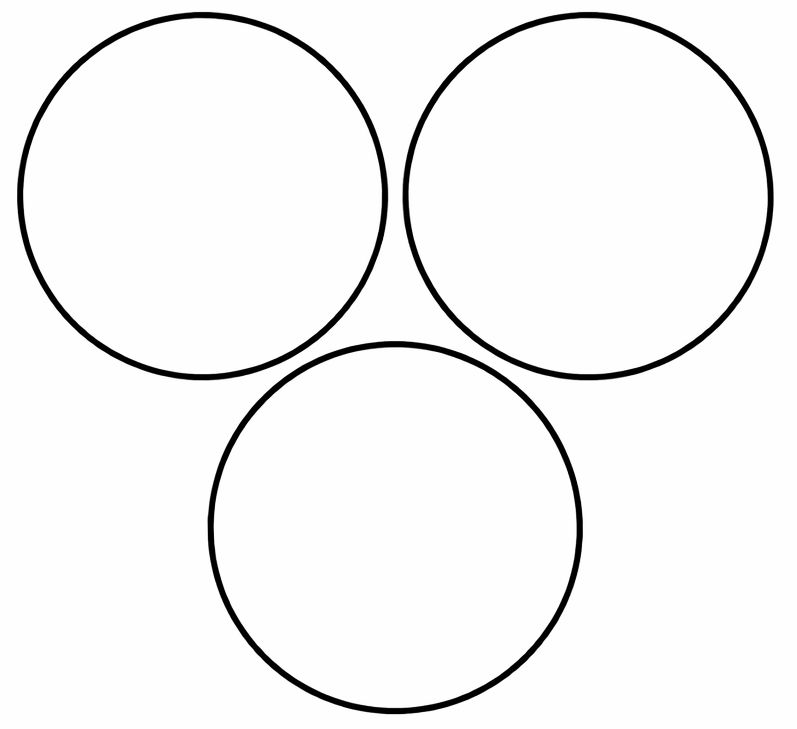
The task is to identify the most suitable Venn Diagram that represents the relationship between the words: Horse, Monkey, Tiger. These words represent different animal species, and there is no overlap or hierarchical relationship among them.
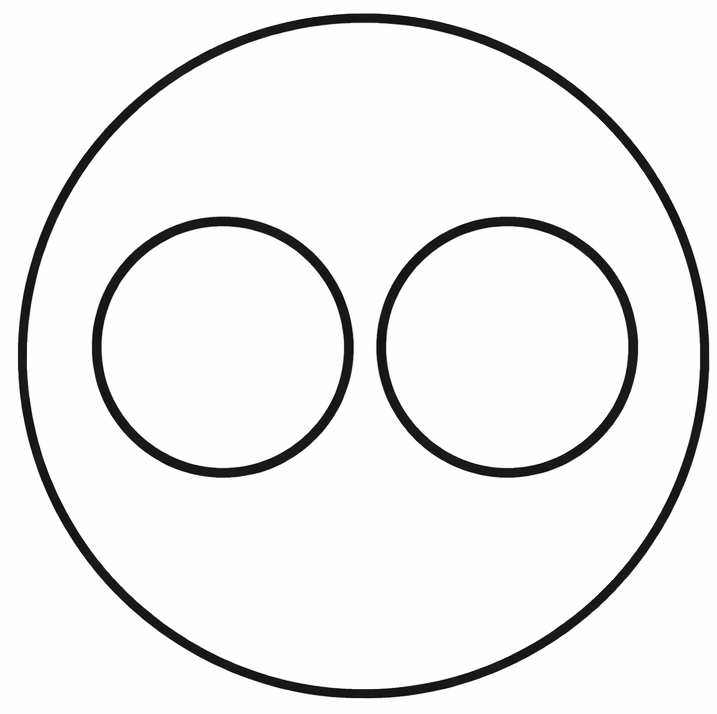
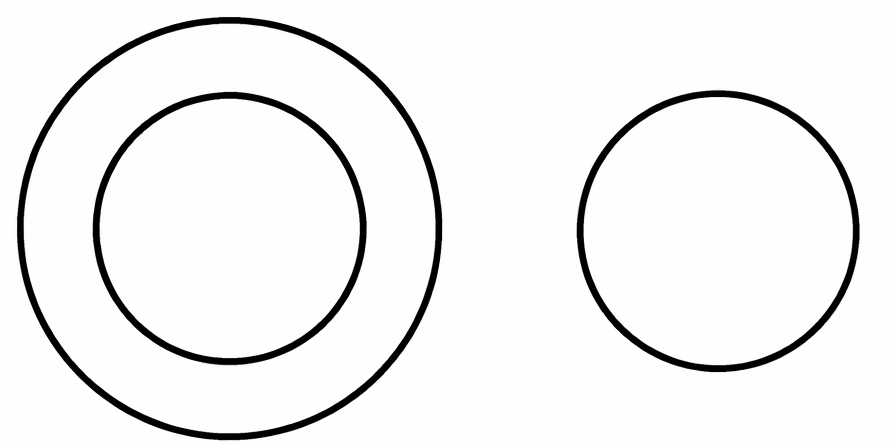
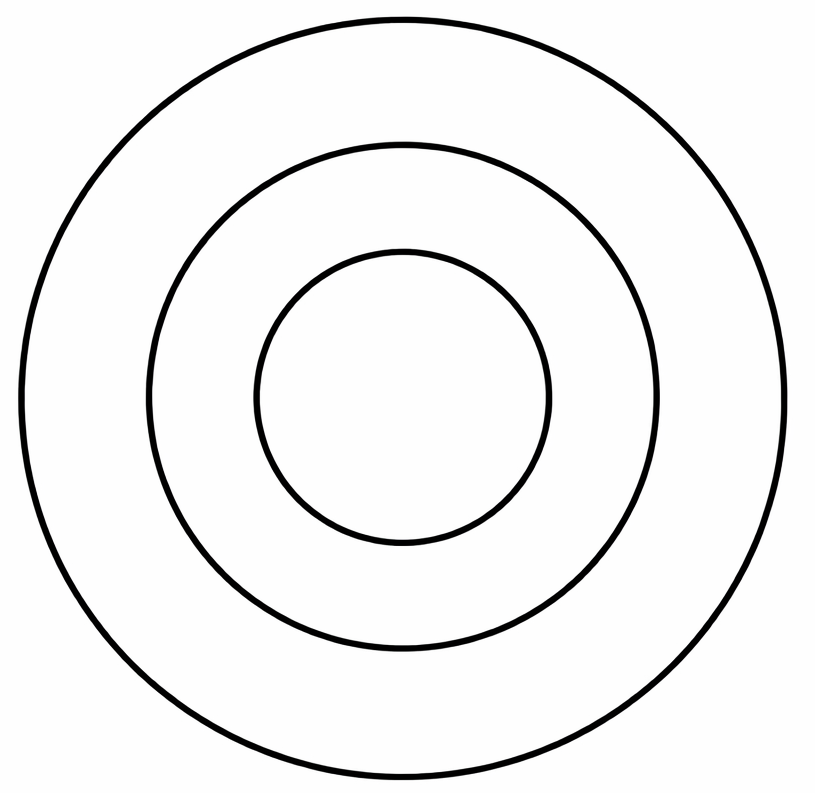
Correct Option: A) This option shows three separate circles, accurately representing the distinct nature of Horse, Monkey, and Tiger.
This problem can be solved using the concept of work and time. We can determine the individual work rates of Rohan and the combined work rate of Rohan and Rohit. Then, by subtracting Rohan's work rate from their combined work rate, we can find Rohit's individual work rate and subsequently the time Rohit takes to complete the job alone.
Calculate the combined work rate of Rohan and Rohit:
If Rohan and Rohit together can do a job in 10 days, their combined work rate is \( \frac{1}{10} \) of the job per day.
Calculate Rohan's individual work rate:
If Rohan alone can do the same job in 15 days, his individual work rate is \( \frac{1}{15} \) of the job per day.
Calculate Rohit's individual work rate:
Rohit's work rate can be found by subtracting Rohan's work rate from their combined work rate.
Find a common denominator for the subtraction:
The least common multiple (LCM) of 10 and 15 is 30.
Determine the time Rohit takes to complete the job alone:
If Rohit's work rate is \( \frac{1}{30} \) of the job per day, then he will take 30 days to complete the entire job alone.
D) 30 days. This is derived from calculating Rohit's work rate as \( \frac{1}{30} \) of the job per day, meaning he takes 30 days to finish the job.
To calculate the compound interest when compounded semi-annually, we need to adjust the annual interest rate and the time period. The annual rate is halved, and the number of years is doubled to find the number of compounding periods. Then, we use the compound interest formula to find the total amount and subtract the principal to get the compound interest.
When interest is compounded semi-annually, the interest rate is halved, and the time period is doubled.
The formula for the amount \((A)\) after \(n\) compounding periods is:
\[ A = P \left(1 + \frac{r}{100}\right)^n \]Compound Interest \((CI) = \text{Amount} - \text{Principal}\)
\[ CI = 1,94,481 - 1,60,000 \]\[ CI = 34,481 \]Correct Option: B) 34,481
Instruction: Even if the given statements seem to be at variance with commonly known facts, assume them to be true and determine which of the given conclusions logically follow(s) from the statement.
Statement: All that glitters is not gold
Conclusions:
I. Things that look good on the outside may not necessarily be good on the inside.
II. We cannot imagine the truth behind the shiny facade of anything or person from a distance.
Only statement II is logical.
Statements I and II are logical
Only statement I is logical.
Neither statement I nor II is logical.
This is a logical reasoning question based on a given statement. We need to analyze the statement and determine which of the provided conclusions logically follow from it. The instruction explicitly states to assume the given statement to be true, even if it contradicts common knowledge.
B) Statements I and II are logical. Both conclusions accurately reflect the meaning and implications of the statement "All that glitters is not gold," which warns against judging things solely by their appearance.
The work done by a force on an object is equal to the change in its kinetic energy. This is known as the Work-Energy Theorem. We need to calculate the initial and final kinetic energies and then find their difference.
The formula for kinetic energy is \(KE = \frac{1}{2}mv^2\).
\[ KE_1 = \frac{1}{2} m v_1^2 \]\[ KE_1 = \frac{1}{2} (1.0 \, \text{kg}) (4 \, \text{m/s})^2 \]\[ KE_1 = \frac{1}{2} (1.0 \, \text{kg}) (16 \, \text{m}^2/\text{s}^2) \]\[ KE_1 = 8 \, \text{J} \]According to the Work-Energy Theorem, the work done is the change in kinetic energy:
\[ W = KE_2 - KE_1 \]\[ W = 32 \, \text{J} - 8 \, \text{J} \]\[ W = 24 \, \text{J} \]C) 24 J — The work done by the force is the change in kinetic energy, which is \(32 \, \text{J} - 8 \, \text{J} = 24 \, \text{J}\).