The problem requires us to analyze a given statement and determine which of the provided conclusions logically follow from it. This is a common type of logical reasoning question in competitive exams. We need to evaluate each conclusion based solely on the information presented in the statement, without introducing outside knowledge.
The statement explicitly mentions that "imported fruits and vegetables, which are maintained to show freshness using artificial conditions." This directly supports Conclusion I. Therefore, Conclusion I logically follows from the statement.
The statement implies that homegrown produce is better for health. The reason imported produce is less healthy is because it's maintained artificially to show freshness. This strongly suggests that homegrown produce, by contrast, is naturally fresh, contributing to its health benefits. If homegrown produce were not fresh, it would contradict the idea of it being "better for health" compared to artificially maintained imported produce. Therefore, it is a reasonable inference that homegrown fruits and vegetables are usually fresh.
Correct Option: C) Both conclusions follow
This problem involves finding an unknown number given the Least Common Multiple (LCM) and Highest Common Factor (HCF) of two numbers, and one of the numbers. The fundamental relationship between LCM, HCF, and two numbers is that the product of the two numbers is equal to the product of their LCM and HCF.
Thus, the second number is 15.
B) 15 — As calculated, the second number is 15, which satisfies the property that the product of the two numbers (24 and 15) is equal to the product of their LCM (120) and HCF (3).
Consider the given statement and decide which of the given assumptions is implicit in the given statement.
Statement:
Read the instructions before you start playing the game.
Assumptions:
I. The game is being organized.
II. No blind person is playing the game.
III. Players are literate.
None are implicit.
Only I and III are implicit
Only I is implicit.
All are implicit.
This question asks us to identify implicit assumptions in a given statement. An implicit assumption is something that is not explicitly stated but must be true for the statement to make sense or be valid. We need to analyze each assumption to see if it is necessarily implied by the statement.
The statement is: "Read the instructions before you start playing the game."
Since all three assumptions are necessary for the statement to be meaningful and effective, all are implicit.
D) All are implicit.
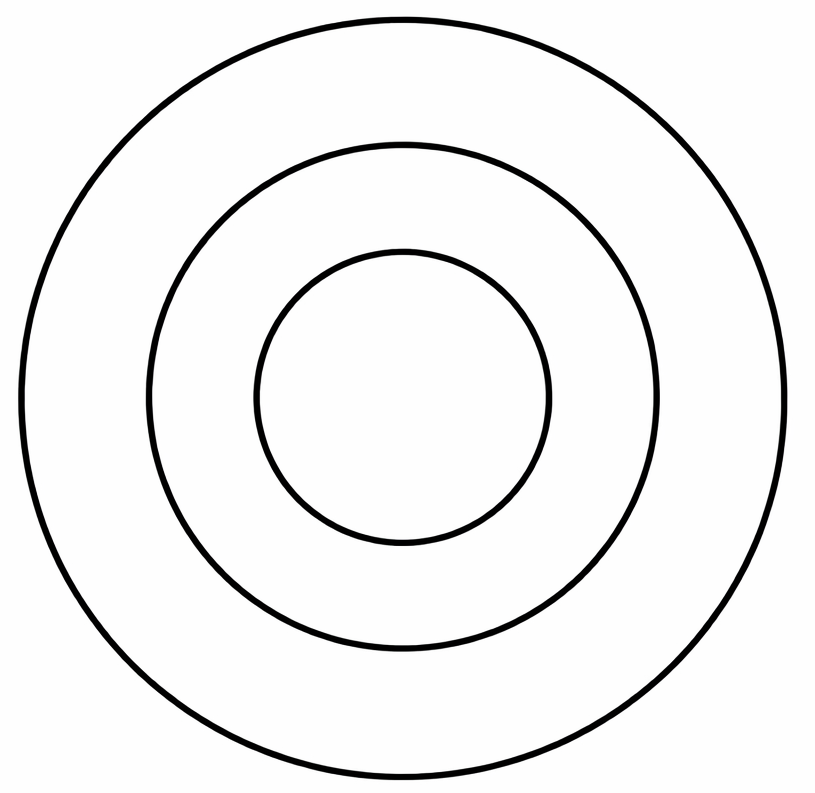
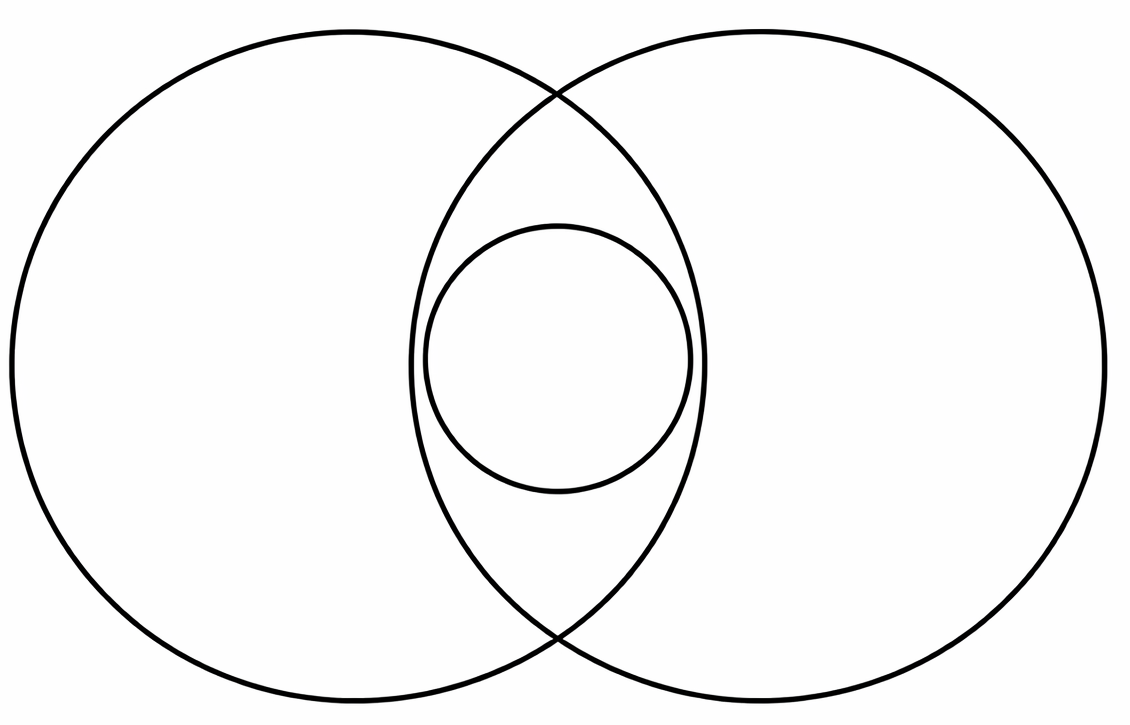
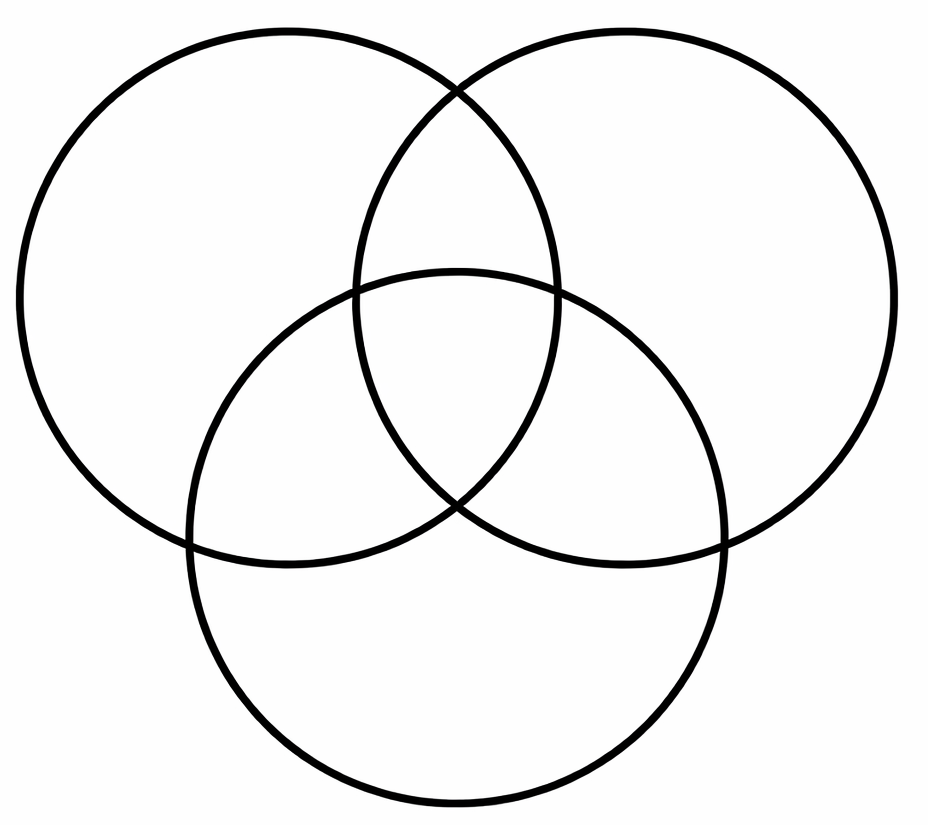
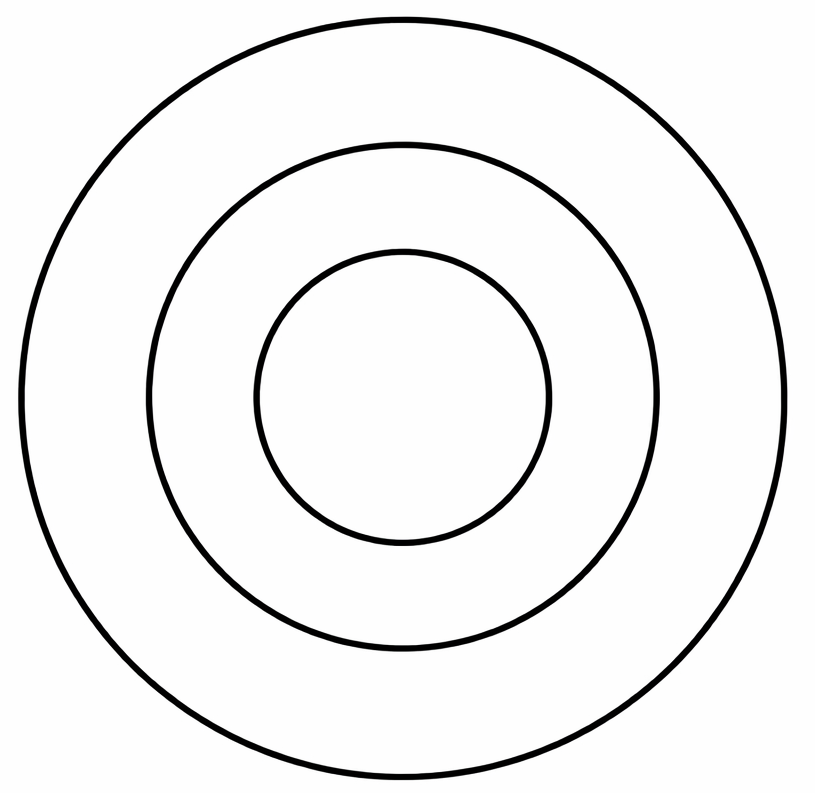
Choose the Venn diagram that shows the best of the three classes below:
State, District, City
To determine the correct Venn diagram for the relationship between State, District, and City, we must understand their hierarchical and geographical relationships. A city is typically part of a district, and a district is part of a state. Therefore, a nested or hierarchical Venn diagram would best represent this relationship.
Correct Option: A) Option A correctly represents the hierarchical relationship with concentric circles.
A person of 80 kg mass runs with a force of 240 N. Its acceleration should be ______.
This problem involves applying Newton's Second Law of Motion, which states that the force acting on an object is equal to the product of its mass and acceleration. We are given the mass of the person and the force applied, and we need to calculate the acceleration.
The formula for Newton's Second Law is:
\[ F = m \times a \]where \(F\) is force, \(m\) is mass, and \(a\) is acceleration.To find acceleration, we can rearrange the formula as:
\[ a = \frac{F}{m} \]Substitute \(F = 240 \text{ N}\) and \(m = 80 \text{ kg}\) into the rearranged formula:
\[ a = \frac{240 \text{ N}}{80 \text{ kg}} \]Perform the division:
\[ a = 3 \text{ m/s}^2 \]The unit for acceleration is meters per second squared (\(\text{m/s}^2\)).A) 3 ms-2 is the correct answer. The calculated acceleration is 3 m/s2, which matches this option.
The question asks for the term that represents the total number of frequencies observed in a data set. This is a fundamental concept in statistics related to how often each value or category appears.
D) Frequency — The term "frequency" itself refers to the count of occurrences of a particular data value. When we talk about the "total number of frequencies observed," it refers to the sum of all individual frequencies, which is essentially the total number of observations in the data set. While the question phrasing might be slightly ambiguous ("total number of frequencies observed" could be interpreted as the sum of frequencies, or the count of distinct frequency values), in the context of standard statistical terminology, the sum of frequencies is the total number of data points, and the concept of frequency is central to counting observations. If the question implies the sum of all individual frequencies, then it represents the total number of data points. If it implies the number of distinct frequency values, that's a different concept. However, among the given options, "Frequency" is the most relevant term related to counting observations.
The question asks to identify the city chosen to host the 2022 Commonwealth Games. This is a factual question related to current affairs and major international sporting events. Knowledge of recent global events is key to answering this type of question.
Correct Option: D) Birmingham
Birmingham was officially announced as the host city for the 2022 Commonwealth Games on 21 December 2017. The games took place from 28 July to 8 August 2022.
The problem involves angles in a circle, specifically angles subtended by the same arc and angles formed by intersecting chords. We will use the property that angles subtended by the same arc are equal, and the property that the angle formed by two intersecting chords inside a circle is half the sum of the measures of the arcs intercepted by the angle and its vertical angle. Alternatively, we can use the sum of angles in a triangle.
This problem involves calculating work rates for pipes filling and emptying a tank. We will determine the individual filling rates of pipes A and B, and the combined emptying/filling rate when all three pipes are open. By comparing the combined rate with the individual rates, we can find the emptying rate of pipe C in terms of tank capacity per minute. Finally, using the given emptying rate of pipe C in liters per minute, we can calculate the total capacity of the tank.
Calculate the filling rate of Pipe A:
Pipe A fills the tank in 15 minutes. So, in 1 minute, Pipe A fills \(\frac{1}{15}\) of the tank.
Calculate the filling rate of Pipe B:
Pipe B fills the tank in 12 minutes. So, in 1 minute, Pipe B fills \(\frac{1}{12}\) of the tank.
Calculate the combined rate of all three pipes:
When all three pipes (A, B, and C) are operating, the tank gets emptied in one hour (60 minutes). This means the net effect is emptying the tank. So, in 1 minute, the three pipes together empty \(\frac{1}{60}\) of the tank.
Set up an equation for the combined rate:
Let the rate of Pipe C be \(x\) (emptying rate). Filling rates are positive, emptying rates are negative. So, the combined rate is:
Solve for \(x\):
First, find a common denominator for \(\frac{1}{15}\) and \(\frac{1}{12}\), which is 60.
Calculate the tank capacity:
We are given that Pipe C can empty the tank at the rate of 2 liters per minute. From our calculation, Pipe C empties \(\frac{1}{6}\) of the tank per minute. Therefore, \(\frac{1}{6}\) of the tank capacity corresponds to 2 liters.
B) 12 liters — The calculations show that the tank capacity is 12 liters.
How many triangles are present in the picture below?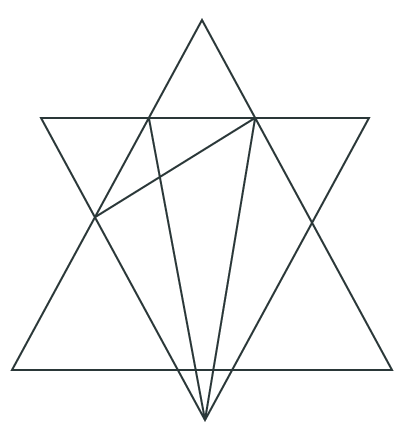
To determine the total number of triangles in the given diagram, we need to systematically count all possible triangles formed by the intersecting lines.
Upon detailed observation, the diagram contains:
Correct Option: D) 30