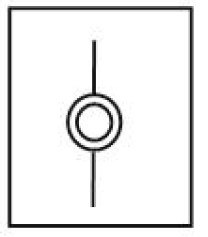
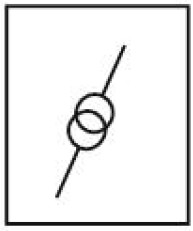
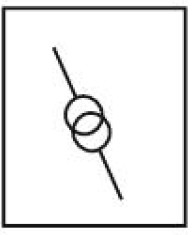
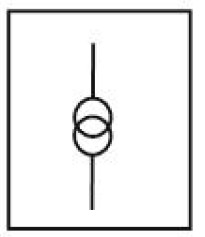
Choose the mirror image for the following: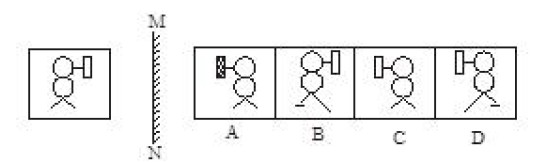
To find the mirror image of a given diagram, we need to reflect the elements across the vertical mirror line. This means reversing the left and right sides while maintaining the orientation of the elements.
Correct Option: B) Option B is the correct mirror image as it accurately reflects the original diagram across the vertical mirror line.
The question asks to identify which of the given forces is NOT electromagnetic in nature. To answer this, we need to understand the fundamental forces of nature and how different everyday forces relate to them. The four fundamental forces are gravitational, electromagnetic, strong nuclear, and weak nuclear. Most macroscopic forces we encounter are manifestations of either gravitational or electromagnetic forces.
Based on this analysis, the weight of a body is gravitational in nature, not electromagnetic.
Correct Option: D) Weight of body — The weight of a body is the force exerted on it by gravity. Gravity is a fundamental force distinct from the electromagnetic force.
What is the highest point in India?
The question asks for the highest point in India. This requires knowledge of the major mountain peaks and their geographical locations.
Correct Option: B) Kangchenjunga is the highest peak in India.
This is a statement and assumption type question. We need to analyze the given statement and determine which of the provided assumptions is implicitly contained within the statement. An assumption is something taken for granted or supposed without proof. The statement is a well-known proverb.
D) Neither assumption I nor II is implicit. Upon strict re-evaluation, the proverb "The journey of a thousand miles starts with the first step" is a descriptive statement about the nature of long endeavors. It states a fact about how such journeys commence. It does not implicitly assume that an initiative *has* to be taken (Assumption I) in a prescriptive sense, nor does it touch upon reasons for not starting (Assumption II). The proverb simply describes the sequence of events for any long journey. Therefore, neither assumption is directly and necessarily implicit within the statement itself.
x and y, given correct to 2 decimal places, are given as 4.51 and 2.48 respectively. What is the upper bound of the value of x + y?
To find the upper bound of a sum of numbers, we need to find the upper bound of each individual number first. When a number is given correct to a certain number of decimal places, its actual value lies within a range. The upper bound is the largest possible value the number could have had before being rounded.
Determine the precision: The numbers \(x\) and \(y\) are given correct to 2 decimal places. This means the rounding occurred at the hundredths place.
Calculate the upper bound for \(x\):
Given \(x = 4.51\) (correct to 2 decimal places).
The actual value of \(x\) could be anything from \(4.505\) up to (but not including) \(4.515\). When rounded to 2 decimal places, any number in the range \([4.505, 4.515)\) would become \(4.51\).
The upper bound for \(x\) is \(4.51 + 0.005 = 4.515\).
Calculate the upper bound for \(y\):
Given \(y = 2.48\) (correct to 2 decimal places).
Similarly, the actual value of \(y\) could be anything from \(2.475\) up to (but not including) \(2.485\). When rounded to 2 decimal places, any number in the range \([2.475, 2.485)\) would become \(2.48\).
The upper bound for \(y\) is \(2.48 + 0.005 = 2.485\).
Calculate the upper bound for \(x + y\):
To find the upper bound of the sum \(x + y\), we add the upper bounds of \(x\) and \(y\).
\[ \text{Upper bound of } (x + y) = \text{Upper bound of } x + \text{Upper bound of } y \]\[ = 4.515 + 2.485 \]\[ = 7.000 \]Correct Option: A) 7.000
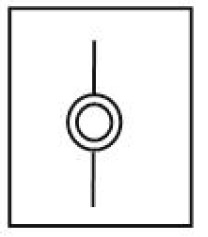
Choose the mirror image for the following:
To determine the mirror image of a given diagram, we need to visualize how the image would appear if reflected across a vertical axis. This involves reversing the orientation of elements in the diagram horizontally.
Correct Option: A) The diagram in Option A shows a vertical line with a circle centered on it, which matches the mirror image of the original.
The atomic size of elements generally follows predictable trends across the periodic table. We need to identify the positions of Oxygen (O), Sulfur (S), and Selenium (Se) in the periodic table and apply these trends to determine the correct order of their atomic sizes.
A) Se > S > O. This order correctly reflects the increase in atomic size down a group in the periodic table.
The question asks for the number of hymns contained in the Rig Veda. This is a factual recall question related to ancient Indian history and religious texts. Knowing the structure and content of the Vedas, particularly the Rig Veda, is essential for competitive exams.
B) 1,028. The Rig Veda is traditionally known to contain 1,028 hymns (suktas), including the 11 Valakhilya hymns.
This problem involves decoding a set of family relationships expressed through symbols and then identifying the expression that correctly represents "K is the father-in-law of H". We will break down each expression symbol by symbol to determine the relationships.
Let's define the symbols first:
We need to find the expression where K is the father-in-law of H. This means H is married to K's child, and K is male.
Let's analyze option C: H@J\)L%K&P
From the above deductions:
Combining these, L is K's daughter. Since J is L's brother, J is also K's child (son). H is married to J. Therefore, H is K's daughter-in-law. Since K is J's father, and H is J's wife, K is the father-in-law of H.
The condition "K is the father-in-law of H" is satisfied.
C) H@J\)L%K&P - As derived above, H is the wife of J, J is the brother of L, L is the daughter of K, and K is the father of P. This implies J is the son of K, and H is J's wife. Therefore, K is the father-in-law of H.
The question asks about the specific tree under which Queen Mayadevi gave birth to Gautam Buddha. This is a factual question related to the early life of Buddha, a key topic in ancient Indian history and religious studies.
Correct Option: D) Sal tree