The question asks to identify the item that does not belong to the given group. This is a classification type of question where we need to find the common characteristic among some items and then identify the outlier.
Correct Option: D) A — A Teacher is a person, while Pencil, Eraser, and Sharpener are all stationery items.
The problem asks to calculate the potential energy of an object at a certain height above the ground. Potential energy due to gravity is given by the formula \(PE = mgh\), where \(m\) is the mass, \(g\) is the acceleration due to gravity, and \(h\) is the height.
The potential energy (\(PE\)) of an object due to its position in a gravitational field is given by:
\[ PE = mgh \]Substitute the given mass, height, and acceleration due to gravity into the potential energy formula:
\[ PE = (13 \text{ kg}) \times (9.8 \text{ m/s}^2) \times (5 \text{ m}) \]First, multiply \(13 \times 9.8\):
\[ 13 \times 9.8 = 127.4 \]Now, multiply this result by \(5\):
\[ PE = 127.4 \times 5 = 637 \]The unit for energy is Joules (\(J\)).
\[ PE = 637 \text{ J} \]D) 637 J is the correct answer, as calculated from the potential energy formula.
The problem asks us to solve for \(x\) in the given equation \((6x - 24)^2 = 0\), where \(x\) is a natural number (\(x \in N\)). We need to find the value of \(x\) that satisfies this equation.
Correct Option: C) x = 4
The question asks about the top-ranked player in the ICC ODI Women's Cricket rankings in 2017. This requires knowledge of historical cricket rankings, specifically for that year.
Correct Option: D) Mithali Raj
Mithali Raj moved to the No. 1 spot in the ICC ODI Women's Cricket batting rankings in 2017. She achieved this milestone due to her consistent performance, especially during the ICC Women's World Cup in England.
If \( \frac{1332}{145} \) = 9.19, then what is the value of \( \frac{133.24}{9.19} \)?
The problem provides an equation and asks for the value of another expression. We can use the given equation to find the relationship between the numbers and then substitute the values into the expression we need to evaluate.
We are given the equation:
\[ \frac{1332}{145} = 9.19 \]From the given equation, we can deduce the relationship between 1332, 145, and 9.19. We can write it as:
\[ 1332 = 145 \times 9.19 \]We need to find the value of:
\[ \frac{133.24}{9.19} \]The numerator is \(133.24\). This is very close to \(1332\). Specifically, \(133.24\) is approximately \(1332\) divided by \(10\).
Let's consider the exact value. If we divide \(1332\) by \(10\), we get \(133.2\). The given numerator is \(133.24\). This suggests there might be a slight approximation in the given value of \(9.19\), or the question intends for us to use the exact relationship.
Let's assume the question intends for us to use the given relationship directly. We have:
\[ \frac{1332}{145} = 9.19 \]We need to find \( \frac{133.24}{9.19} \). Let's try to express \(133.24\) in terms of \(1332\).
Notice that \(133.24\) is approximately \(1332 / 10\). If we substitute \(9.19 = \frac{1332}{145}\) into the expression we need to evaluate:
\[ \frac{133.24}{9.19} = \frac{133.24}{\frac{1332}{145}} = \frac{133.24 \times 145}{1332} \]Let's perform the division of \(1332\) by \(145\) more precisely:
\[ \frac{1332}{145} \approx 9.1862 \]The question states \( \frac{1332}{145} = 9.19 \), implying a rounding. Let's work with the exact fractions where possible.
Consider the expression \( \frac{133.24}{9.19} \). We know \( 9.19 = \frac{1332}{145} \).
So, the expression becomes:
\[ \frac{133.24}{\frac{1332}{145}} = \frac{133.24 \times 145}{1332} \]Now, let's observe the relationship between \(133.24\) and \(1332\). If we divide \(1332\) by \(10\), we get \(133.2\). The numerator is \(133.24\), which is very close to \(133.2\).
Let's assume the question implies that \(133.24\) is approximately \(1332 / 10\). If we assume \(133.24 = 1332 / 10\), then:
\[ \frac{133.24}{9.19} = \frac{1332 / 10}{1332 / 145} = \frac{1332}{10} \times \frac{145}{1332} = \frac{145}{10} = 14.5 \]This result matches one of the options perfectly. The slight difference between \(133.2\) and \(133.24\) is likely an artifact of rounding in the problem statement, or the problem intends for us to recognize the pattern.
Given the options are exact values, it's highly probable that the intention is for us to recognize that \(133.24\) is approximately \(1332/10\), and the given \(9.19\) is \(1332/145\).
Let's re-verify the exact division: \(1332 \div 145 = 9.186206...\). Rounded to two decimal places, this is \(9.19\).
Now, let's consider the numerator \(133.24\). If we assume a direct relationship, we can write:
\[ \frac{133.24}{9.19} = \frac{133.24}{\frac{1332}{145}} = \frac{133.24 \times 145}{1332} \]Let's perform the multiplication \(133.24 \times 145\):
\[ 133.24 \times 145 = 19319.8 \]Now divide by \(1332\):
\[ \frac{19319.8}{1332} \approx 14.50435 \]This value is very close to \(14.5\). Given the options, \(14.5\) is the most appropriate answer, indicating that the problem expects us to use the given approximation or recognize the scaling factor.
The most straightforward way to solve this is to recognize the scaling:
Let \( N_1 = 1332 \) and \( D_1 = 145 \). We are given \( \frac{N_1}{D_1} = 9.19 \).
We need to find the value of \( \frac{133.24}{9.19} \).
Notice that \( 133.24 \approx \frac{1332}{10} \).
So, the expression is approximately \( \frac{N_1 / 10}{N_1 / D_1} \).
This simplifies to \[\frac{N_1}{10} \times \frac{D_1}{N_1} = \frac{D_1}{10}\].
Substituting \( D_1 = 145 \):
\[ \frac{145}{10} = 14.5 \]Correct Option: D) 14.5
The question asks to identify the lead actor in the movie "Parmanu". This is a general knowledge question related to Indian cinema, specifically Bollywood.
The movie "Parmanu: The Story of Pokhran" (2018) is a historical action drama film based on the Pokhran-II nuclear tests conducted by India in 1998. John Abraham played the lead role of Ashwat Raina, an Indian Army officer who leads the team responsible for the covert operation.
C) John Abraham played the lead actor role in the movie "Parmanu: The Story of Pokhran".
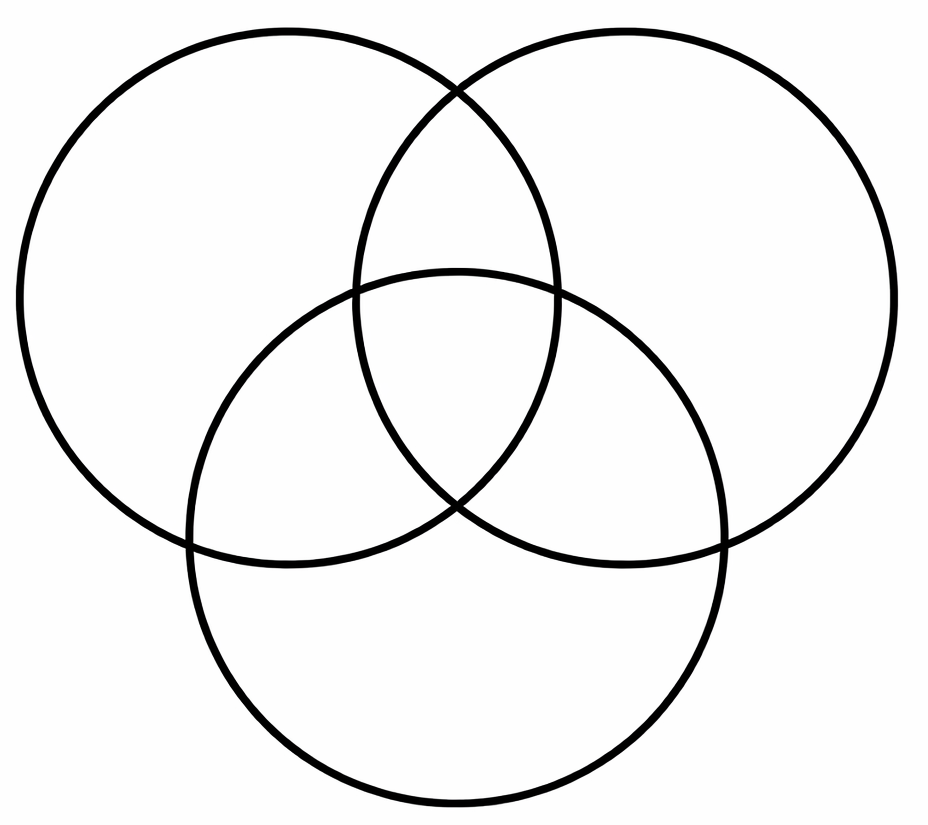
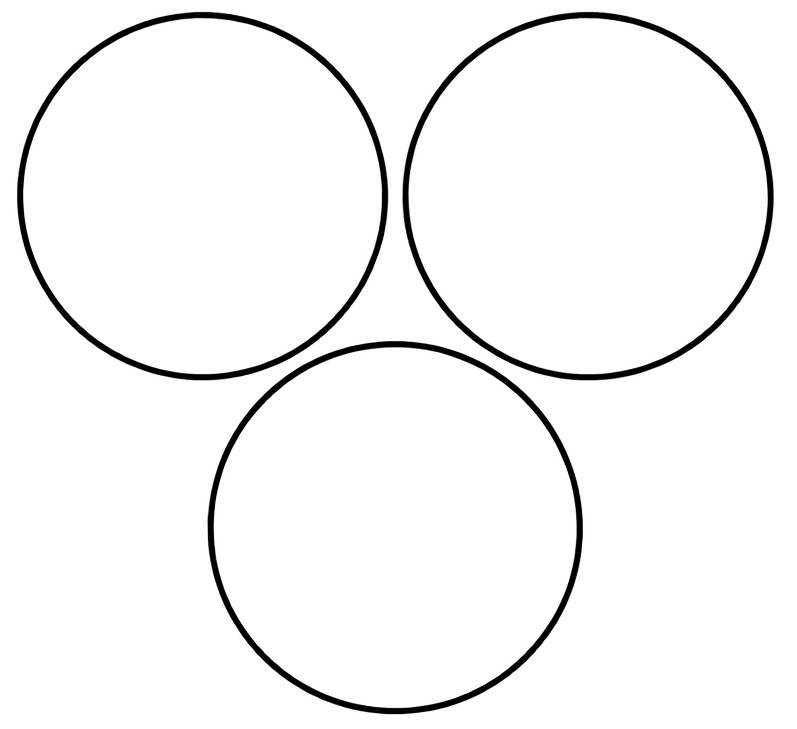
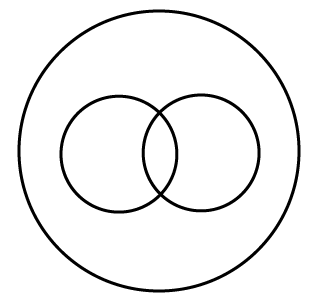
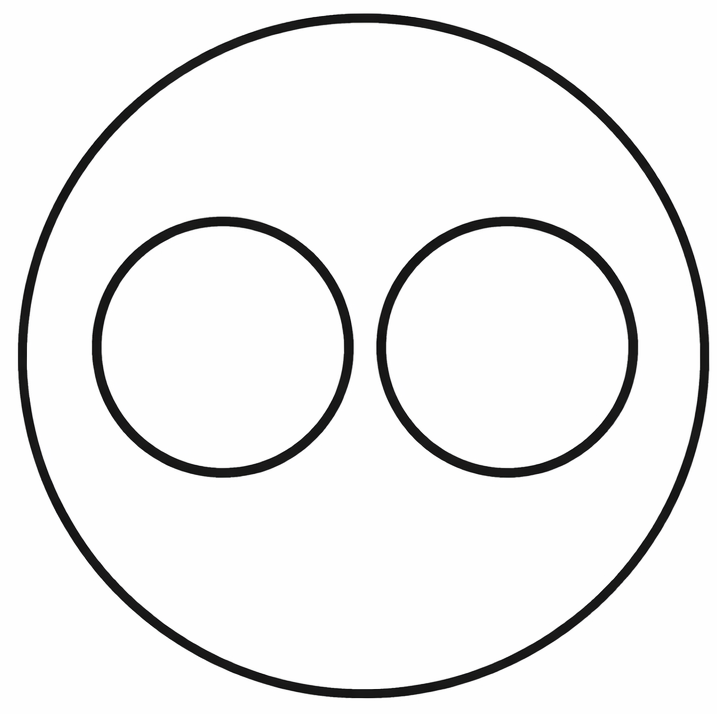
Choose the best suitable Venn diagram for the following words:
Indoor games, Chess, Carrom
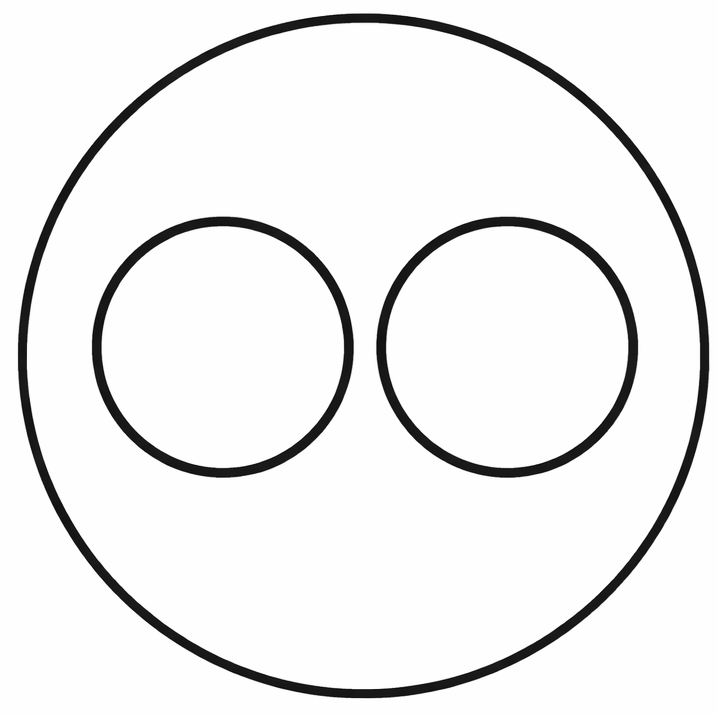
To solve this problem, we need to identify the logical relationships between the categories: Indoor games, Chess, and Carrom. Both Chess and Carrom are types of indoor games, so they should be subsets within the larger set of Indoor games.
Correct Option: D) The diagram shows two circles (Chess and Carrom) inside a larger circle (Indoor games), correctly representing the subset relationship.
The question asks to identify a specific book by Aravind Adiga, published in 2017, which features a young, 14-year-old cricket player living in the Mumbai slums. This requires knowledge of Aravind Adiga's bibliography and the plot summaries of his works.
Aravind Adiga is a well-known Indian author. His novel 'Selection Day' (2016, though often associated with 2017 for wider recognition/paperback release) perfectly fits the description. It tells the story of Manjunath Kumar, a 14-year-old cricket prodigy from the Mumbai slums.
D) ‘Selection Day’ is the correct answer. Published in 2016 (with significant attention and paperback release in 2017), this novel by Aravind Adiga focuses on two brothers, Manju and Radha, who are groomed by their ambitious father to become cricket stars. The story is set in the Mumbai slums and explores themes of poverty, ambition, and the harsh realities of Indian cricket.
We need to determine the number of incorrect answers Rakesh attempted. We are given the marks for correct and incorrect answers, the total score, and the number of correct answers. We can calculate the marks obtained from correct answers and then use the total score to find the marks deducted due to incorrect answers. Finally, we can calculate the number of incorrect answers.
Marks for each correct answer = \(+5\)
Number of correct answers = \(10\)
Total marks from correct answers = \(10 \times 5 = 50\)
Rakesh's total score = \(42\)
The difference between marks from correct answers and the total score is the total marks deducted for incorrect answers.
\[ \text{Marks deducted} = \text{Marks from correct answers} - \text{Total score} \] \[ \text{Marks deducted} = 50 - 42 = 8 \]Marks deducted for each incorrect answer = \(-2\)
The absolute value of marks deducted per incorrect answer is \(2\).
\[ \text{Number of incorrect answers} = \frac{\text{Total marks deducted}}{\text{Marks deducted per incorrect answer}} \] \[ \text{Number of incorrect answers} = \frac{8}{2} = 4 \]Therefore, Rakesh attempted 4 incorrect answers.
Correct Option: C) 4
To determine how many times the hands of a clock are exactly opposite to each other between 2 o'clock and 4 o'clock, we need to understand the relative speed of the hour and minute hands and the conditions for them to be opposite. When the hands are opposite, they are 180 degrees apart.
Correct Option: B) 2