The question asks to identify India's indigenously designed and developed long-range subsonic cruise missile. We need to recall the characteristics and classifications of the missiles listed in the options.
Correct Option: B) Nirbhay is India's indigenously designed and developed long-range subsonic cruise missile.
If \(\sqrt{108}\) + \(\sqrt{243}\) = 25.98, find the value of \(\sqrt{147}\) + \(\sqrt{192}\).
The problem involves simplifying square roots and then performing addition. The key is to express the numbers inside the square roots as products involving perfect squares, allowing us to extract common factors and simplify the expressions. We are given an equation with a numerical value and asked to find the value of a similar expression.
First, let's simplify the terms in the given equation: \(\sqrt{108} + \sqrt{243} = 25.98\).
Now, substitute these simplified forms back into the given equation:
\[ 6\sqrt{3} + 9\sqrt{3} = 25.98 \]\[ (6+9)\sqrt{3} = 25.98 \]\[ 15\sqrt{3} = 25.98 \]Next, let's simplify the terms in the expression we need to evaluate: \(\sqrt{147} + \sqrt{192}\).
Now, substitute these simplified forms into the expression:
\[ 7\sqrt{3} + 8\sqrt{3} \]\[ (7+8)\sqrt{3} \]\[ 15\sqrt{3} \]We found that \(\sqrt{108} + \sqrt{243}\) simplifies to \(15\sqrt{3}\), and its value is given as 25.98.
We also found that \(\sqrt{147} + \sqrt{192}\) simplifies to \(15\sqrt{3}\).
Since both expressions simplify to the same value, \(15\sqrt{3}\), their numerical values must be identical.
Therefore, \(\sqrt{147} + \sqrt{192} = 25.98\).
A) 25.98 is the correct answer because both the given expression and the expression to be found simplify to \(15\sqrt{3}\).
To find the quantity of copper in the alloy, we need to calculate 32% of the total mass of the alloy. The total mass is given as 1 kg, which should be converted to grams for consistency with the options.
The total mass of the alloy is 1 kg. Since 1 kg = 1000 g, the total mass of the alloy is 1000 g.
\[ \text{Total mass of alloy} = 1 \text{ kg} = 1000 \text{ g} \]The problem states that the alloy contains 32% copper.
\[ \text{Percentage of copper} = 32\% \]To find the quantity of copper, multiply the total mass of the alloy by the percentage of copper.
\[ \text{Quantity of copper} = \text{Percentage of copper} \times \text{Total mass of alloy} \]\[ \text{Quantity of copper} = 32\% \times 1000 \text{ g} \]\[ \text{Quantity of copper} = \frac{32}{100} \times 1000 \text{ g} \]\[ \text{Quantity of copper} = 32 \times 10 \text{ g} \]\[ \text{Quantity of copper} = 320 \text{ g} \]The information about zinc (40%) and nickel (the rest) is extra and not needed to solve for the quantity of copper.
D) 320 g is the correct quantity of copper in 1 kg of the alloy.
This problem involves the concept of work and time, specifically related to pipes and cisterns. We need to calculate the combined rate of filling and emptying to find the total time taken to fill the tank when both taps are open simultaneously.
Determine the filling rate of the first tap:
The first tap fills the tank in 25 minutes. So, in one minute, it fills \(\frac{1}{25}\) of the tank.
Determine the emptying rate of the second tap:
The second tap empties the tank in 50 minutes. So, in one minute, it empties \(\frac{1}{50}\) of the tank.
Calculate the net filling rate when both taps are open:
Since one tap is filling and the other is emptying, their effects are opposite. The net rate will be the filling rate minus the emptying rate.
Calculate the total time to fill the tank:
If the net rate is \(\frac{1}{50}\) of the tank per minute, it means the tank will be filled in 50 minutes.
B) 50 minutes
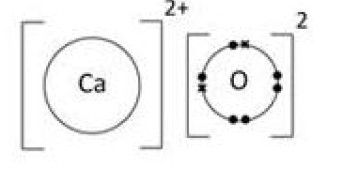
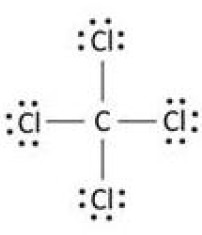
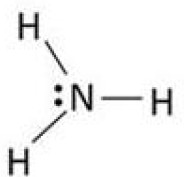
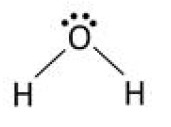
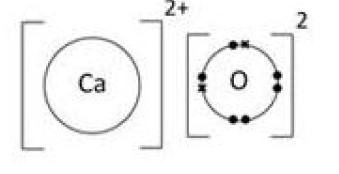
______________ is not a covalent molecule.
To determine which molecule is not covalent, we need to understand the nature of covalent and ionic bonds. Covalent bonds involve the sharing of electrons between atoms, while ionic bonds involve the transfer of electrons from one atom to another, resulting in charged ions.
Correct Option: A) The diagram represents an ionic bond between Ca and O, not a covalent molecule.
The sum of two fractions is \( \frac{7}{4} \). One of them is \( \frac{5}{3} \). Find the other fraction.
\( \frac{2}{1} \)
\( \frac{1}{12} \)
\( \frac{1}{5} \)
\( \frac{1}{10} \)
To find the other fraction, we need to subtract the given fraction from the sum of the two fractions. This involves finding a common denominator for the fractions and then performing the subtraction.
Correct Option: B) \( \frac{1}{12} \)
Select the option figure that will complete the series in the question figure.
Question Figure.
Option Figures.
The question involves identifying the pattern in a series of figures and selecting the option that logically completes the sequence.
By applying these transformations, the correct figure that completes the series is option A.
Correct Option: A) The arrow points down, and the bent line is vertical, matching the expected transformation.
To find the day after a certain number of days, we need to understand the concept of a week. A week has 7 days, and the days of the week repeat in a cycle of 7. Therefore, we can find the remainder when the number of days is divided by 7. This remainder will tell us how many days forward from the current day we need to count.
So, \(61\) divided by \(7\) gives a quotient of \(8\) and a remainder of \(5\).
Correct Option: B) Saturday
The question asks to identify the founder of the Swatantra Party. This requires knowledge of Indian political history and the key figures associated with major political parties.
Correct Option: B) C Rajagopalachari was the founder of the Swatantra Party in 1959. He was a vocal critic of the Nehruvian socialist policies and advocated for classical liberal principles.
Which of the options bears the closest resemblance to the following figure?
Problem Figure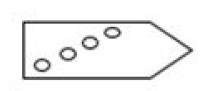
Option Figures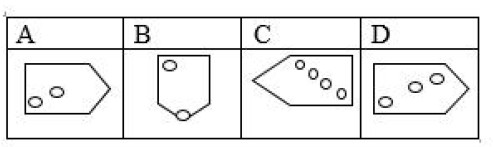
The problem requires identifying which option figure closely resembles the given problem figure. The key is to observe the shape and arrangement of elements in the figures.
Correct Option: B) Option B matches the shape and arrangement of dots in the problem figure.