
The problem asks for the sum of the ages of L and M 5 years from now. To find this, we first need to determine their current ages. We will evaluate each statement individually and then together to see if they provide enough information.
This statement gives us L's current age: \(\text{L} = 5\). However, it provides no information about M's age. Therefore, we cannot determine M's current age, and consequently, we cannot find the sum of their ages 5 years from now.
This statement tells us the relationship between their ages: \(\text{M} = \text{L} + 1\). However, it does not give us the actual age of either L or M. We have two unknowns (\(\text{L}\) and \(\text{M}\)) and only one equation. Therefore, we cannot determine their current ages.
From Statement 1, we have \(\text{L} = 5\).
From Statement 2, we have \(\text{M} = \text{L} + 1\).
Substitute the value of L from Statement 1 into the equation from Statement 2:
\[ \text{M} = 5 + 1 \]\[ \text{M} = 6 \]Now we know both L's current age (5 years) and M's current age (6 years).
We need to find the sum of their ages 5 years from now:
Sum of their ages 5 years from now \(= 10 + 11 = 21\) years.
Since we can determine the sum of their ages, both statements together are sufficient.
Correct Option: B) Statements 1 and 2 together are sufficient
What comes next (?) in the given series:
12P, 14Q, 18S, 24V,?
The given series consists of a number and a letter. We need to analyze the pattern for both the numerical part and the alphabetical part separately to find the next term in the series.
The numbers in the series are 12, 14, 18, 24.
The differences are 2, 4, 6. This is an arithmetic progression with a common difference of 2. So, the next difference should be \(6 + 2 = 8\).
Therefore, the next number in the series will be \(24 + 8 = 32\).
The letters in the series are P, Q, S, V.
Let's find their positions in the English alphabet (A=1, B=2, ..., Z=26):
Now, let's look at the difference in their positions:
The differences are +1, +2, +3. This is an arithmetic progression with a common difference of 1. So, the next difference should be \(+3 + 1 = +4\).
Therefore, the next letter will be 4 positions after V. V is the 22nd letter, so \(22 + 4 = 26\). The 26th letter in the alphabet is Z.
The next number is 32 and the next letter is Z.
So, the next term in the series is 32Z.
B) 32Z — This matches our derived number (32) and letter (Z).
Find the odd one out: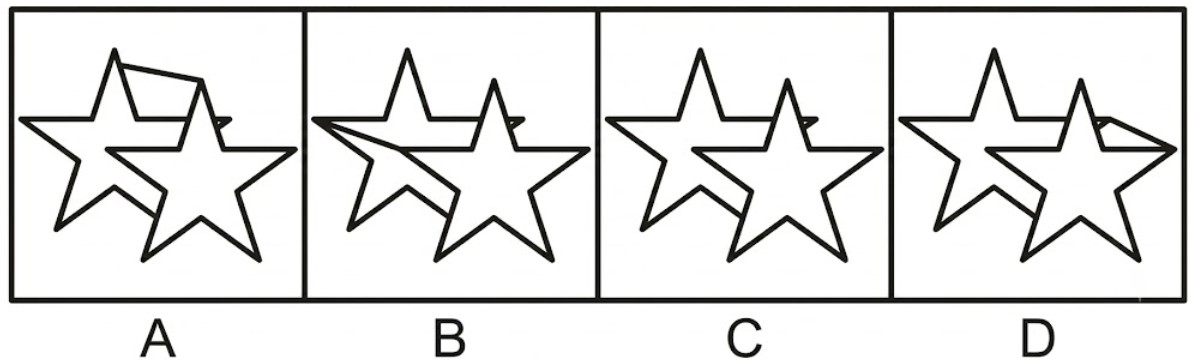
To find the odd one out, we need to analyze the pattern or structure of the objects in each option. The diagram consists of pairs of stars, and the task is to identify which option deviates from the common pattern.
Correct Option: A) Option A is correct because it includes an extra line connecting the star tips, which is not found in the other options.
Select the option that is related to the third word on the same basis as the second word is related to the first word.
Chalk : Board : : Pencil:
This is an analogy question where we need to find the relationship between the first pair of words and apply the same relationship to the third word to find the fourth word.
Correct Option: D) Paper
Find the next figure for the given series:
Problem figures: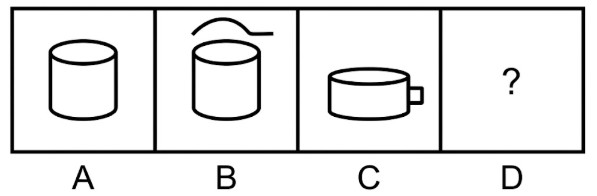
Answer figures: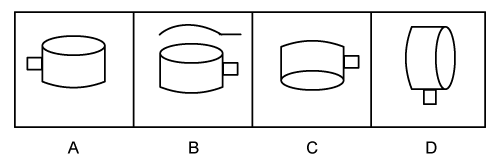
The problem requires identifying the pattern in the given series of figures and predicting the next figure. Observing the transformations in the sequence will help us determine the correct answer.
Correct Option: C) The handle is on the right side, matching the expected transformation.
Which of the option figures bears the closest resemblance to the question figure?
Question Figure: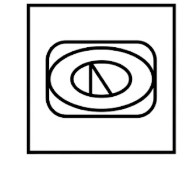
Option Figures: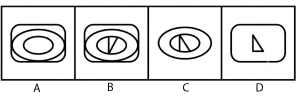
The goal is to identify the option figure that most closely resembles the question figure. This involves analyzing the shapes, patterns, and orientations present in the diagrams.
Correct Option: C) Option C is the correct answer because it closely resembles the question figure in both shape and orientation.
This is a logical reasoning question where we need to determine which conclusions can be logically derived from the given statement. We must avoid making assumptions or using outside knowledge. The conclusions must directly and necessarily follow from the statement.
The statement is: "Fruit prices are soaring in the market."
Let's analyze each conclusion:
A) Neither I nor II follows
Based on the analysis, neither conclusion I nor conclusion II can be logically derived with certainty from the given statement. The statement only provides information about the price increase, not the reasons behind it or its absolute impact on consumption.
Find the ODD one out: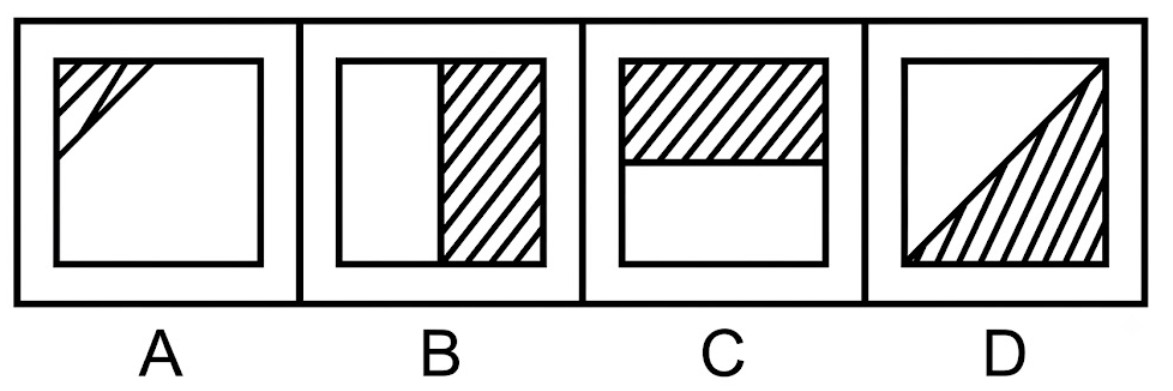
To identify the odd one out, we need to analyze the patterns in the shaded areas within the squares. The goal is to find the option that does not follow the same shading pattern as the others.
Correct Option: C) Option C is the odd one out due to its horizontal shading pattern.
Richa has given the following series in the exam. Complete the series from the options given below.
TAB, TTZBB, TTBBB, TTTYBBB, TTTCBBB, _______.
The problem presents a series of letter combinations. We need to identify the pattern in the number of 'T's, the middle letter, and the number of 'B's to determine the next term in the series.
Correct Option: C) TTTTDBBBB
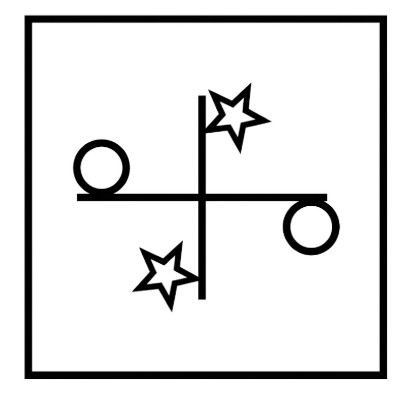
The water image of the above figure is?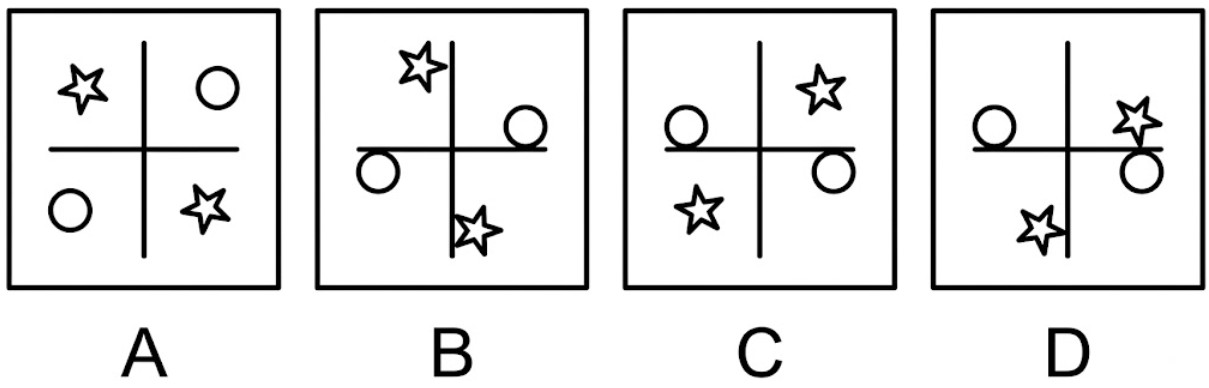
To find the water image of a figure, we need to reflect it vertically across a horizontal axis. This involves flipping the elements of the figure upside down while maintaining their horizontal positions.
After applying these steps, the correct water image is represented by option B.
Correct Option: B) The elements are correctly flipped vertically across the horizontal axis.